
Coastal style has evolved far beyond seashells and nautical stripes. Today’s modern coastal bathroom is a sophisticated space that captures the essence of seaside living through natural materials, soft color palettes, and an airy, open aesthetic.
Whether you’re planning a full renovation or simply refreshing your current space, these coastal bathroom ideas will help you achieve a timeless coastal look.
1. Coastal-Style Lighting
Lighting sets the tone in any bathroom, and coastal spaces benefit from fixtures that feel both functional and decorative.
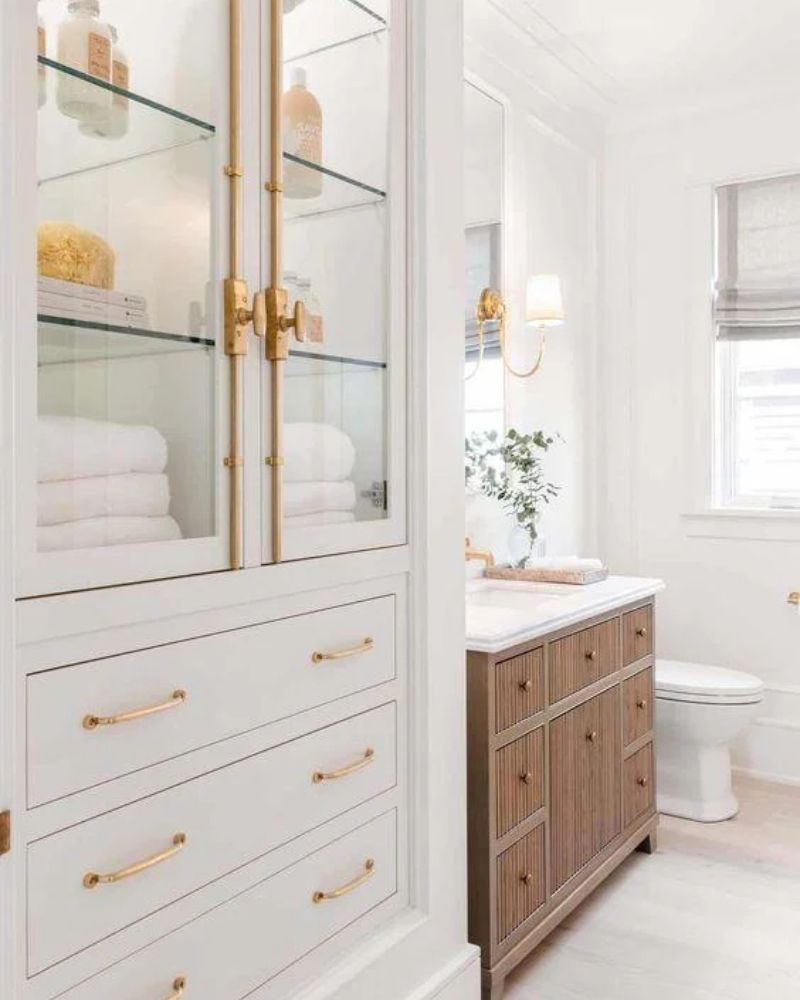
Pendant lights with woven or fabric shades, beaded chandeliers, and fixtures with brass or mixed-metal finishes are excellent choices for achieving a coastal aesthetic.
Sconces flanking a vanity mirror provide essential task lighting while adding architectural interest. Look for designs featuring natural materials such as rattan or linen, or opt for sleek glass-and-metal combinations that feel contemporary yet timeless.
The key is choosing fixtures that feel collected rather than overly matched—think about how they’ll layer with natural light throughout the day.
2. Natural Materials
Incorporating natural materials is essential to authentic coastal design. Wood vanities in warm, light finishes create an organic foundation, while woven pendant lights and natural fiber window treatments add texture and visual interest. Neutral-toned stone flooring and shower tile ground the space with earthy sophistication.
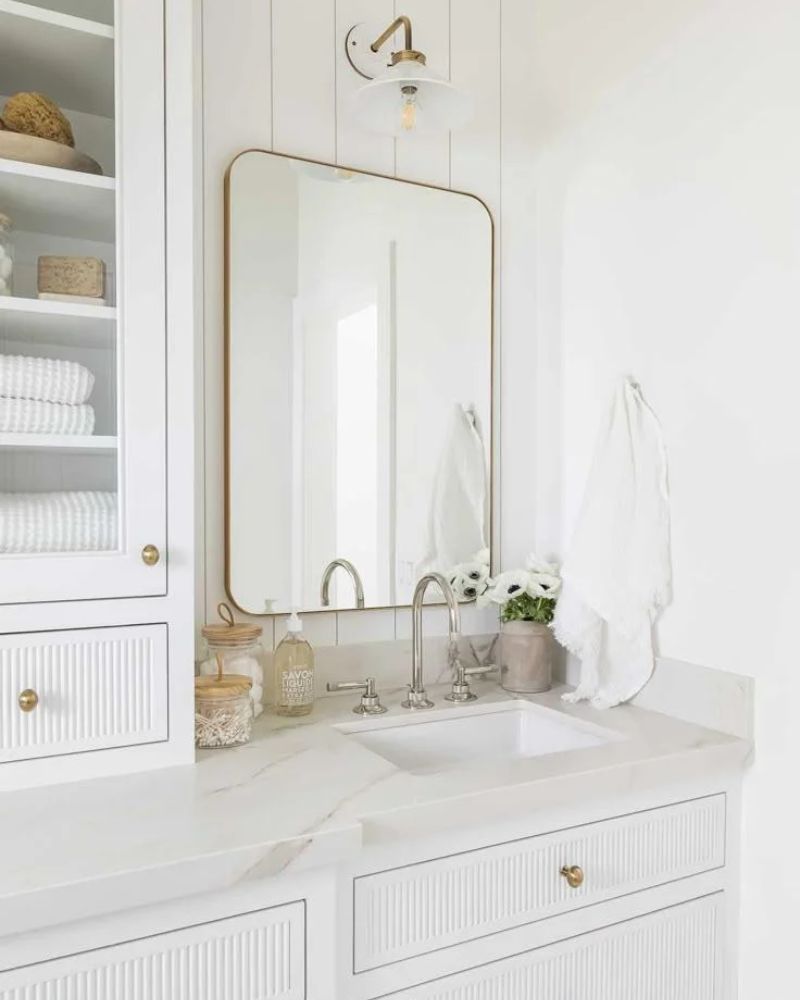
Consider adding open wood shelving above the tub for both storage and display. Natural materials don’t just look beautiful—they also bring tactile variety to the space. Linen shower curtains, woven baskets for storage, and even natural stone accessories all contribute to that relaxed, beachy atmosphere without feeling overly themed.
3. A Coastal Color Palette
The most successful coastal bathrooms draw their color inspiration directly from nature. Crisp whites, soft grays, warm sand tones, and various shades of blue create a calming, cohesive palette. However, don’t feel limited to blue—many beautiful coastal bathrooms rely entirely on warm neutrals and earth tones.
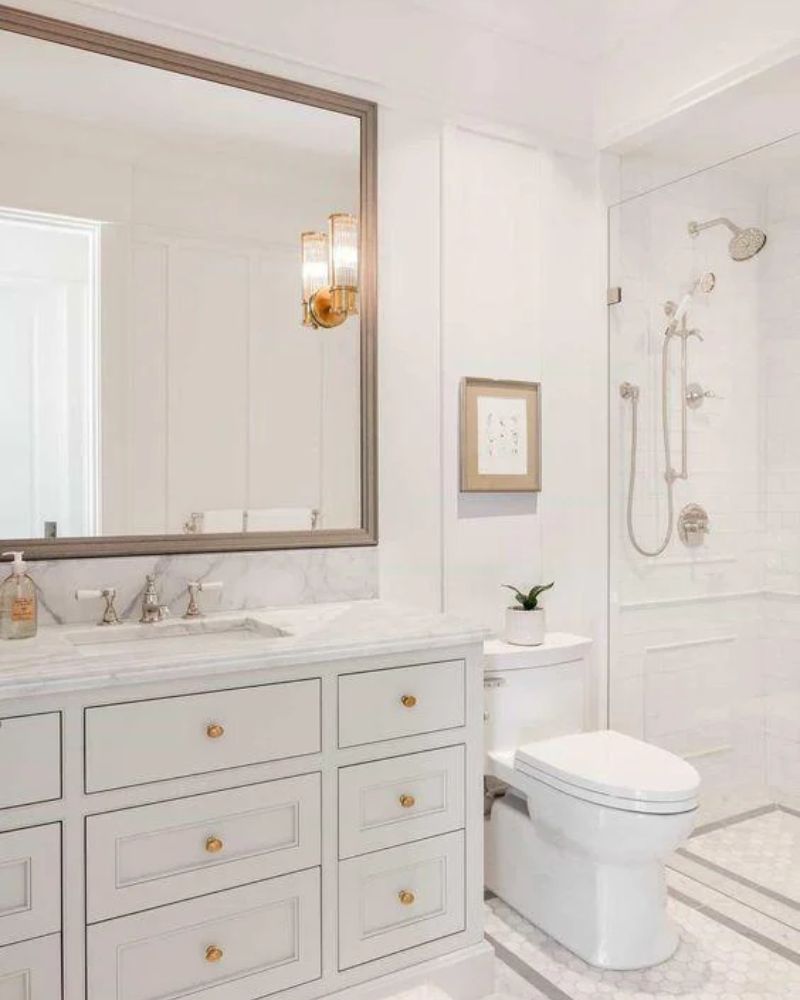
Greige (gray-beige) cabinetry offers a sophisticated alternative to stark white, while navy blue vanities can serve as a bold anchor in a primarily neutral space. Soft gray-blue tones work beautifully on cabinetry when paired with white walls and natural wood accents. The goal is to create layers of complementary neutrals that feel soothing rather than stark.
4. Coastal Vanity and Cabinetry
The vanity is often the focal point of a bathroom, and in coastal design, natural wood cabinets reign supreme. Light oak, white oak, and other blonde woods paired with white or neutral walls create an instantly airy, beachside feel. These warm wood tones add depth and prevent an all-white bathroom from feeling too sterile.
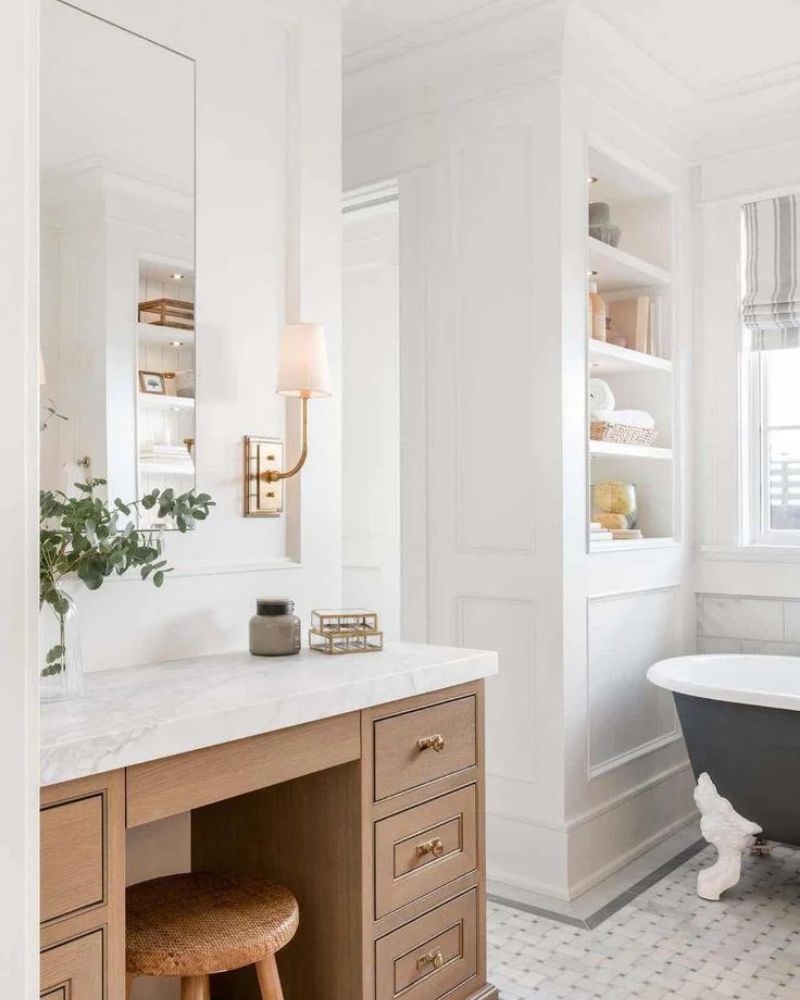
For a more contemporary look, consider mixing materials: a white oak linen cabinet paired with painted white vanity cabinetry offers visual interest while maintaining that light, coastal aesthetic. Custom cabinetry in soft blue-green or navy tones can also make a statement, especially in larger bathrooms where you want to define separate zones.
Don’t overlook hardware and fixtures in your cabinetry design. Warm brass pulls on a light-wood vanity create a cohesive, elevated look, while black matte hardware adds modern contrast.
5. Coastal Bathroom Mirrors
The right mirror can transform your bathroom’s entire aesthetic. Coastal bathrooms particularly shine with mirrors featuring organic shapes and natural materials. Arched, oval, and rounded mirrors soften the hard lines typically found in bathrooms, creating a more relaxed, spa-like environment.
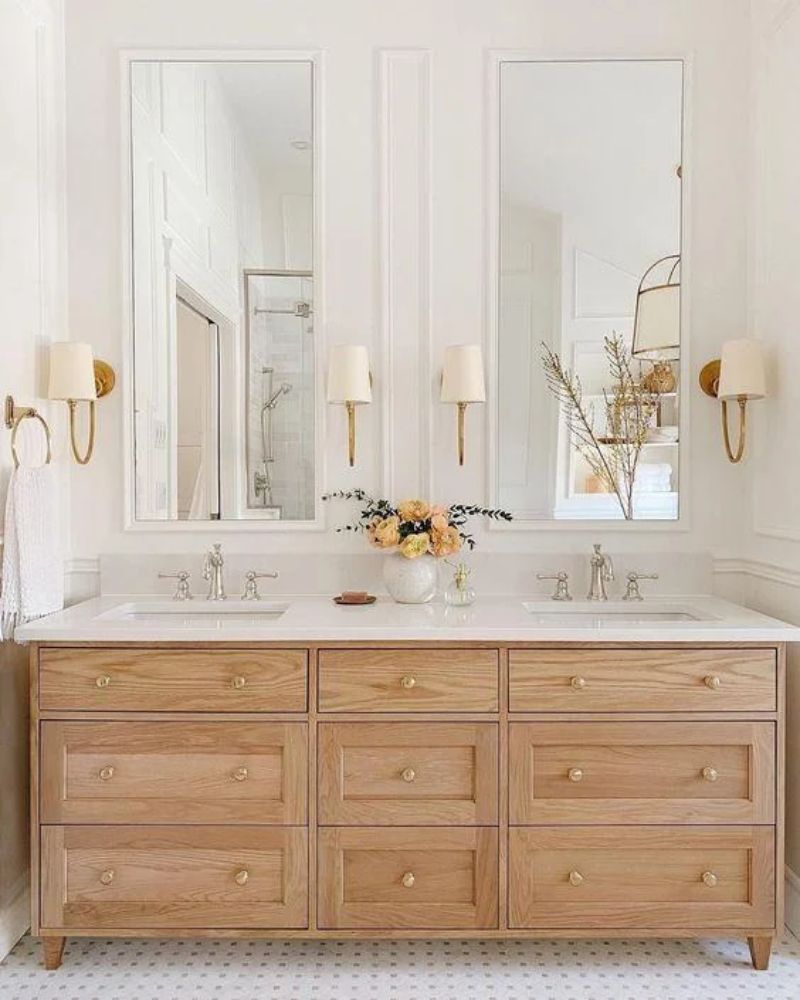
Brass-framed mirrors are especially popular in coastal design, offering warmth and a touch of elegance. Pivoting frameless mirrors provide functionality with a clean, modern look, while wood-framed mirrors—particularly in arched shapes—reinforce that natural, organic aesthetic.
Consider scale when selecting mirrors. In a double vanity bathroom, two matching mirrors create symmetry and balance, while a single large mirror can make a small bathroom feel more spacious. Rectangular mirrors with rounded corners offer a nice middle ground between traditional and contemporary styles.
6. Coastal Bathroom Decor
When it comes to decor, modern coastal style favors restraint over abundance. The goal is to evoke the beach without literal representation—think subtle nods rather than obvious nautical themes.
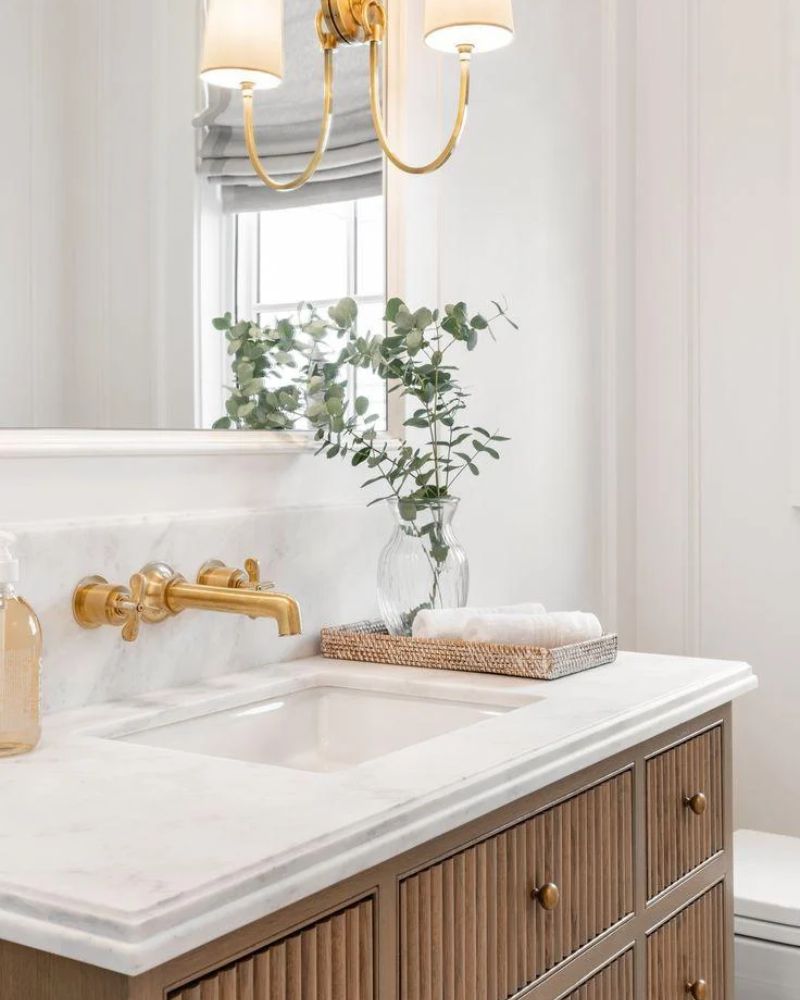
Skip the anchor motifs, rope accents, and “Beach House” signs in favor of more sophisticated touches. Framed coastal artwork, whether abstract ocean scenes or botanical prints, brings personality without feeling kitschy.
Natural elements such as a small potted plant, a beautiful candle, or a woven tray for corralling toiletries add the right amount of style.
The most successful coastal bathrooms let the architecture and finishes speak for themselves, with decor playing a supporting rather than starring role. A few carefully chosen pieces will have more impact than a collection of beach-themed accessories.
7. An Open, Airy Feeling
Openness is fundamental to coastal design. If you’re undertaking a renovation, consider removing non-structural walls to create a more flowing, spacious layout. Even in smaller bathrooms, you can enhance the sense of airiness through design choices.
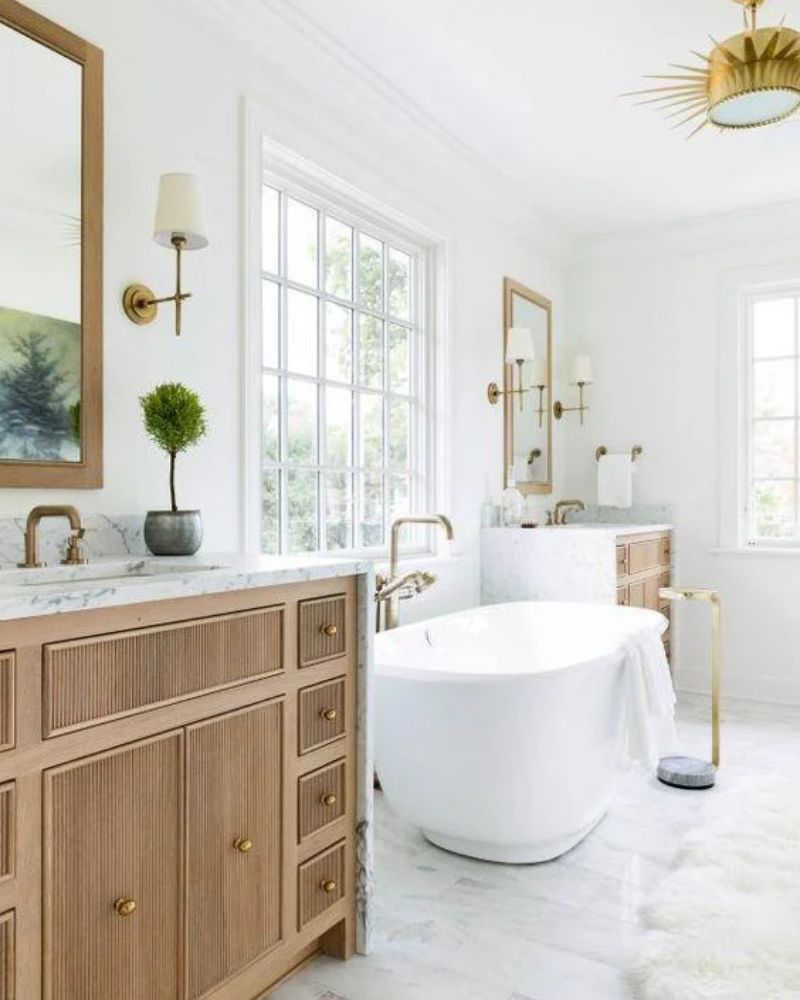
High ceilings naturally create an open feel, but if you’re working with standard ceiling heights, you can create visual lift through other means. Vertical shiplap, tall mirrors, and wall-mounted fixtures all draw the eye upward. Architectural details such as wall molding and coffered ceilings add character while enhancing the sense of space.
Minimize visual clutter by incorporating ample storage built into cabinetry, recessed medicine cabinets, and thoughtfully designed vanities, keeping countertops clear and the space feeling serene.
8. Shiplap Walls and Ceilings
Shiplap and paneled walls are nearly synonymous with coastal style, adding texture and architectural interest to what might otherwise be plain walls. This feature works beautifully in both full bathrooms and powder rooms, creating an instant focal point.
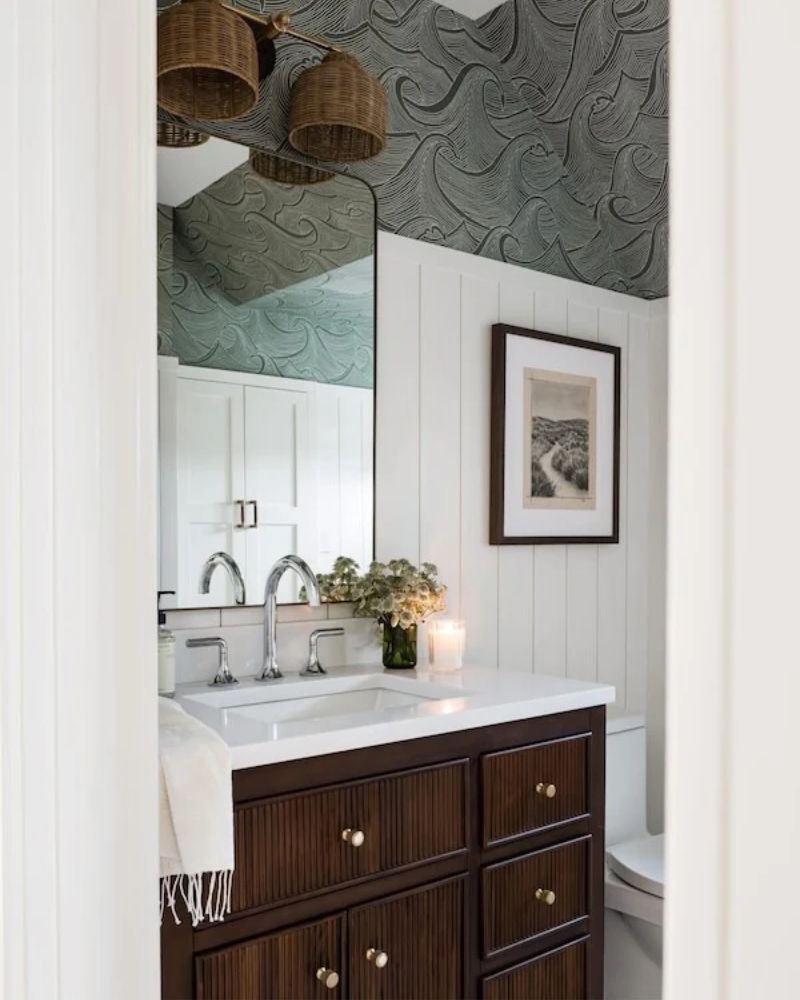
Shiplap can be installed horizontally for a classic look or vertically for a more modern, height-emphasizing effect. Painted in crisp white or soft neutral tones, it provides subtle texture without overwhelming the space. Consider using shiplap strategically—perhaps as a feature wall behind the vanity or extending it to the ceiling for added drama.
The key to refined shiplap is proper installation and finish. Well-executed paneling should feel like an intentional architectural detail, not an afterthought. Pair it with clean-lined fixtures and minimal decor to keep the look sophisticated rather than rustic.
9. Abundant Natural Light
Natural light is perhaps the most important element in coastal bathroom design. Large windows not only flood the space with sunshine but also create that essential connection to the outdoors that defines coastal living.
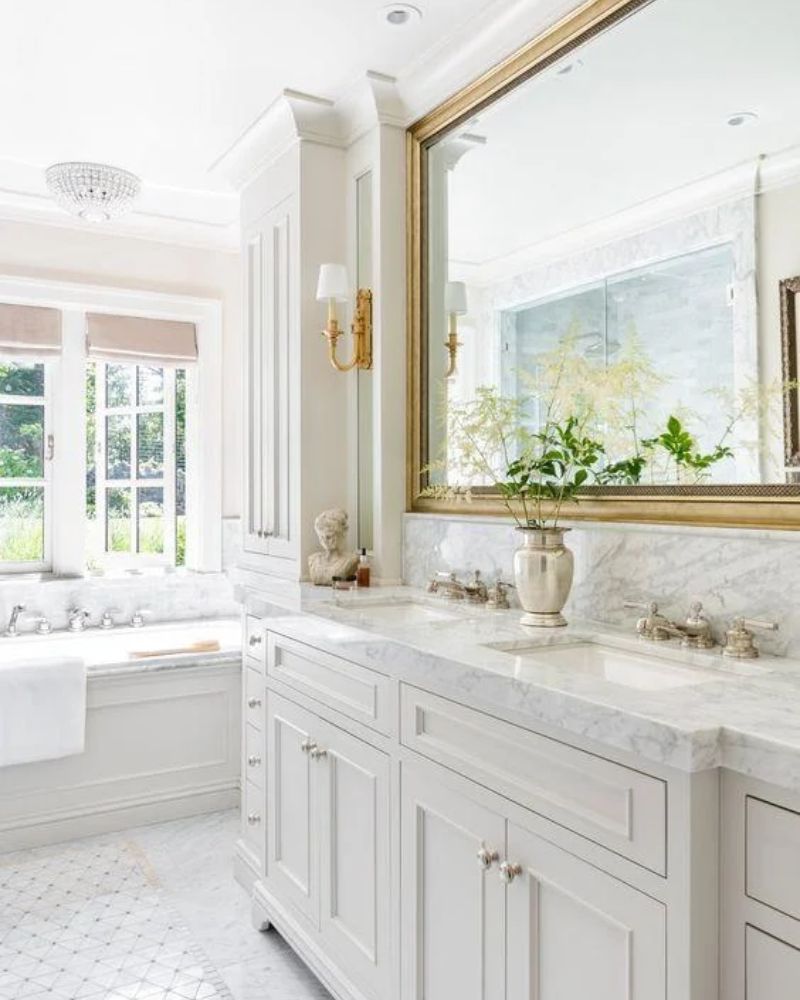
If privacy is a concern, opt for frosted glass, natural woven shades, or shutters that allow light in while maintaining seclusion. Skylights are another excellent option for bathrooms where wall windows aren’t feasible—they provide dramatic natural light from above.
Even with limited natural light, you can enhance what you have. Keep window treatments minimal and light-colored, position mirrors to reflect available light, and layer your artificial lighting to create a bright, welcoming atmosphere throughout the day.
10. Mixed Metal Finishes
Gone are the days of matching every metal finish in your bathroom. Today’s coastal bathrooms embrace mixed metals, creating visual interest and a more collected, custom look.
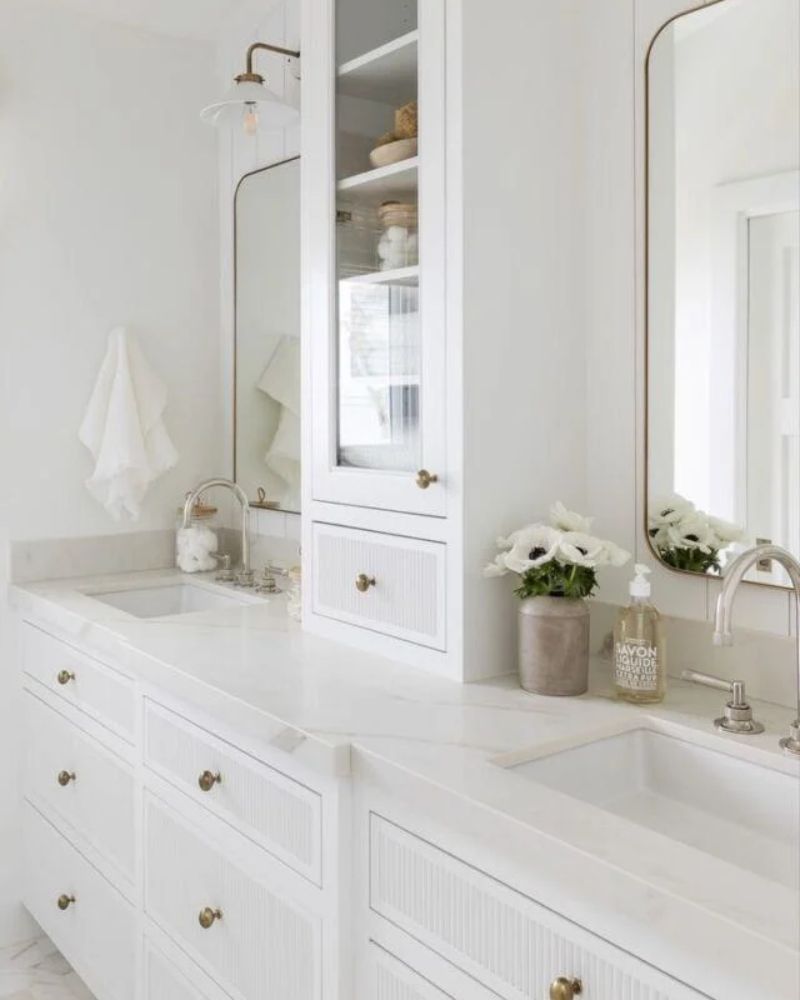
The key to successful metal mixing is balancing warm and cool tones. Pair warm brass or gold fixtures with cool chrome or polished nickel, and consider adding black as a neutral accent to ground your mix. For example, brass mirrors and sconces look stunning with polished nickel faucets and black cabinet pulls.
Don’t overthink it—aim for two to three different metal finishes rather than trying to incorporate every option. The goal is intentional variety, not chaos. When in doubt, stick to finishes with a similar sheen (all matte or all polished) to maintain cohesion.
Remember that coastal style is inherently flexible. You don’t need to incorporate every element to achieve the look. Start with the basics—warm white walls, natural materials, and good lighting—then layer in the details that speak to your personal style.