
Love the look of a Japandi bathroom and want to add this aesthetic to your home? You need to see our list of Japandi interiors that will fill your home with beautiful, earthy vibes!
Very ‘Zen’ Japandi Bathrooms We’re Loving
If you ask us, Japandi interiors bring together the best of Japanese minimalism and Scandinavian warmth, creating spaces that are both calming and inviting – which is exactly what you want in a bathroom! Featuring clean lines, neutral palettes, natural materials, and uncluttered spaces, a Japandi bathroom is the perfect retreat from the chaos of everyday life.
If you want to create a Japandi bathroom and need ideas, our curated list of Japandi interiors will inspire you and help you create a beautiful, zen-like room. So, keep reading to discover our favorite ways to transform your bathroom into a space that’s simple, earthy, and serene.
soft earth tones
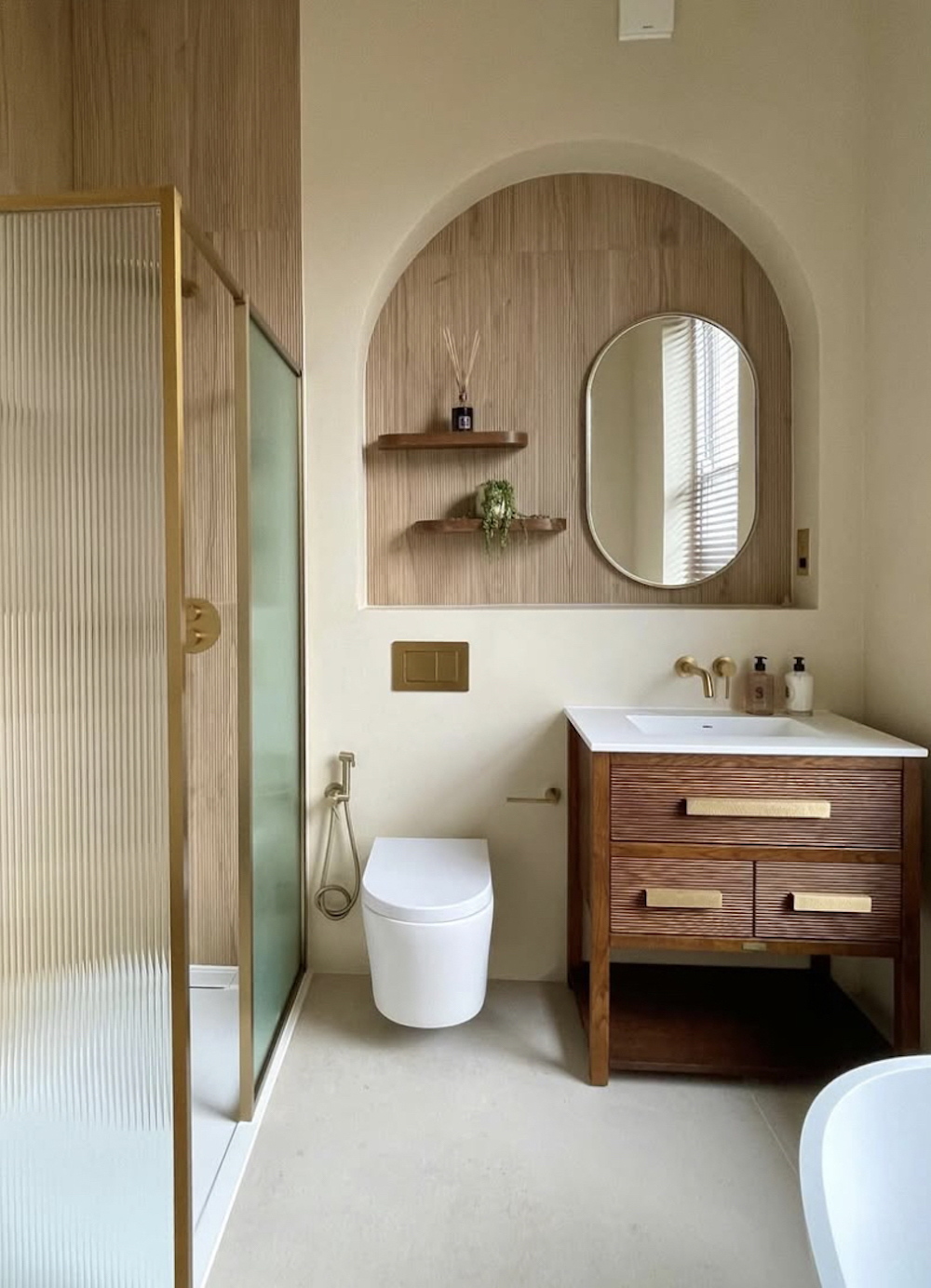
Earthy hues like soft green, cream, and beige are key elements in both Japanese and Scandinavian design. This palette creates a calming environment that’s light and airy and brings the beautiful colors of nature inside.
We recommend pairing these light tones with a pop of dark wood and gold to break up the colors and add a layer of interest.
nature-inspired patterns
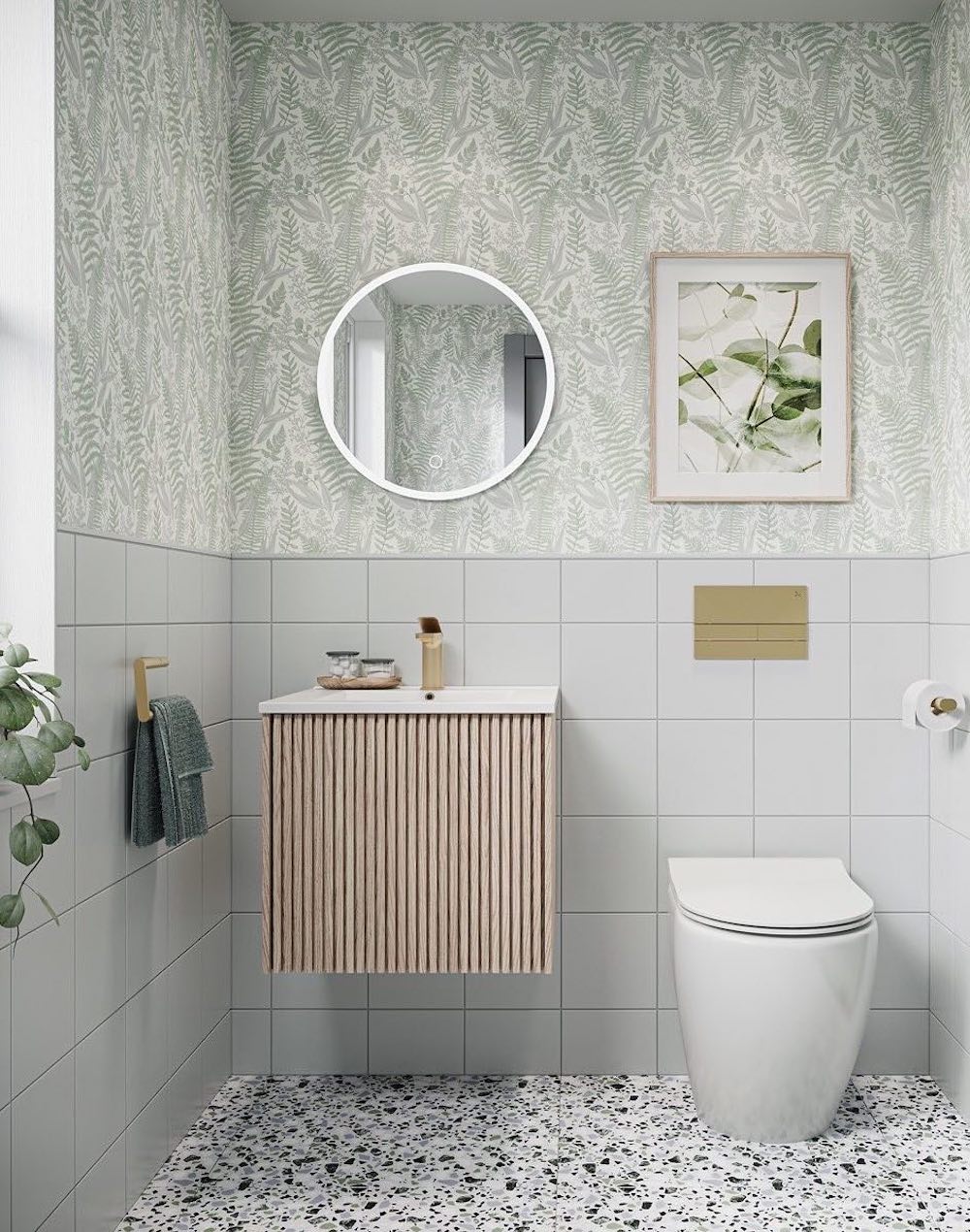
Patterns inspired by nature, such as leaves, flowers, or waves, add interest without overwhelming the space. We adore the half wall of botanical wallpaper above, giving the space a pop of color and elegant style.
textured features
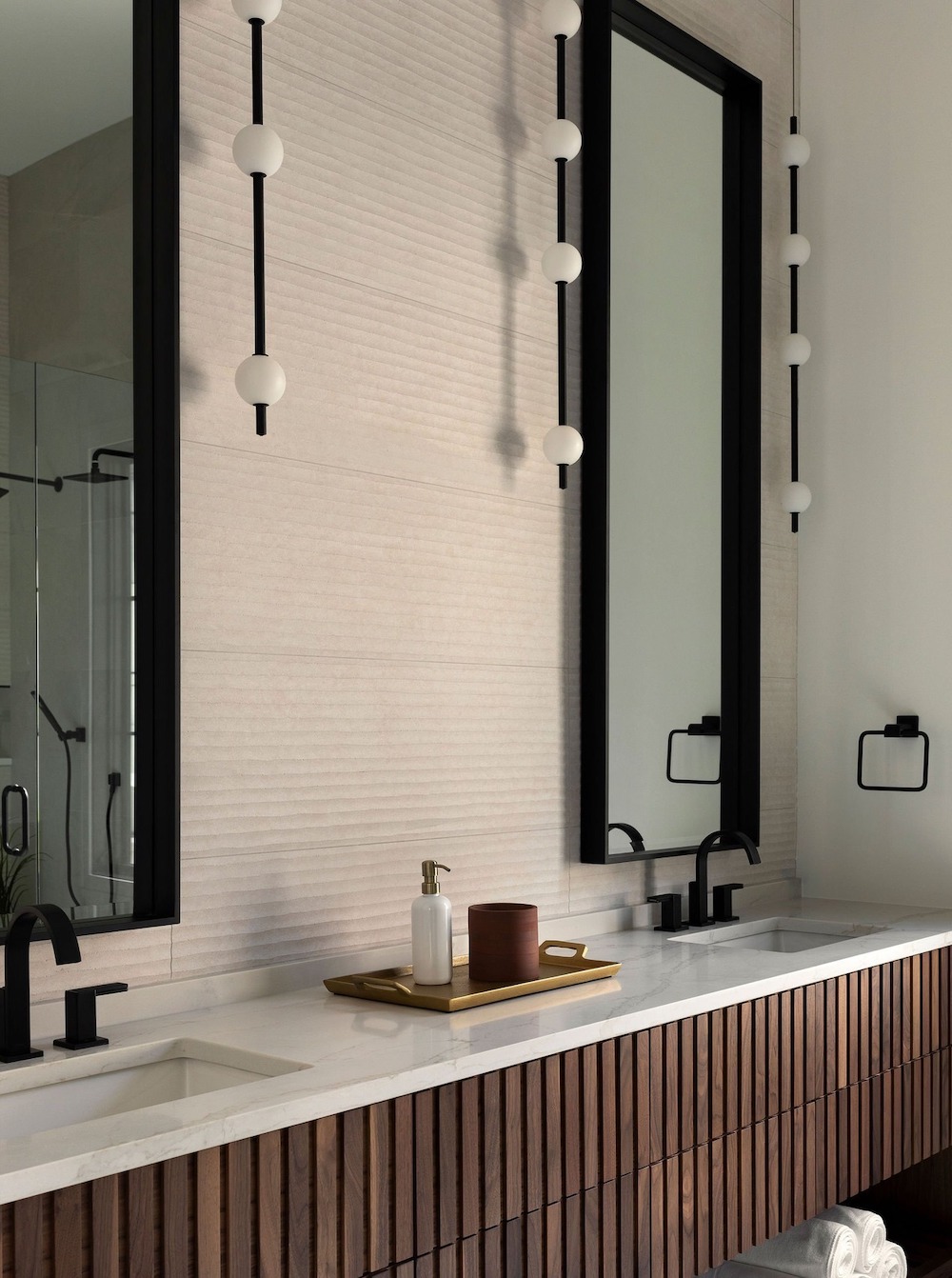
Add texture through materials like wood, marble, and stone to bring depth and warmth to the bathroom. These elements draw the natural beauty and craftsmanship of Japandi design into the space.
You can opt for sleek or rugged textures, or a combination of the two, for a subtle yet beautiful contrast.
round silhouettes
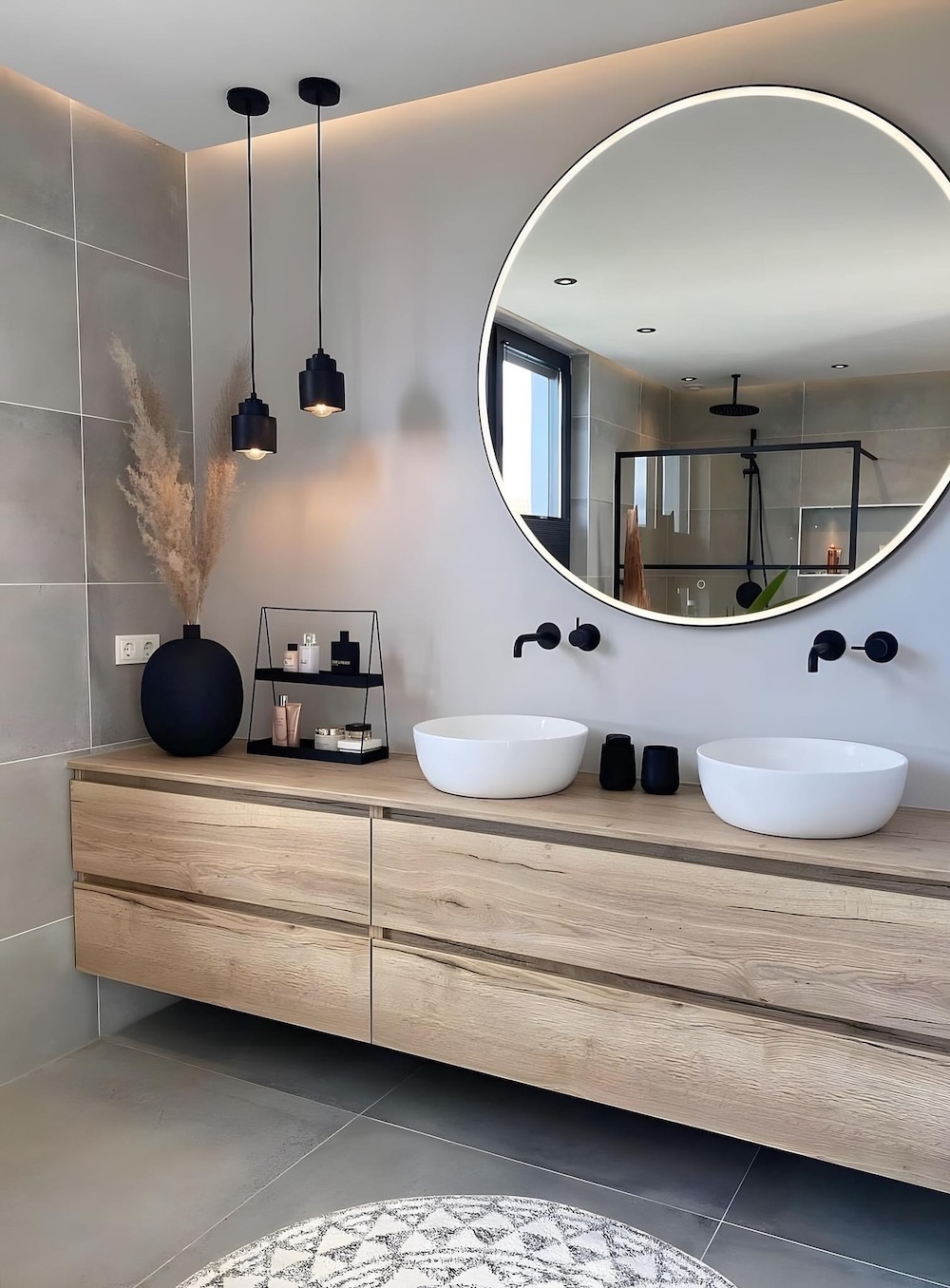
Round silhouettes have a way of softening the aesthetic of a room, giving the space a subtle flow. We love anything with curved lines (mirrors, vases, sink bowls, etc.), and they’re also perfect for adding simple contrast and balance to a space with sharp, angular lines – like the bathroom.
Negative Space
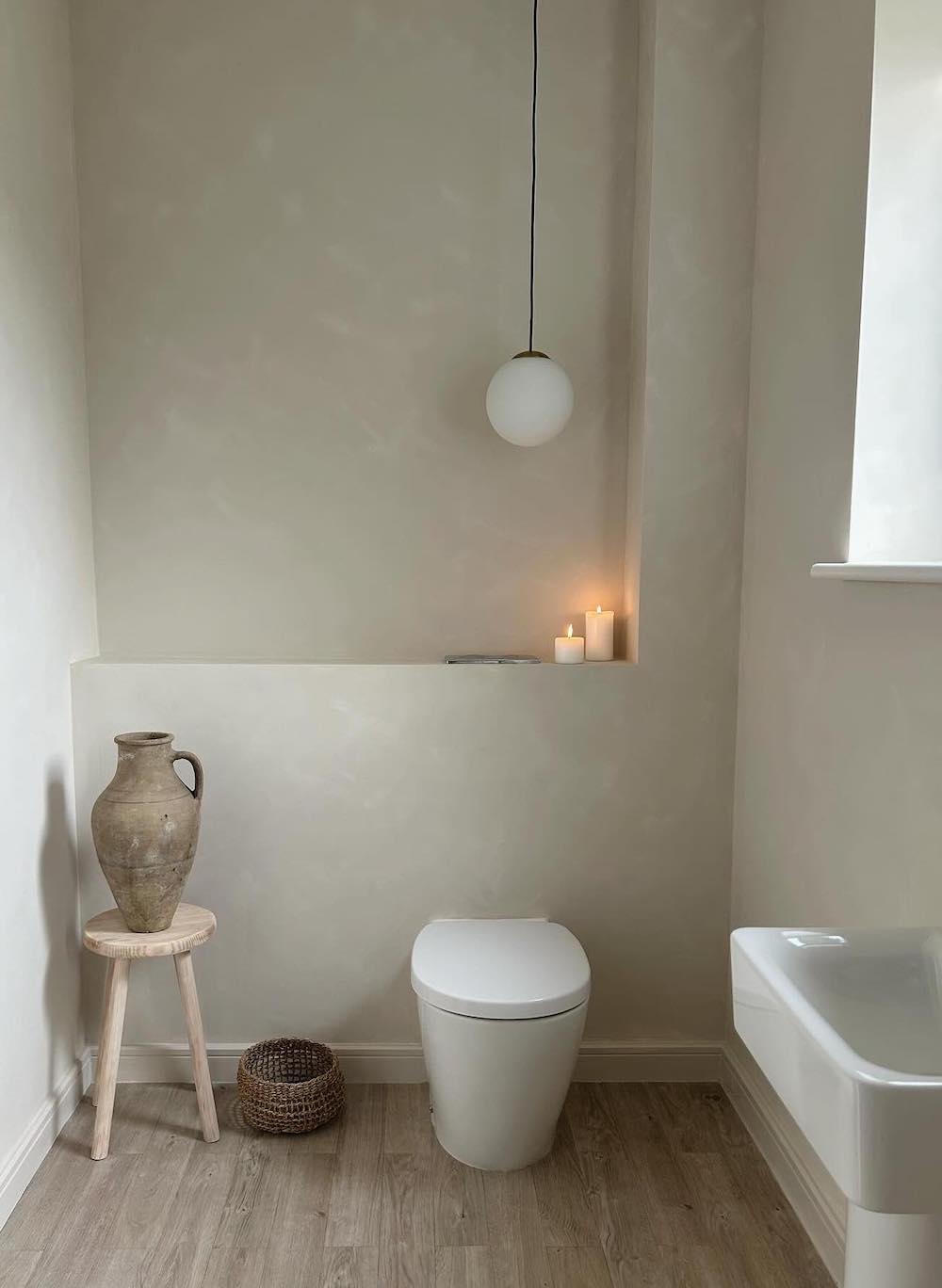
Japanese interiors feature intentional negative space, creating large, empty spaces in rooms to add depth and balance. You can incorporate this into a minimalist room, leaving spaces open to maintain an authentic Japanese aesthetic.
We suggest pairing negative space with features and decor that add subtle texture and warmth, such as the limewashed walls and handmade pieces.
simple palette
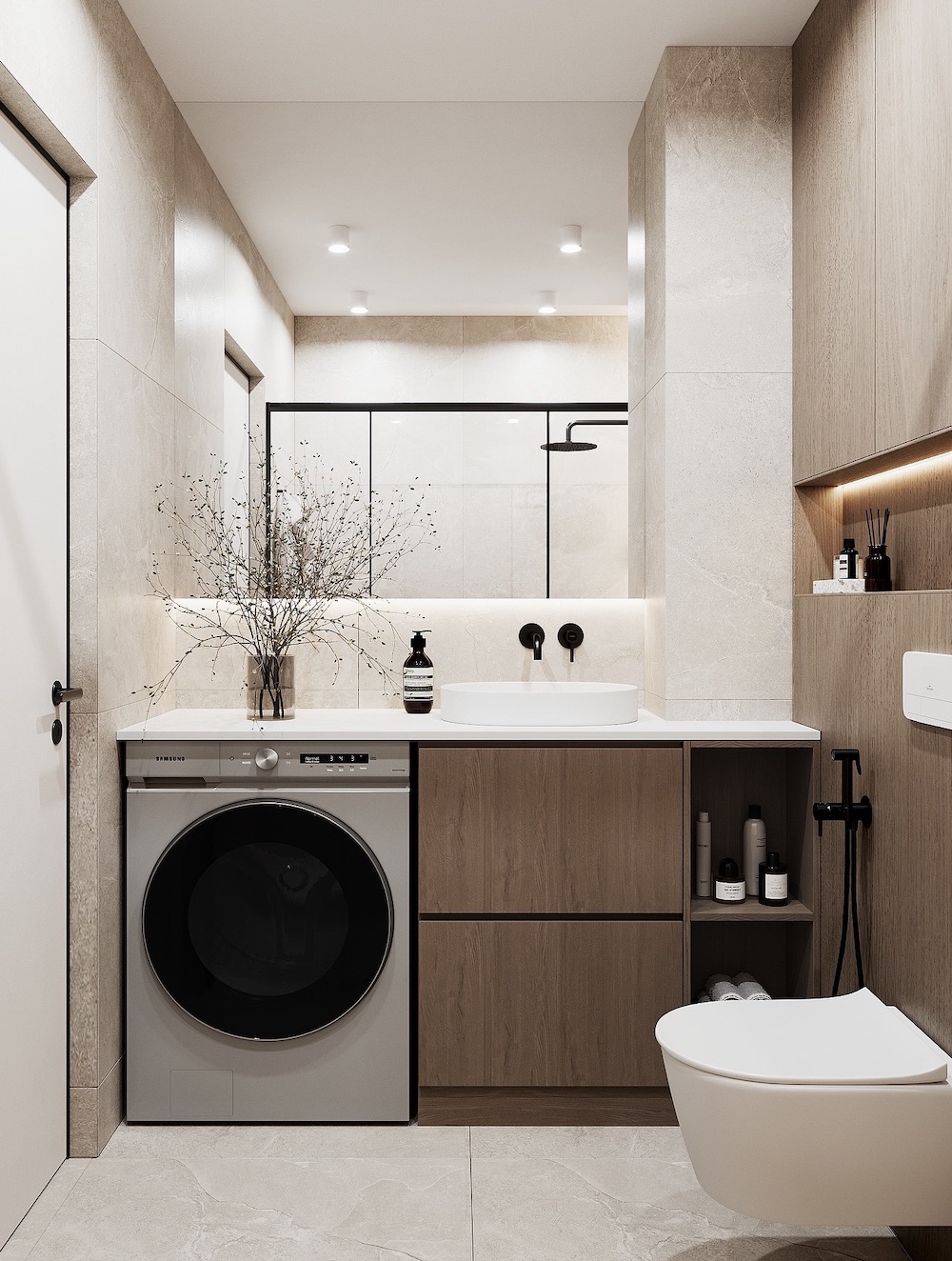
A simple, neutral palette gives the bathroom a serene and balanced atmosphere. We love how this color scheme is soft and light, adding warmth to the space. These colors create a gorgeous backdrop for decor and finishing touches, and the timeless appeal means the aesthetic can evolve effortlessly with needing a full remodel.
thoughtful storage
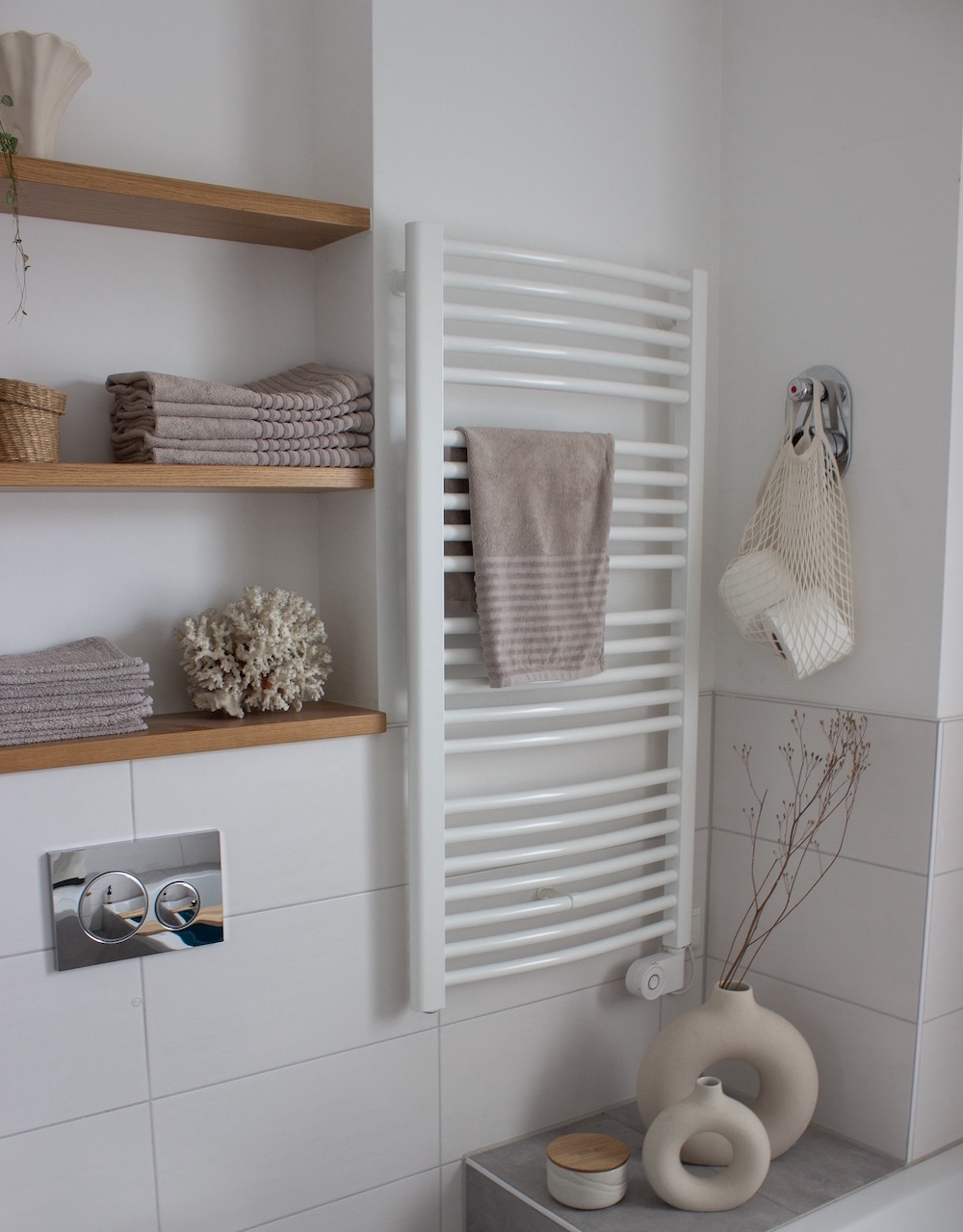
Incorporating clever storage keeps the space organized and clutter-free, which is essential for maintaining the beautiful yet functional aesthetic of Japandi interiors.
We love the vertical towel rack, which provides space to hang towels and decor, adding clean lines and contrasting textures without taking up counter space. This is also one of the best ways to create a Japandi vibe in a small bathroom.
Blend Japandi With Classic Character
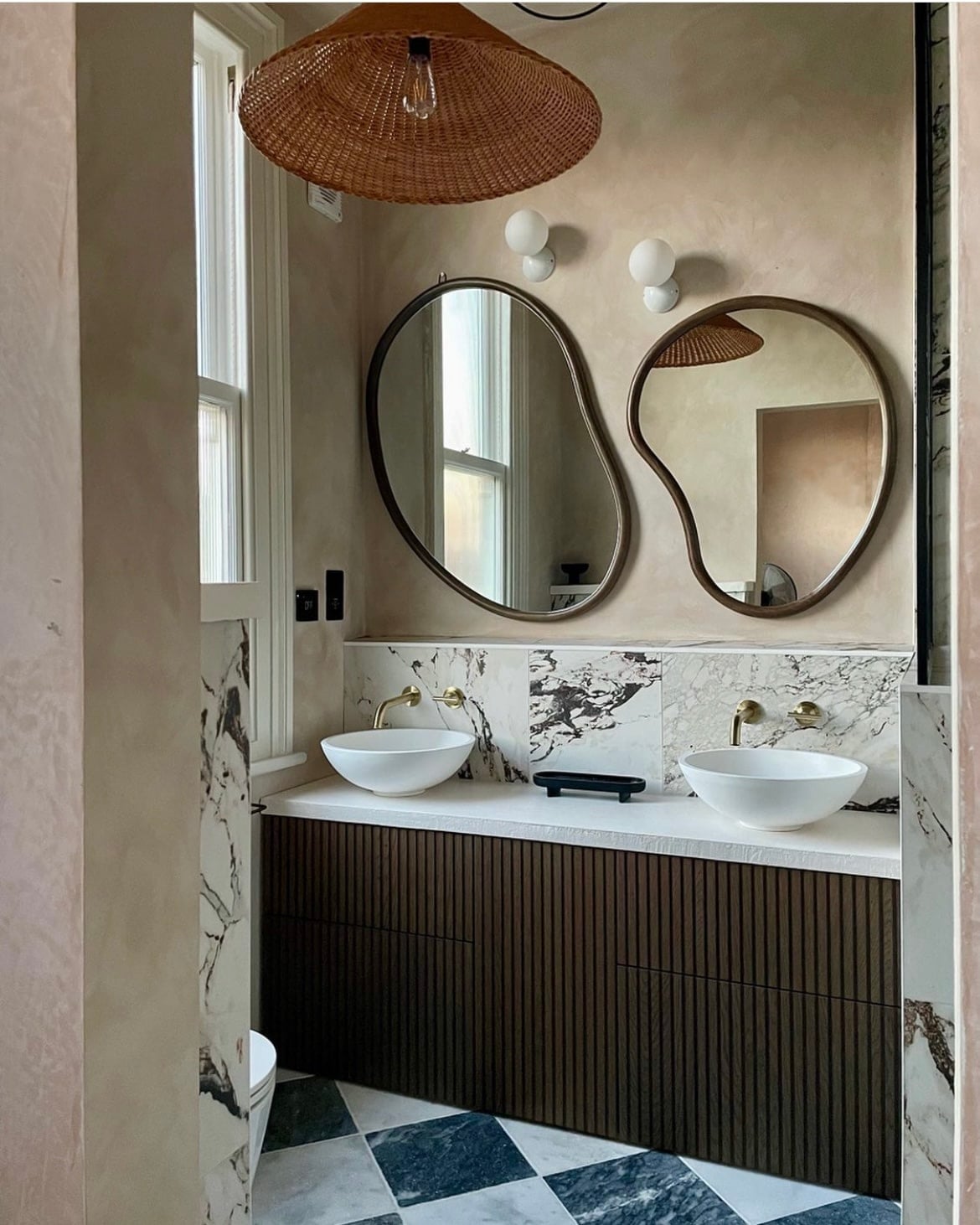
The calming Japandi palette stays intact, but the black-and-white flooring introduces a more heritage-inspired touch reminiscent of Victorian interiors. That contrast between old-world charm and minimalist styling gives the room a fresh, unexpected edge.
Add Depth With a Green Feature Wall
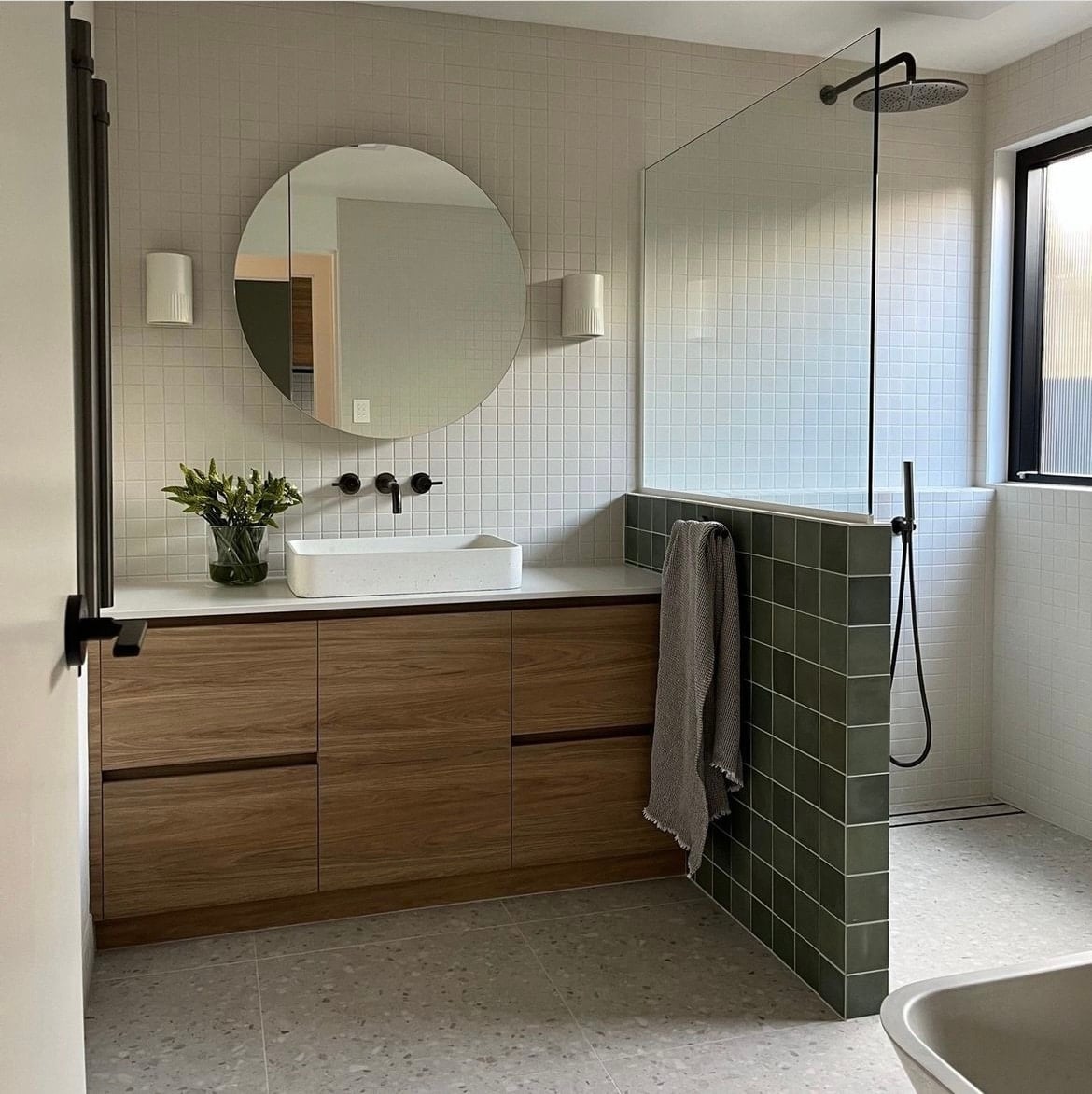
Soft neutrals are central to Japandi interiors, but subtle earthy colors can keep the space from feeling flat. A deep green tiled wall instantly adds richness while still feeling calm and organic. Whether used in the shower or as a divider wall, it introduces a natural focal point without overwhelming the design’s simplicity.
Use Terrazzo For Soft Contrast
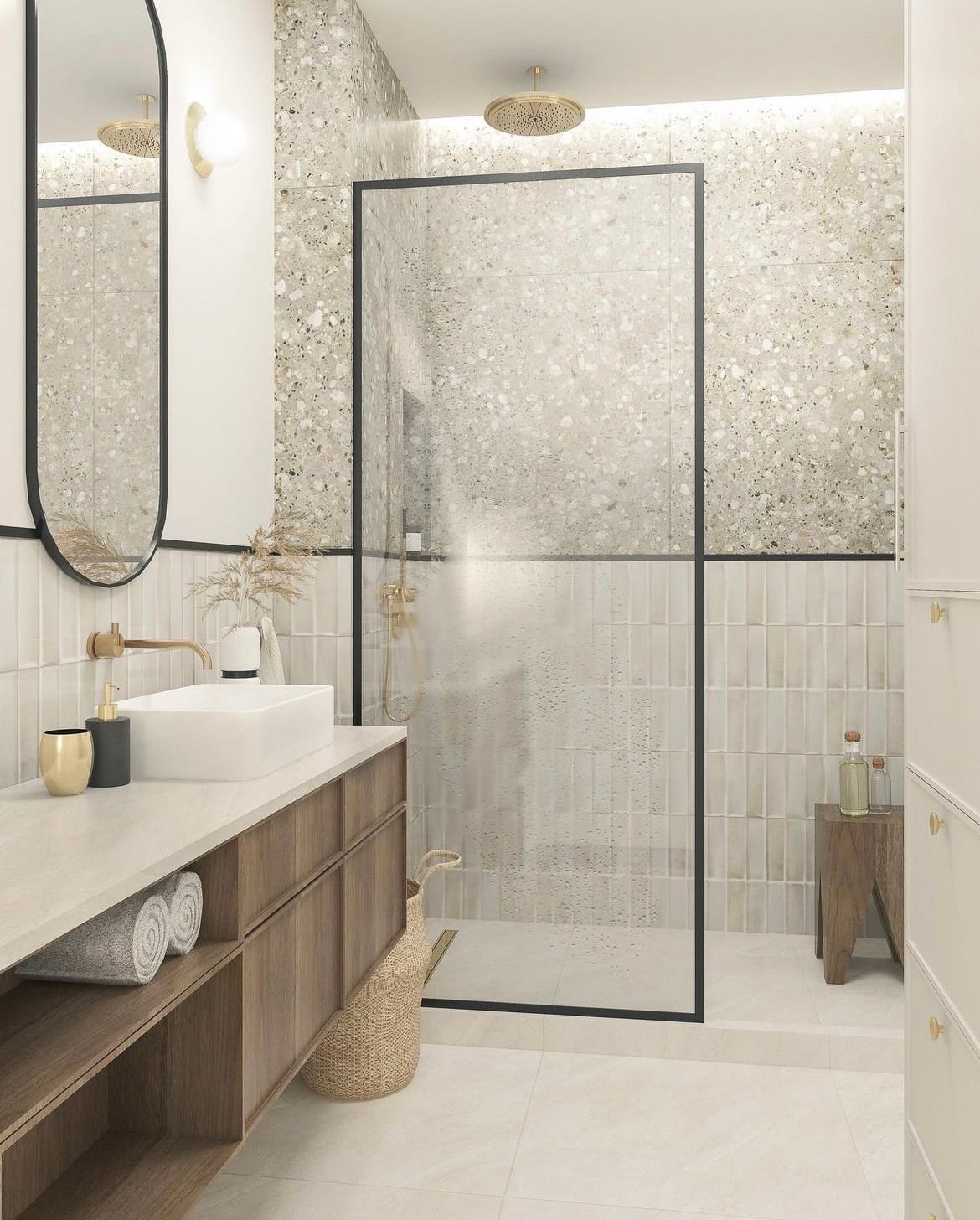
If bold black accents feel too harsh, terrazzo is a more understated way to introduce texture and definition.
Grey terrazzo tiles work beautifully on floors or walls, adding visual interest without stealing attention from the overall calm aesthetic. Pair them with warm whites and pale neutrals to maintain that airy Japandi atmosphere.
Keep The Palette Neutral With Dark Details
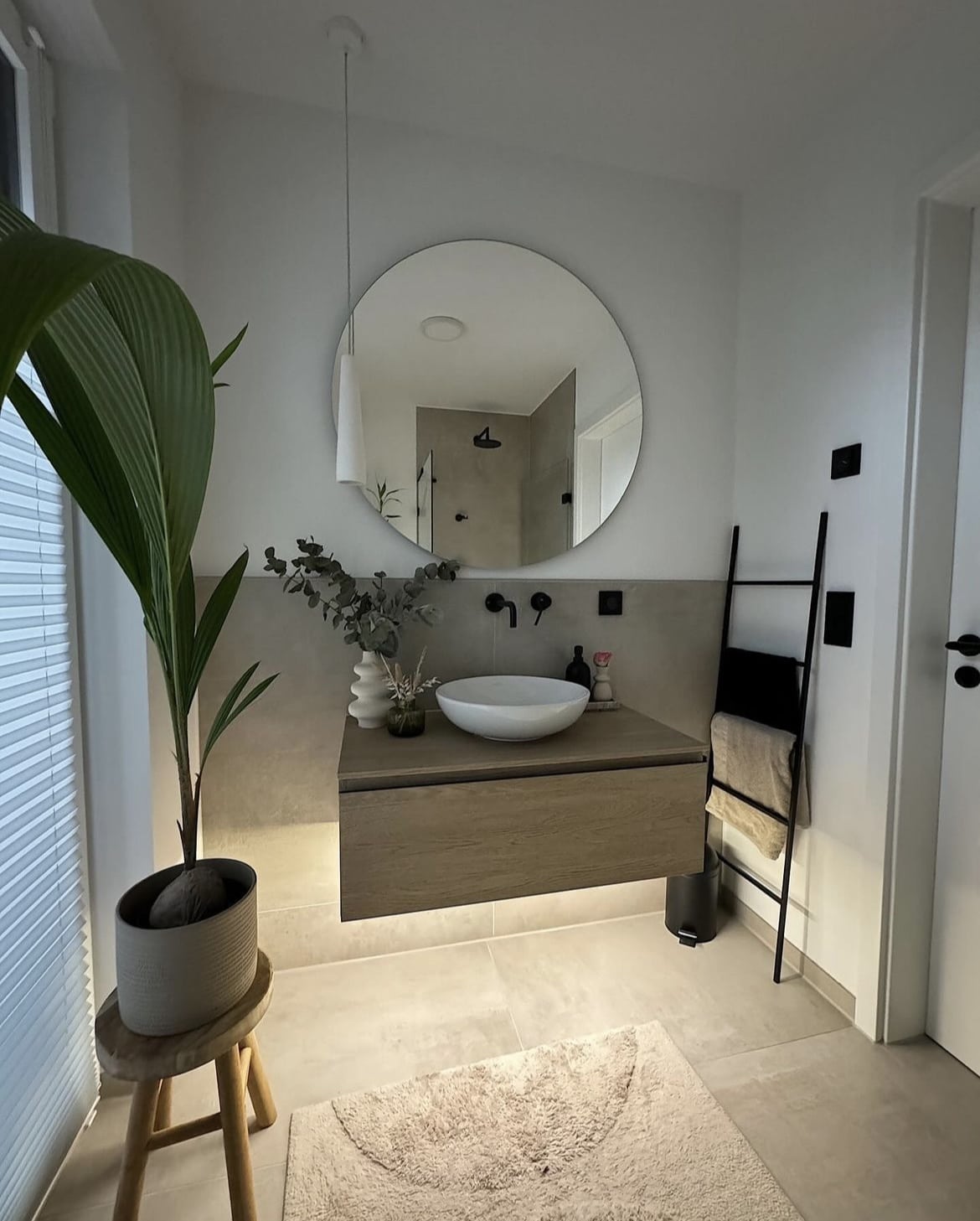
A Japandi bathroom starts with a soft, muted base. Think warm whites, sandy creams, pale taupes, and light greys.
To keep the room from feeling washed out, layer in black accents through mirrors, faucets, hardware, or lighting. These darker touches create balance and give the space a cleaner, more structured look.
Swap Black For Soft Grey
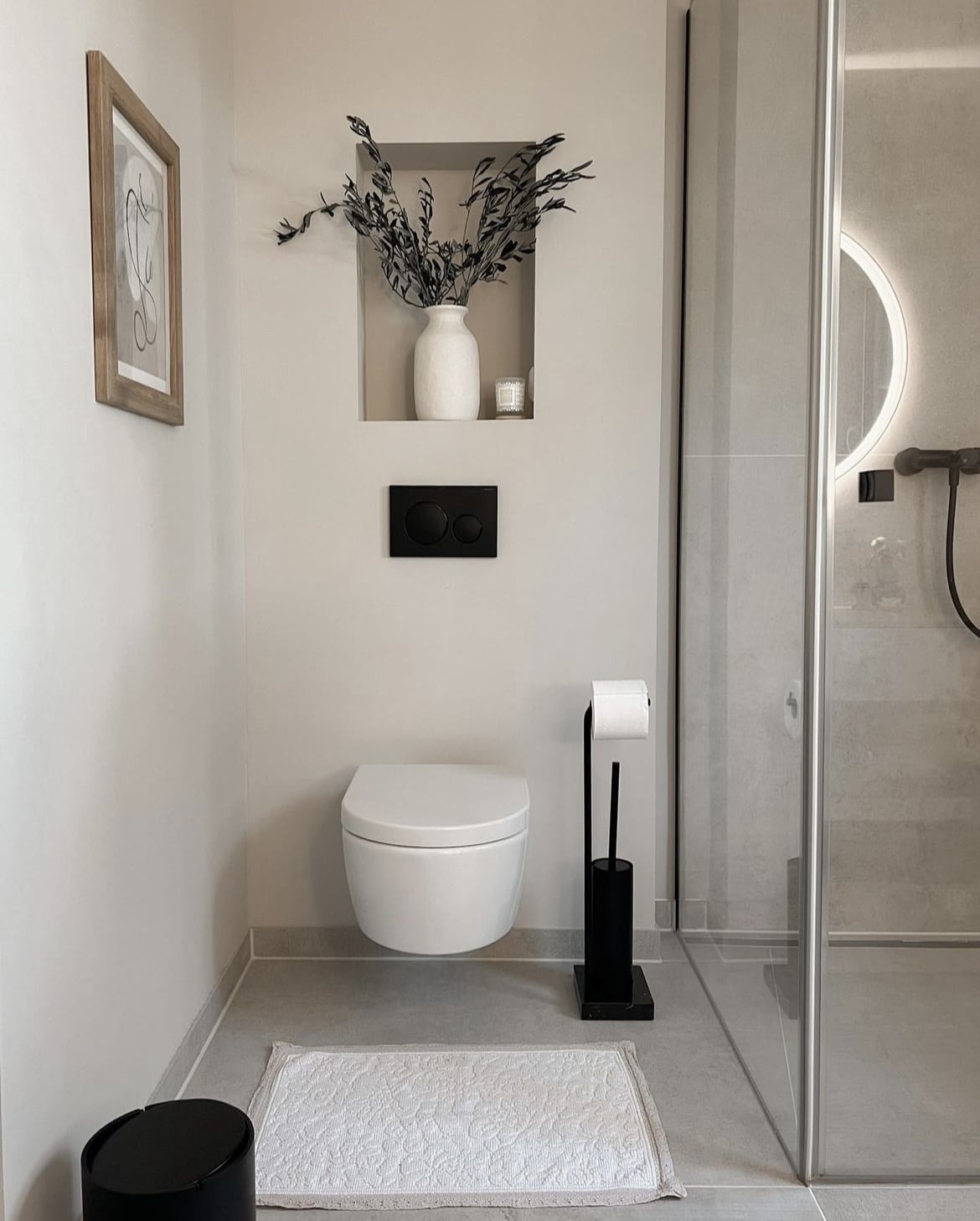
Not every Japandi bathroom needs a sharp contrast. Light grey tiles can anchor the space in a gentler, more calming way.
Using grey on the floors while keeping the walls bright naturally lifts the eye upward and helps the room feel larger. Warm cream shades work especially well here because they soften the overall look and avoid the sterile feel of pure white.
Bring In Organic Materials
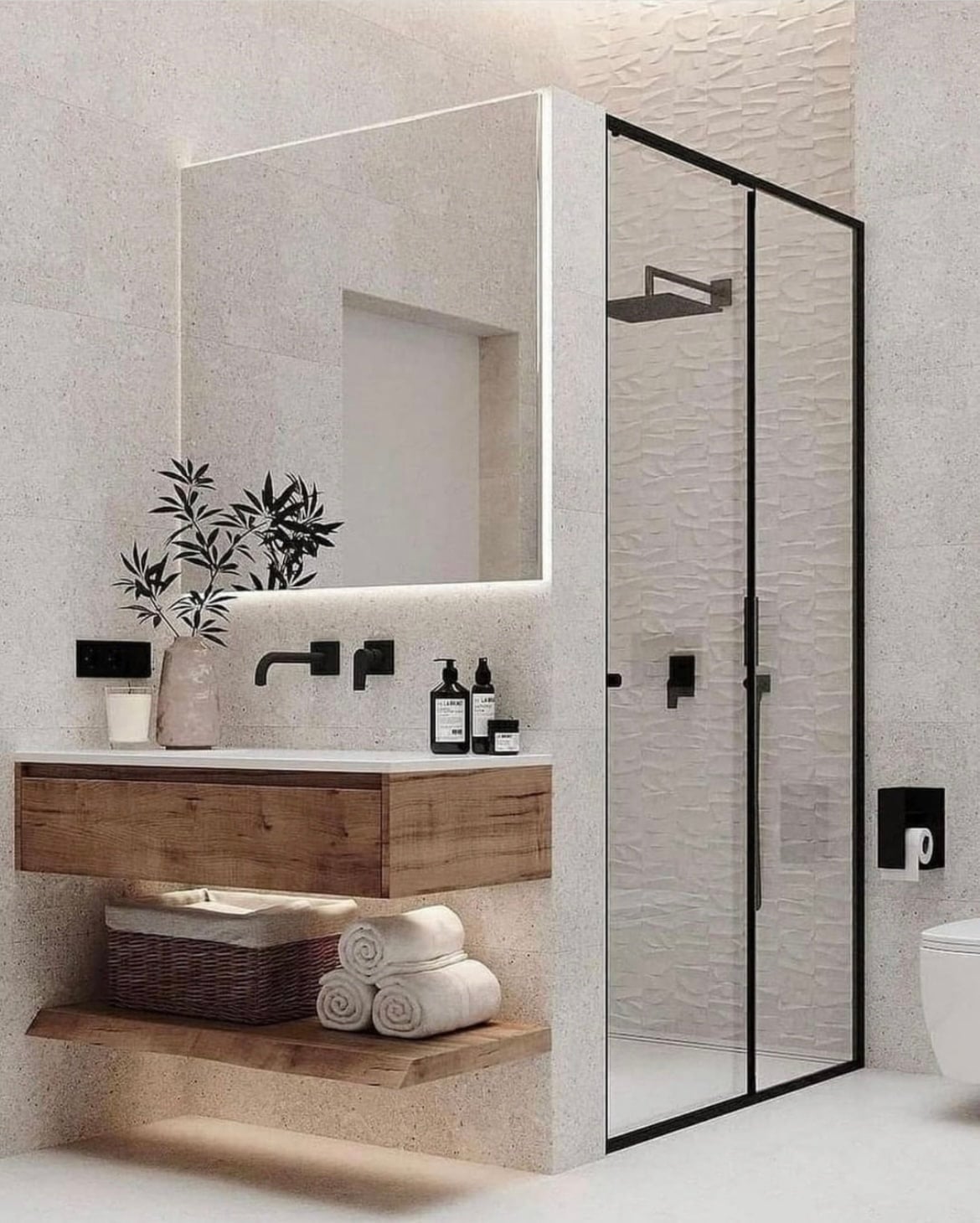
Natural textures are one of the defining elements of Japandi design. They help the room feel warm, grounded, and connected to nature.
Wood vanities are an easy starting point, but woven baskets, concrete finishes, seagrass accents, and subtle wicker details can also work beautifully. The key is balance, so the room stays refined rather than drifting into full boho territory.
Try Slatted Wood Paneling
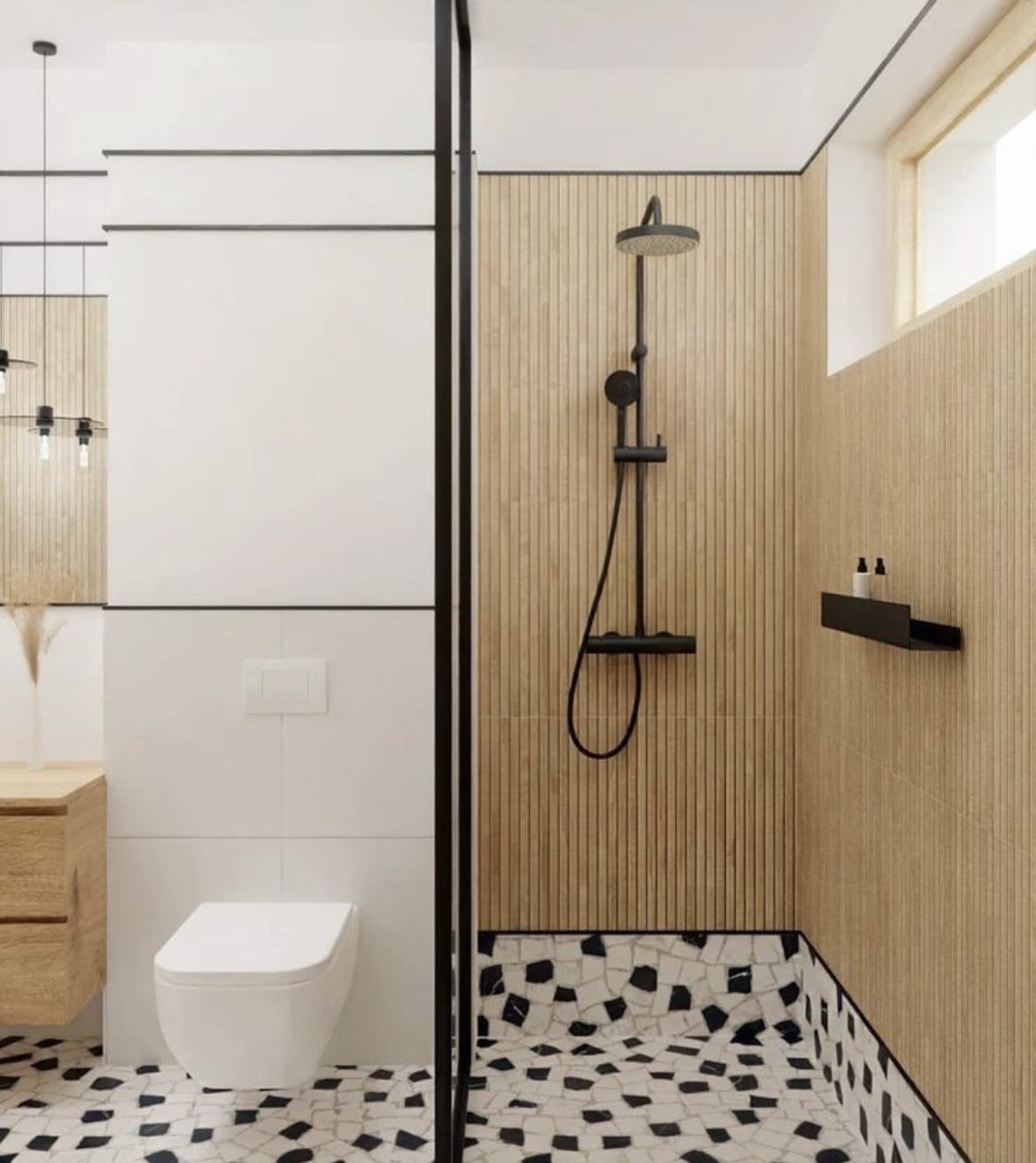
Wood slats instantly add warmth and texture while keeping the clean-lined simplicity Japandi is known for. Used inside a shower enclosure or behind a vanity wall, this type of paneling creates a beautiful architectural feature that still feels calm and understated.
Choose a Minimal Lighted Mirror
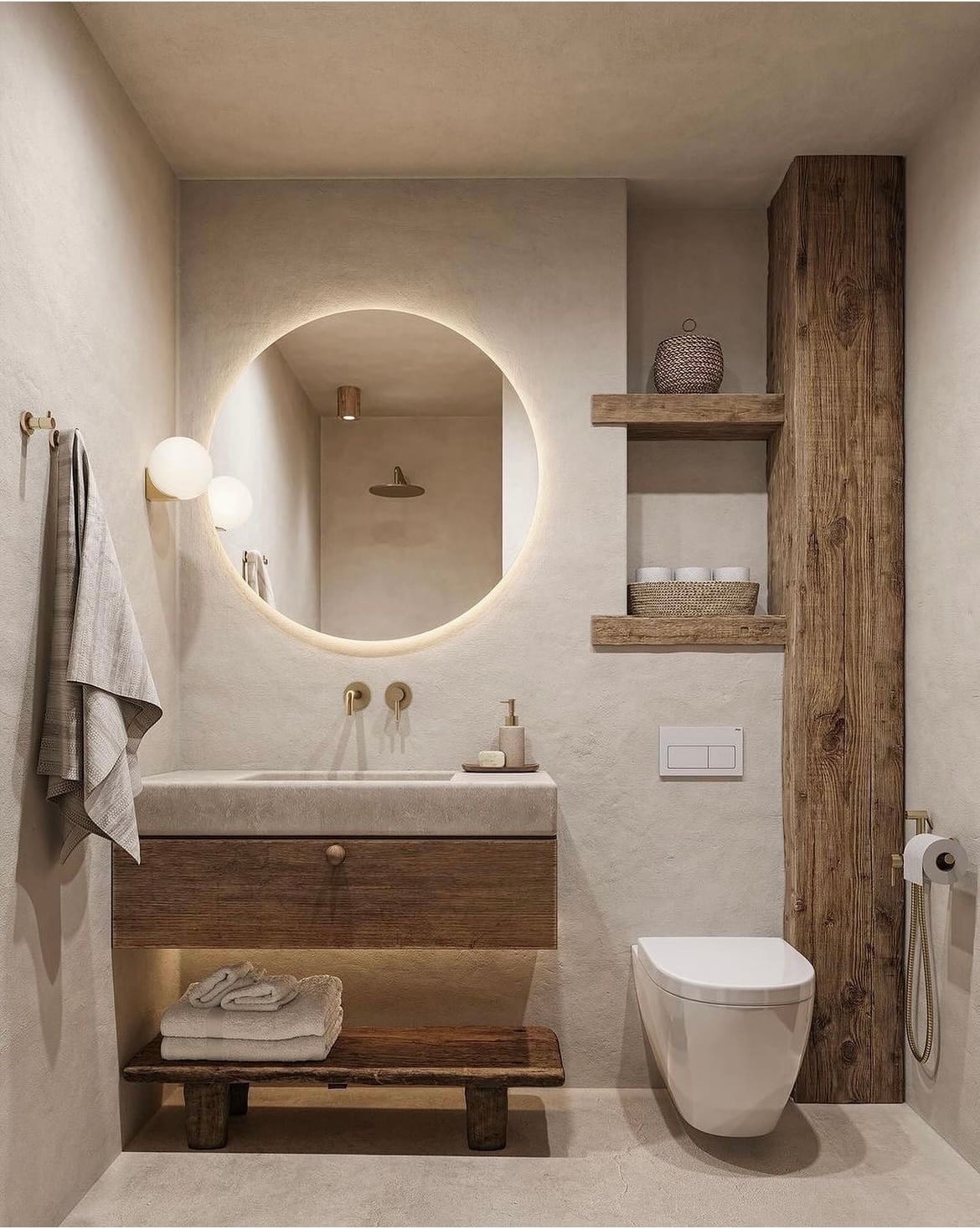
Japandi spaces thrive on simplicity, so overly decorative lighting can feel out of place. A sleek illuminated mirror keeps the design practical and uncluttered while still adding softness and ambiance. Rounded mirrors work especially well because they balance all the straight lines typically found throughout the room.
Let One Statement Piece Shine
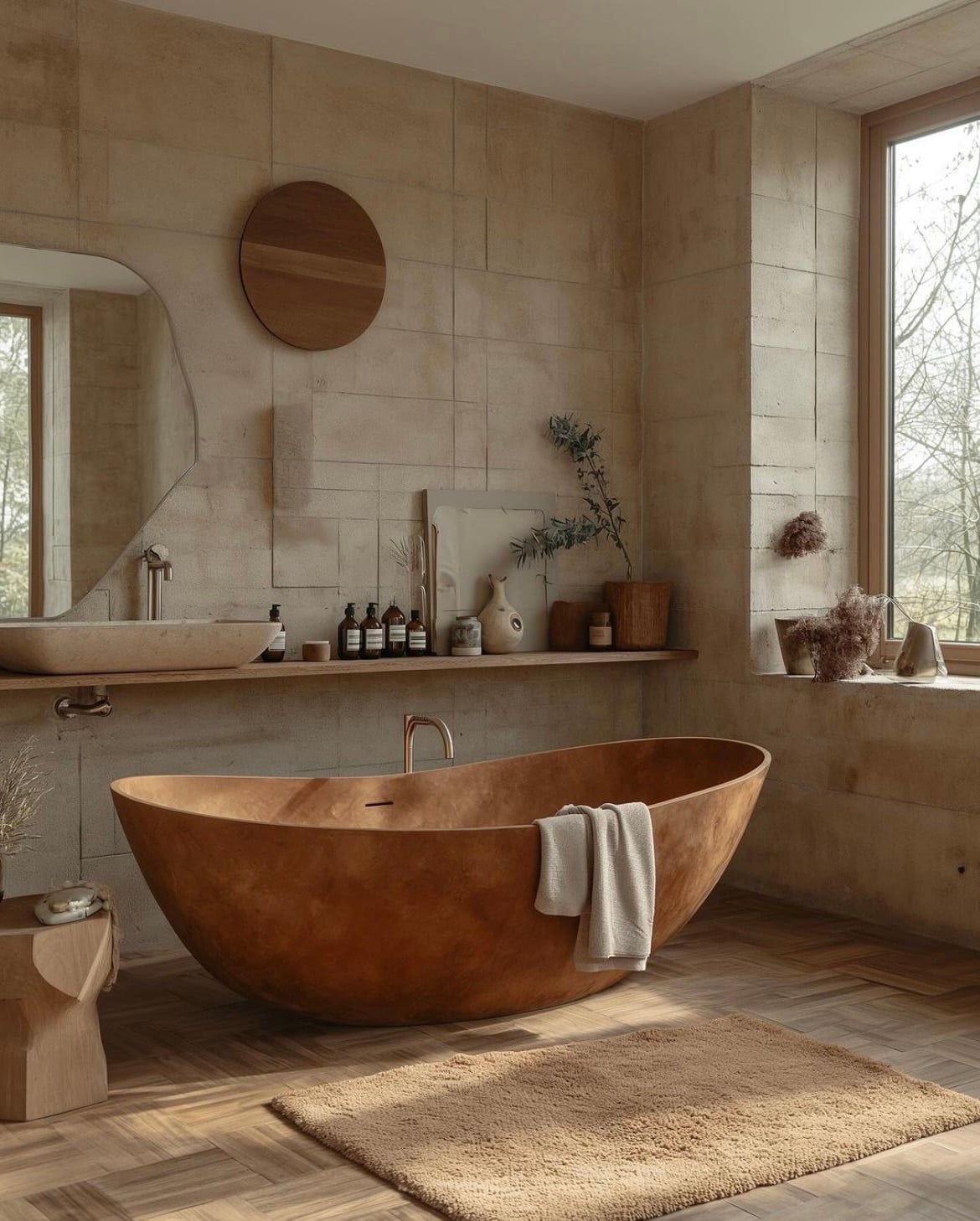
Large bathrooms don’t need to be filled with furniture or decor. Japandi styling is all about intentional restraint. Instead of adding more, focus on one standout feature, such as a sculptural bathtub. A striking tub can instantly elevate the room while still preserving that calm, open feeling the style is known for.
Tile From Floor To Ceiling
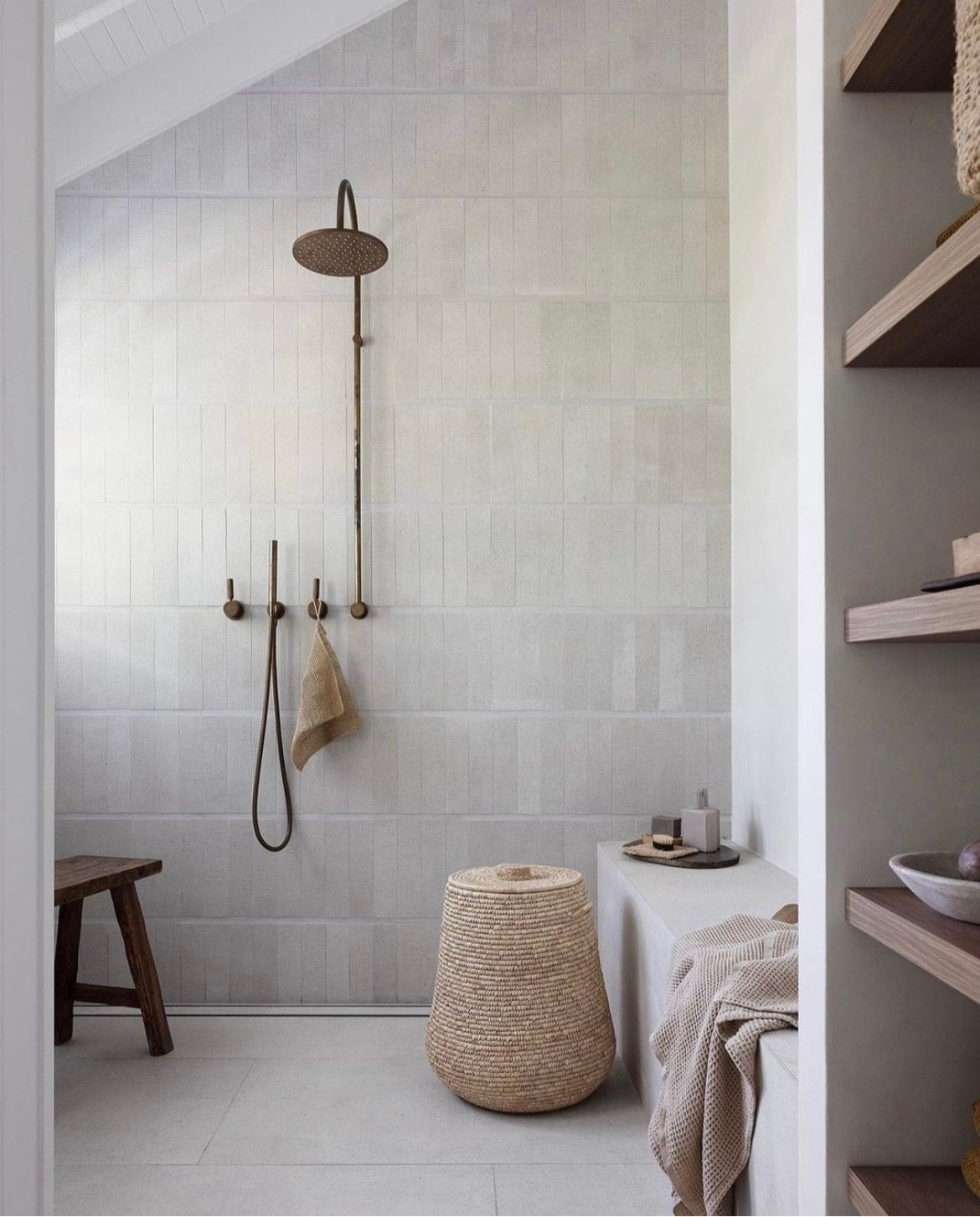
Continuing the same tile all the way up the walls creates a seamless, modern finish. This approach makes ceilings appear taller and helps the bathroom feel more expansive. Neutral-toned tiles keep the effect clean, minimal, and perfectly aligned with Japandi design principles.
Experiment With Darker Wood Tones
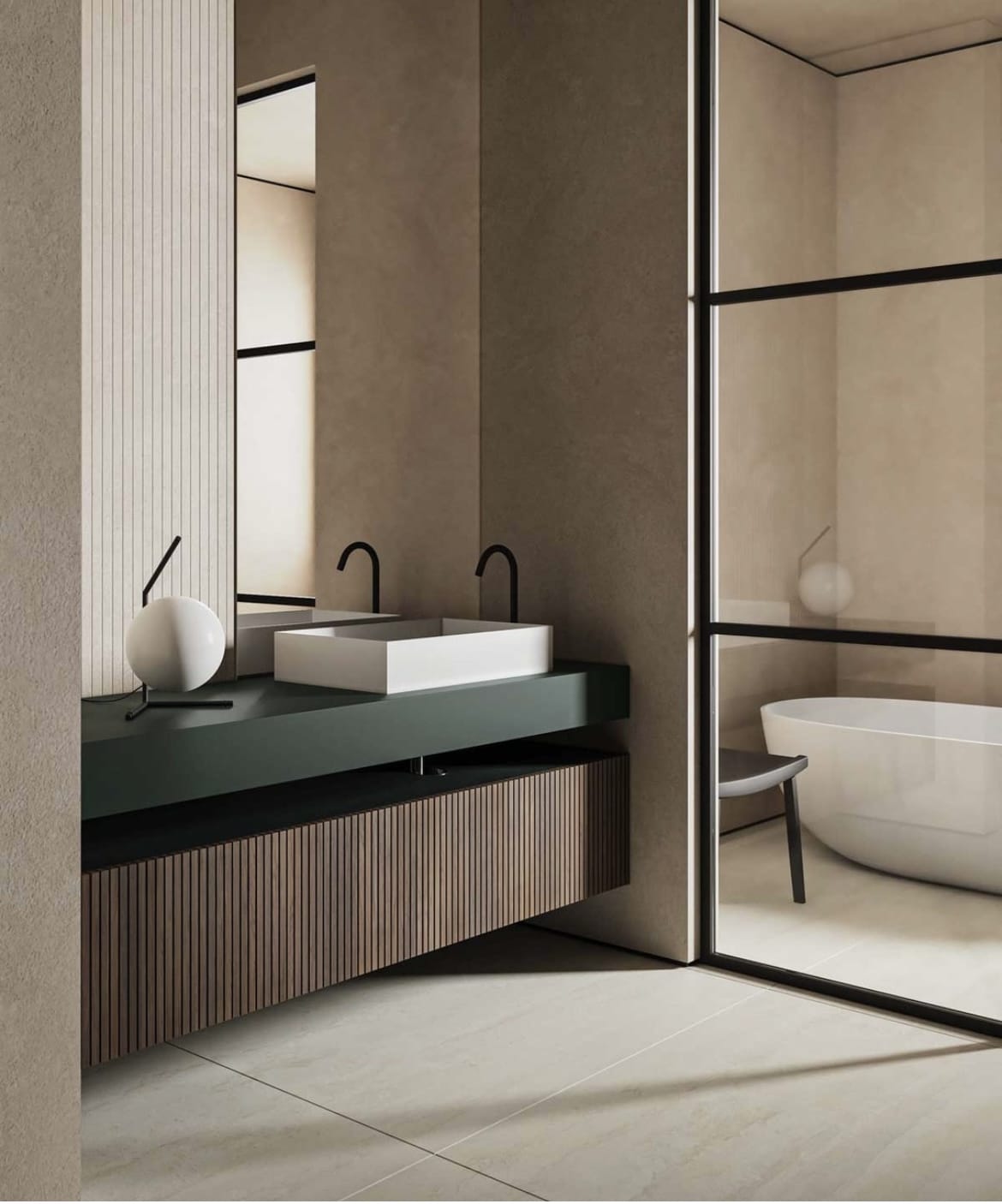
Light oak is common in Japandi interiors, but deeper woods can create a moodier, more grounded atmosphere. Dark walnut finishes bring richness and contrast while still maintaining warmth. Paired with matte black accents, the overall look feels sophisticated without losing its calming nature.
Mix Concrete And Wood
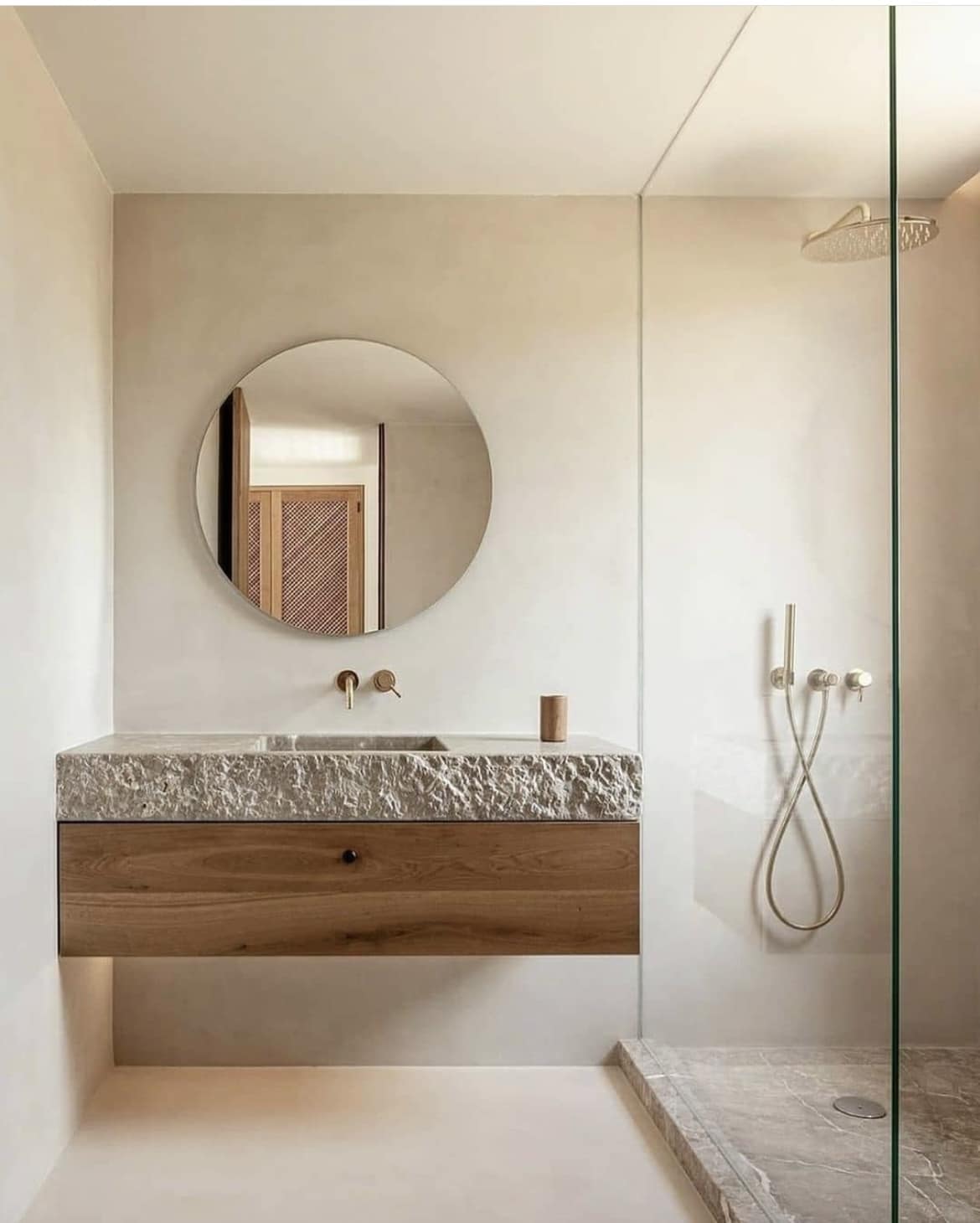
Combining raw textures creates a bathroom that feels earthy yet elevated. A concrete sink paired with a wooden vanity blends industrial and natural elements beautifully. Together, they create visual contrast while still feeling cohesive and calming.
Add Texture With Limewash Walls
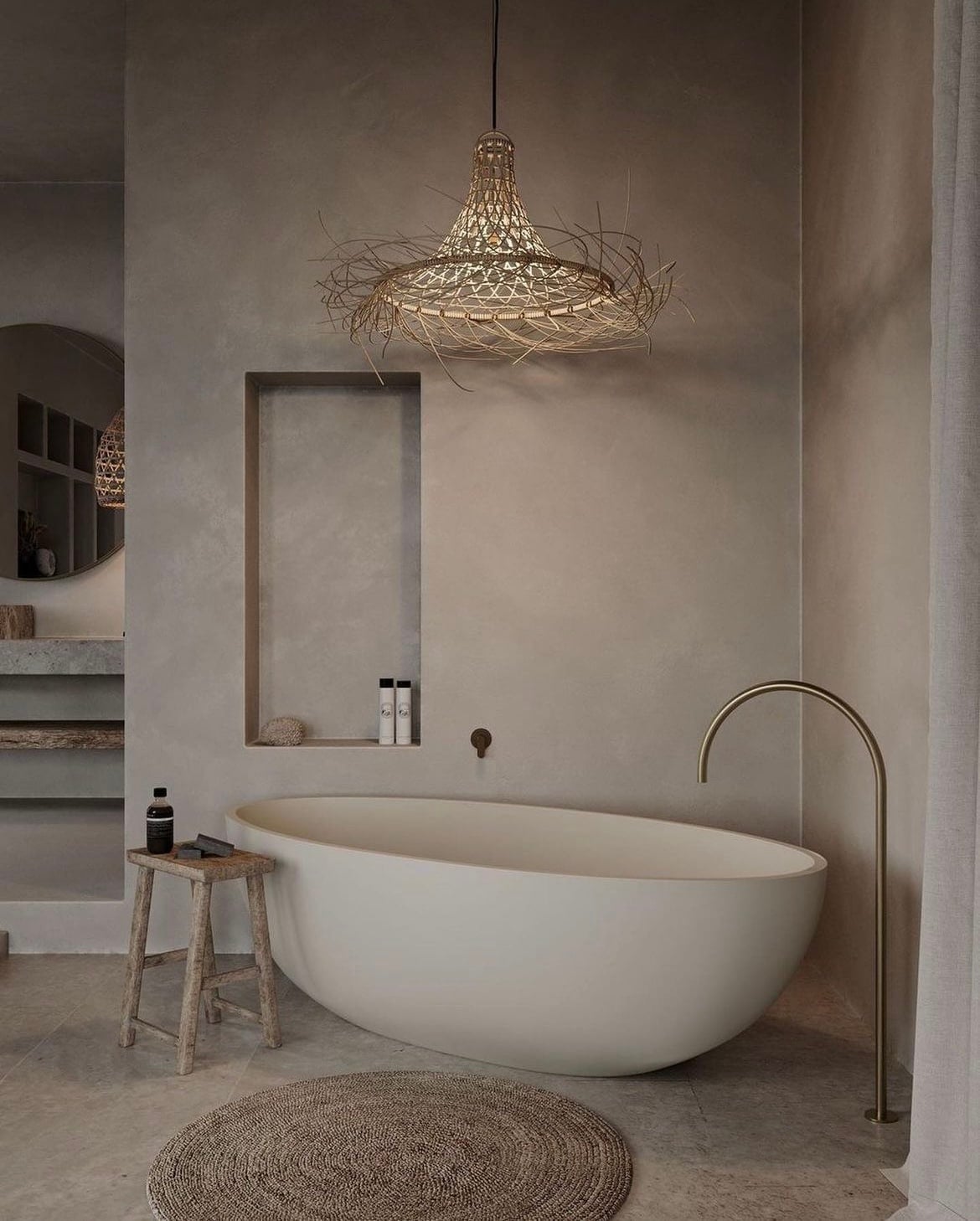
Flat painted walls can sometimes feel too plain in minimalist interiors. Limewash introduces movement and depth without relying on bold colors. Its soft, cloudy finish changes subtly throughout the day, depending on the lighting, making the bathroom feel layered and relaxed. Keep surrounding fixtures simple so the walls remain the focus.
Warm Up The Space With Pale Wood
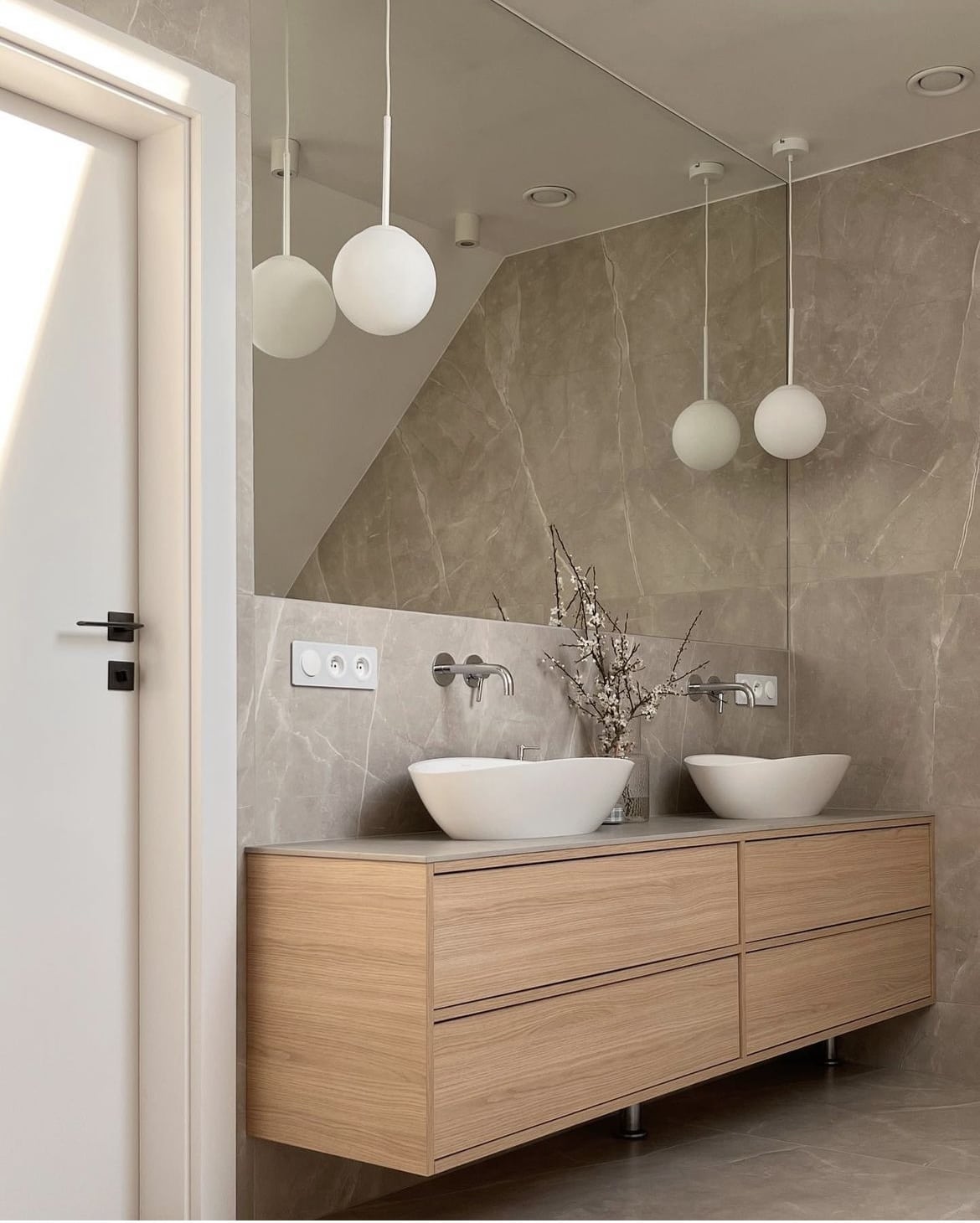
Soft wood tones are a hallmark of Japandi interiors because they instantly make neutral spaces feel warmer and more welcoming. Handleless wooden cabinetry keeps the look streamlined while adding natural texture and visual softness to the room.
Consider Handmade Zellige Tiles
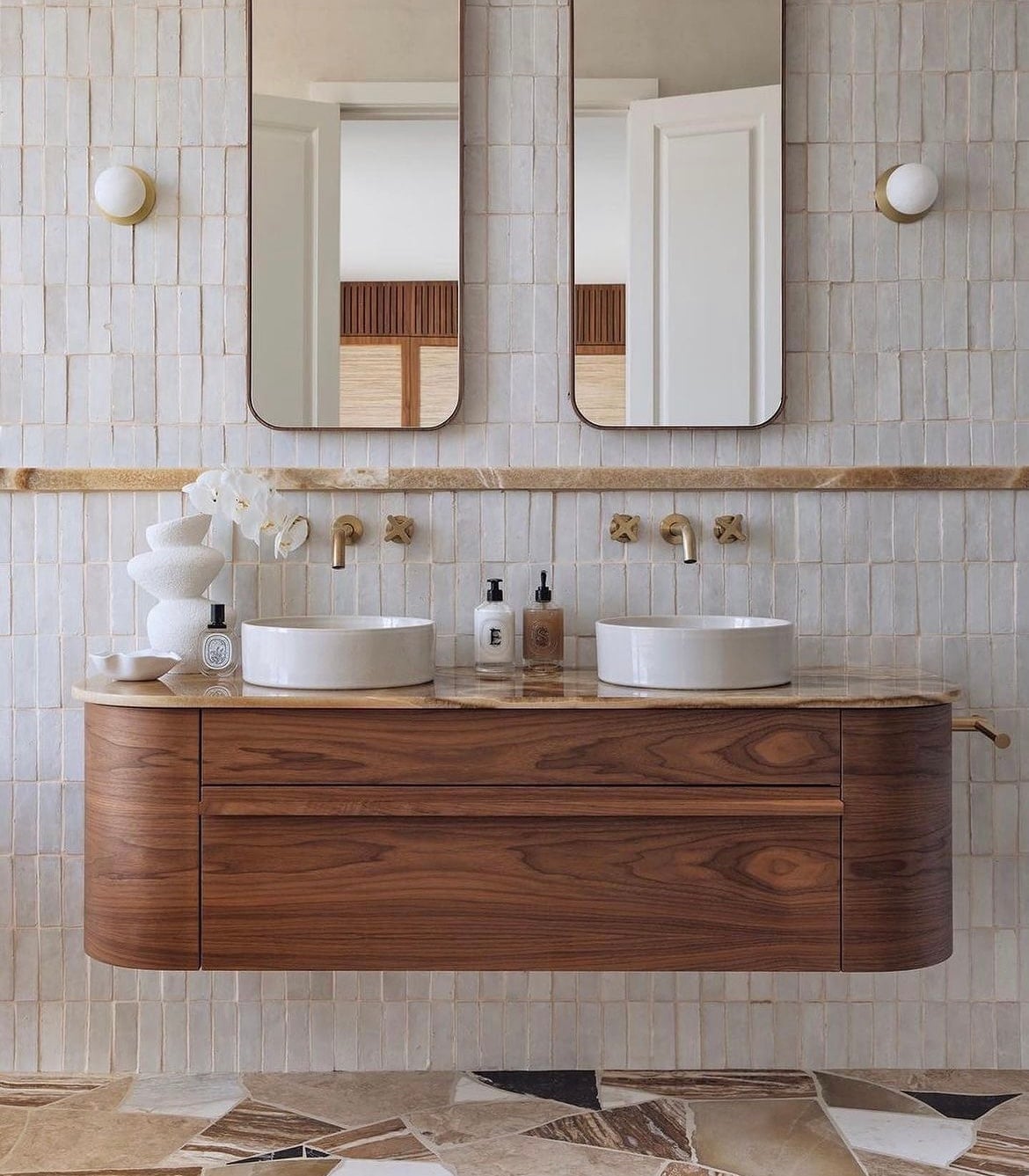
Zellige tiles bring character through their perfectly imperfect finish. Because each tile varies slightly in tone and texture, the overall effect feels artisanal and full of depth. They catch light beautifully and add subtle movement to even the simplest bathroom schemes.
Highlight an Arched Niche
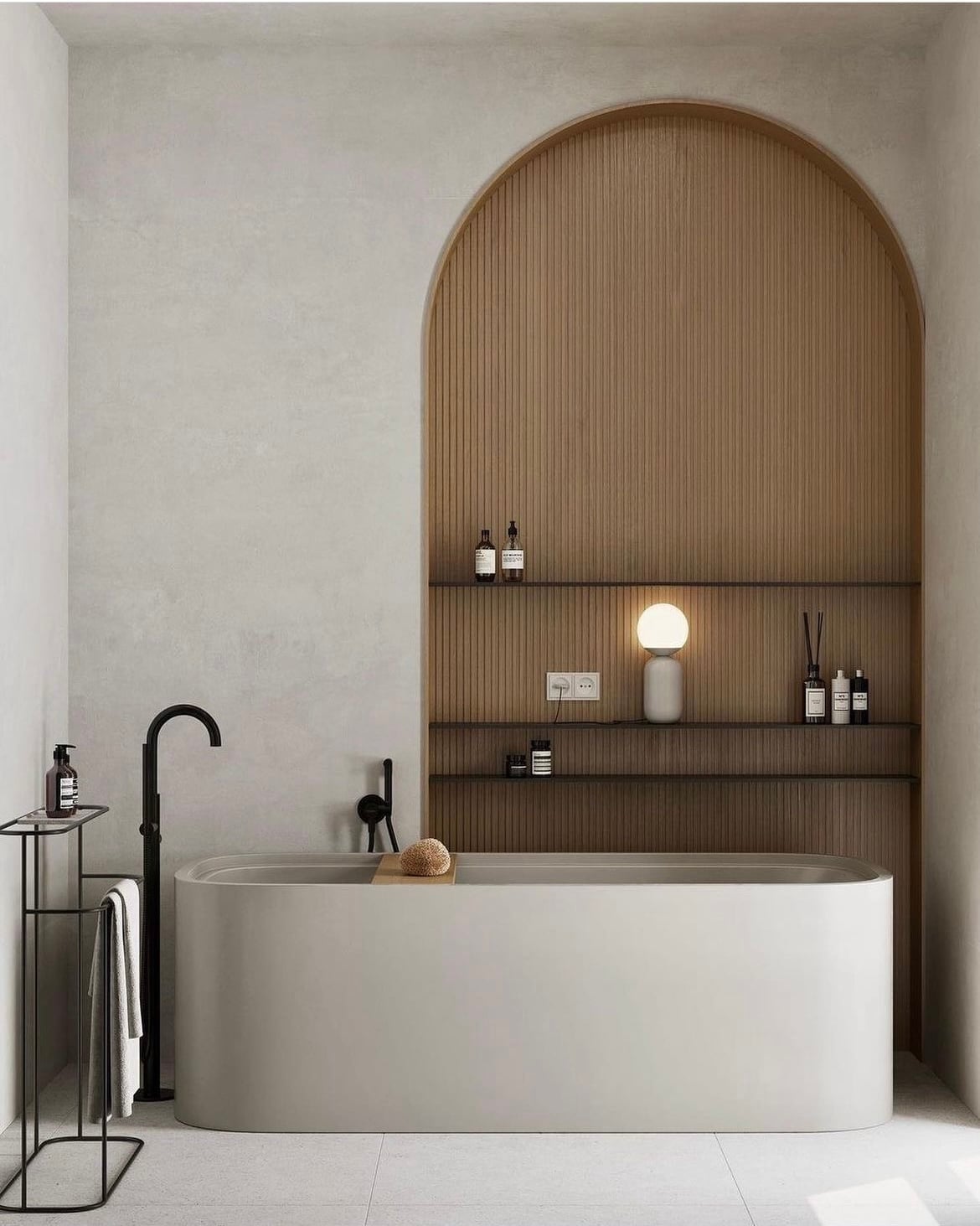
Curved details soften the clean lines often found in Japandi interiors. An arched wall niche instantly becomes more eye-catching when paired with wood paneling or textured finishes behind it. It’s a subtle feature, but one that adds warmth and architectural interest.
Combine the Core Japandi Elements
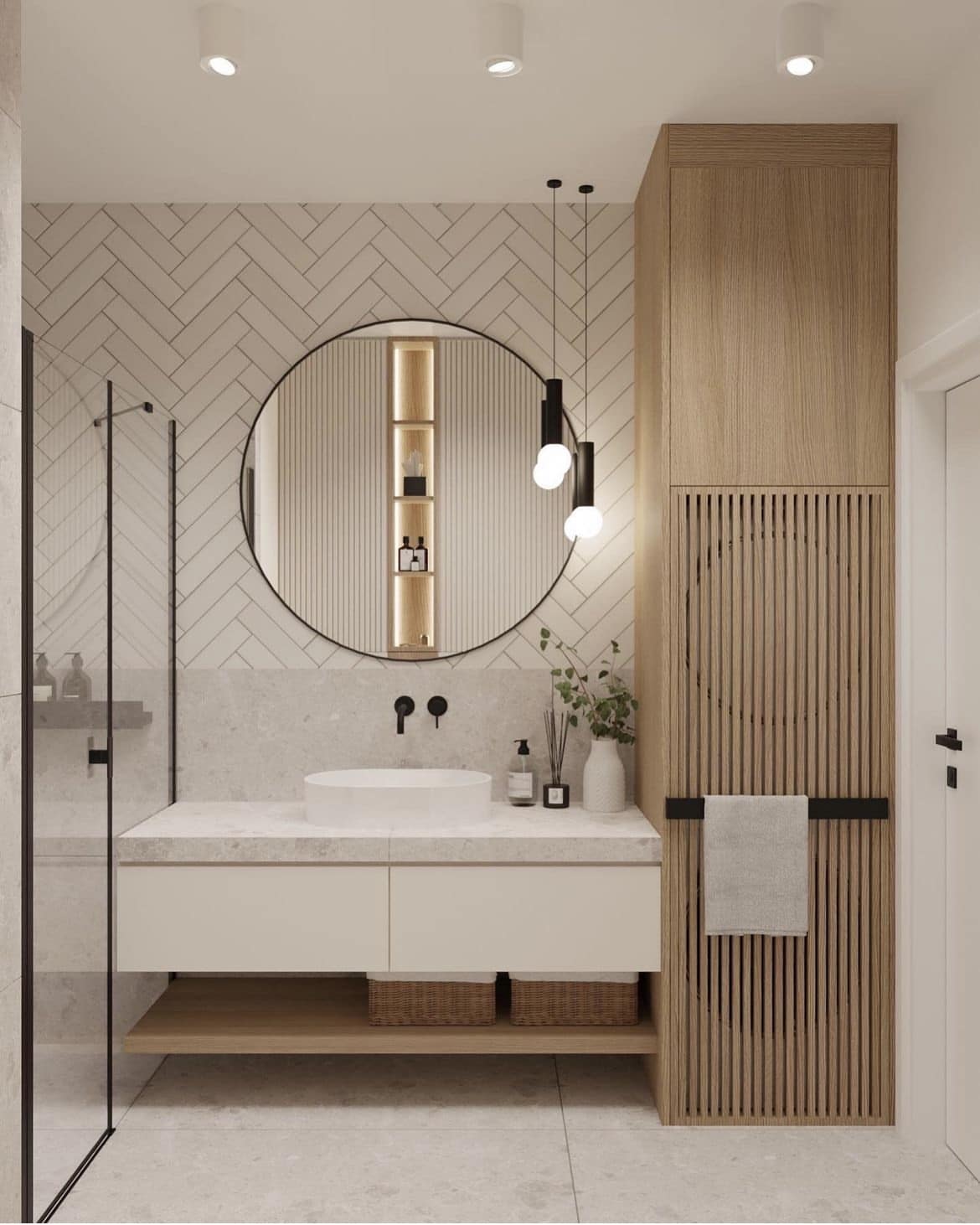
The easiest way to create a cohesive Japandi bathroom is to layer the style’s signature features. Neutral tones, black accents, natural materials, and clean silhouettes all work hand in hand to create a space that feels calming, warm, and effortlessly modern.
Style Sparingly
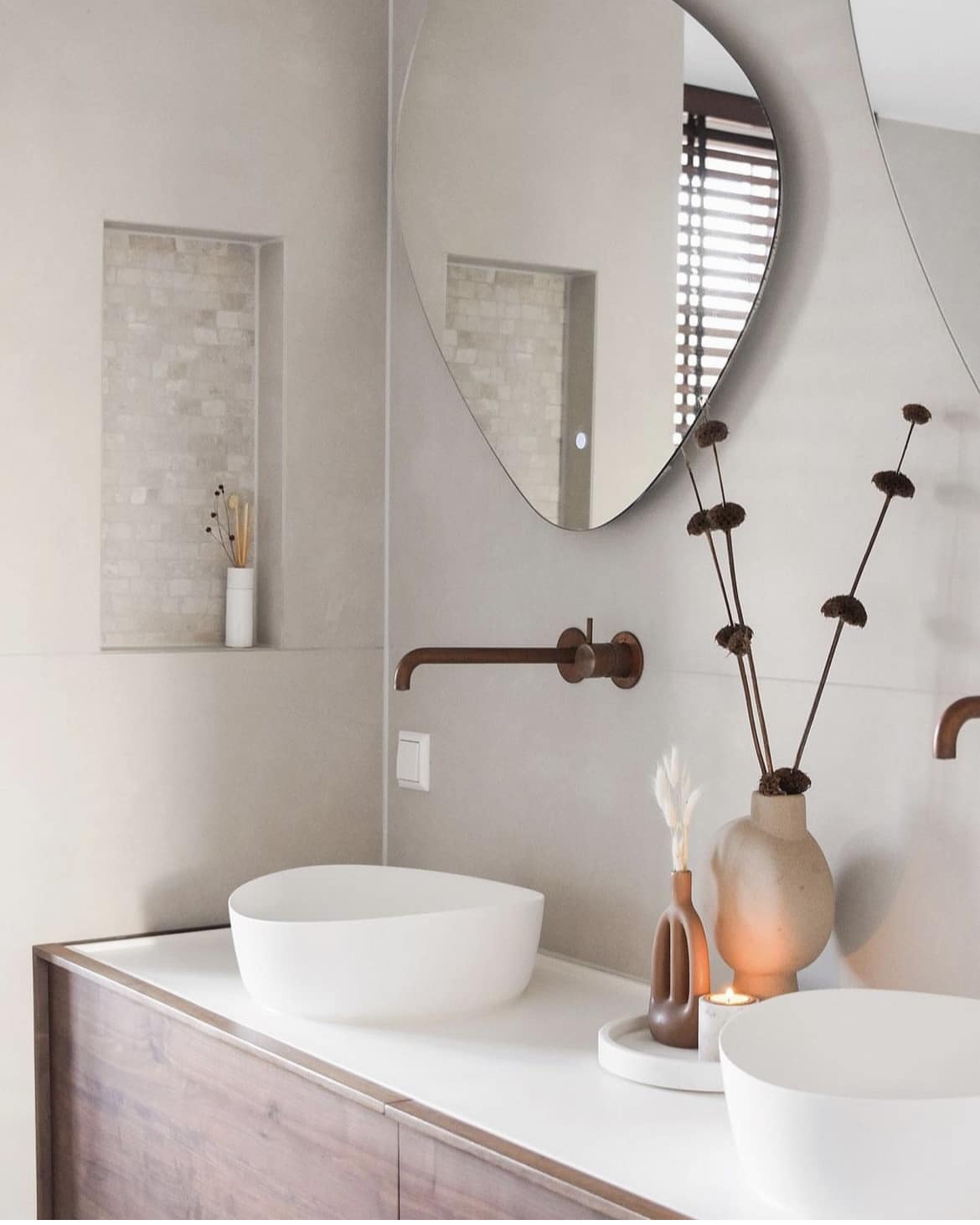
Japandi design embraces simplicity, so decor should feel intentional rather than excessive. A single ceramic vase, a minimal soap bottle, or one stem of greenery is often all you need. Keeping surfaces uncluttered helps the room feel more peaceful and balanced.
Layer In Warm Brown Tones
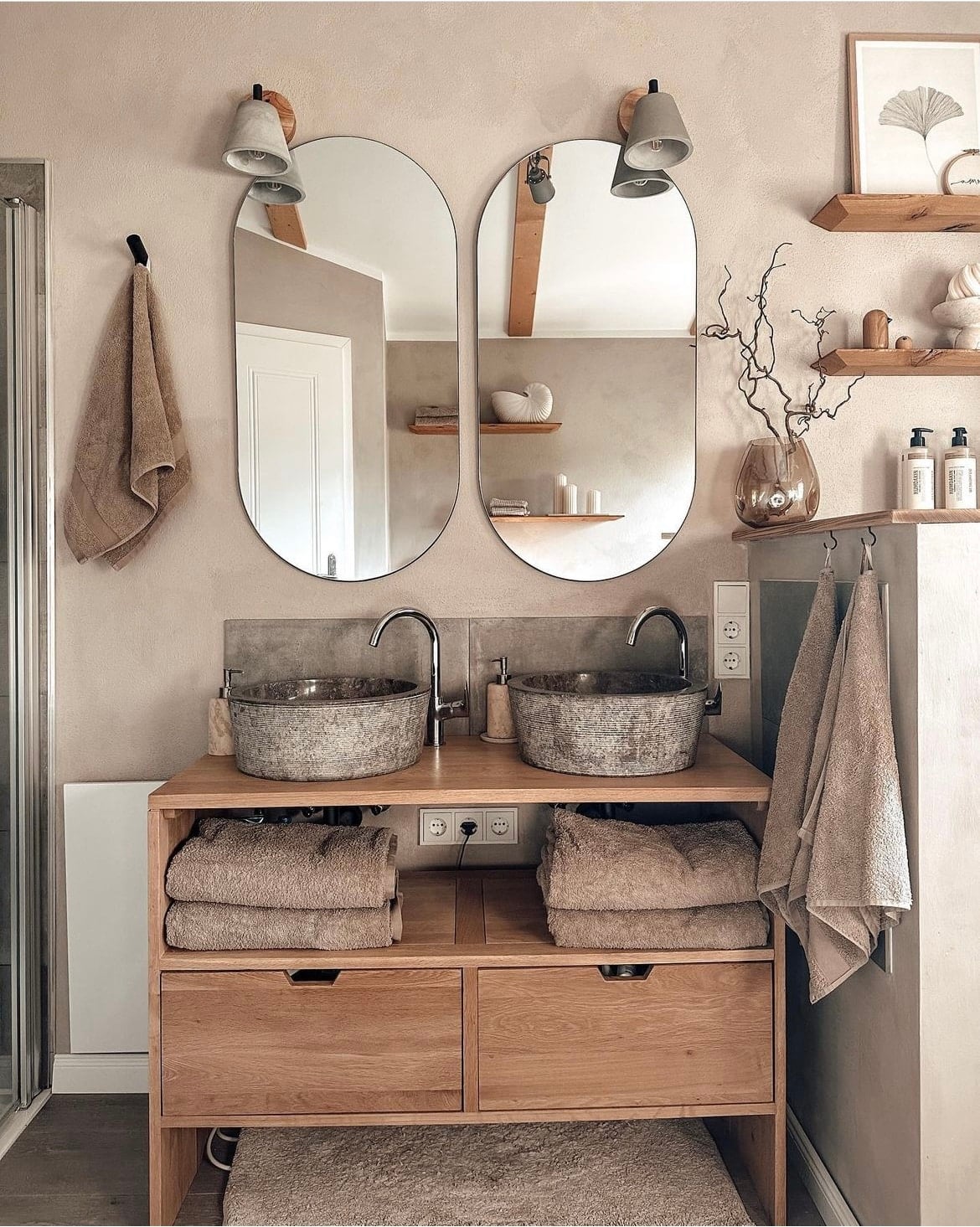
Neutral bathrooms can still feel rich and inviting when layered thoughtfully. Adding soft caramel, mocha, or earthy brown accents through towels, textiles, or decor introduces warmth and dimension without disrupting the calm palette.
Create Texture With Kit Kat Tiles
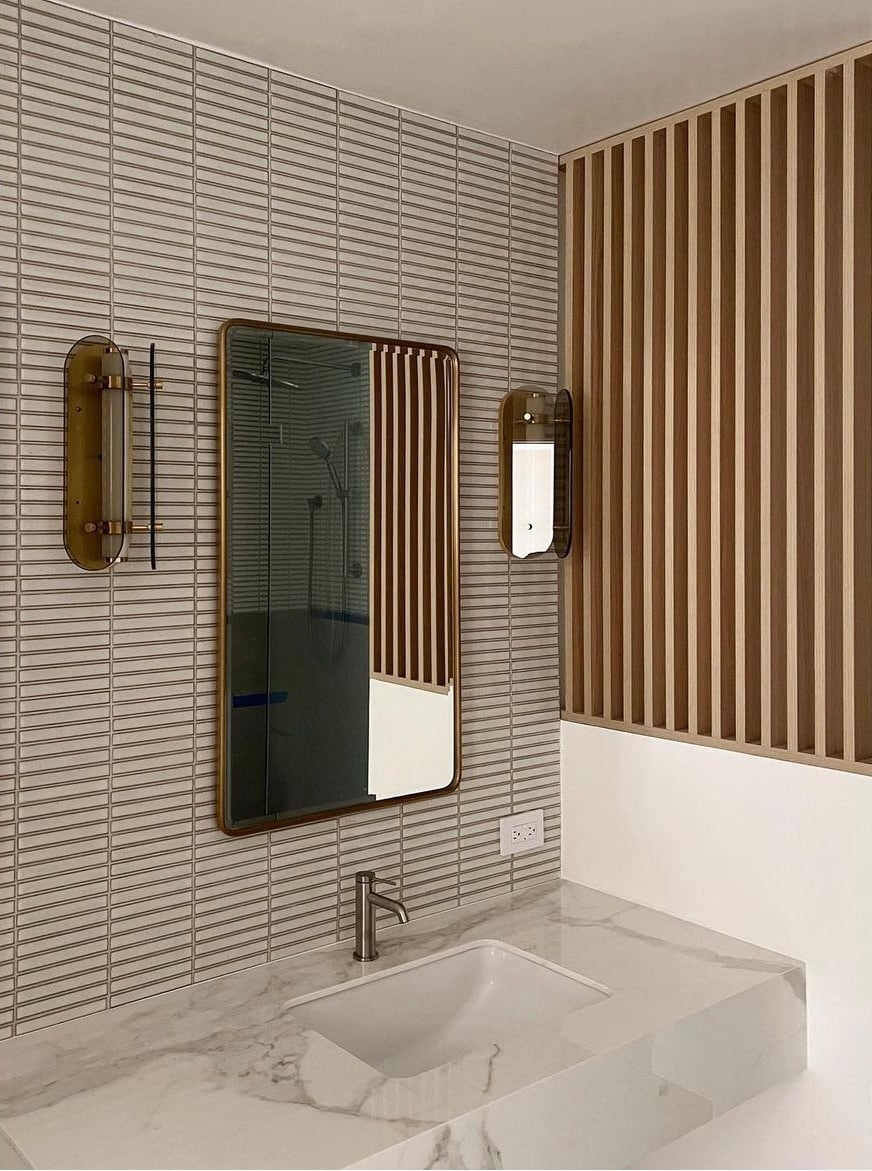
Kit Kat tiles are a favorite for modern Japandi bathrooms thanks to their slim, vertical shape. They naturally draw the eye upward and create subtle texture on feature walls or vanity backsplashes. Pair them with wood details or soft neutral paint for a balanced finish.
Use Wood as a Statement Feature
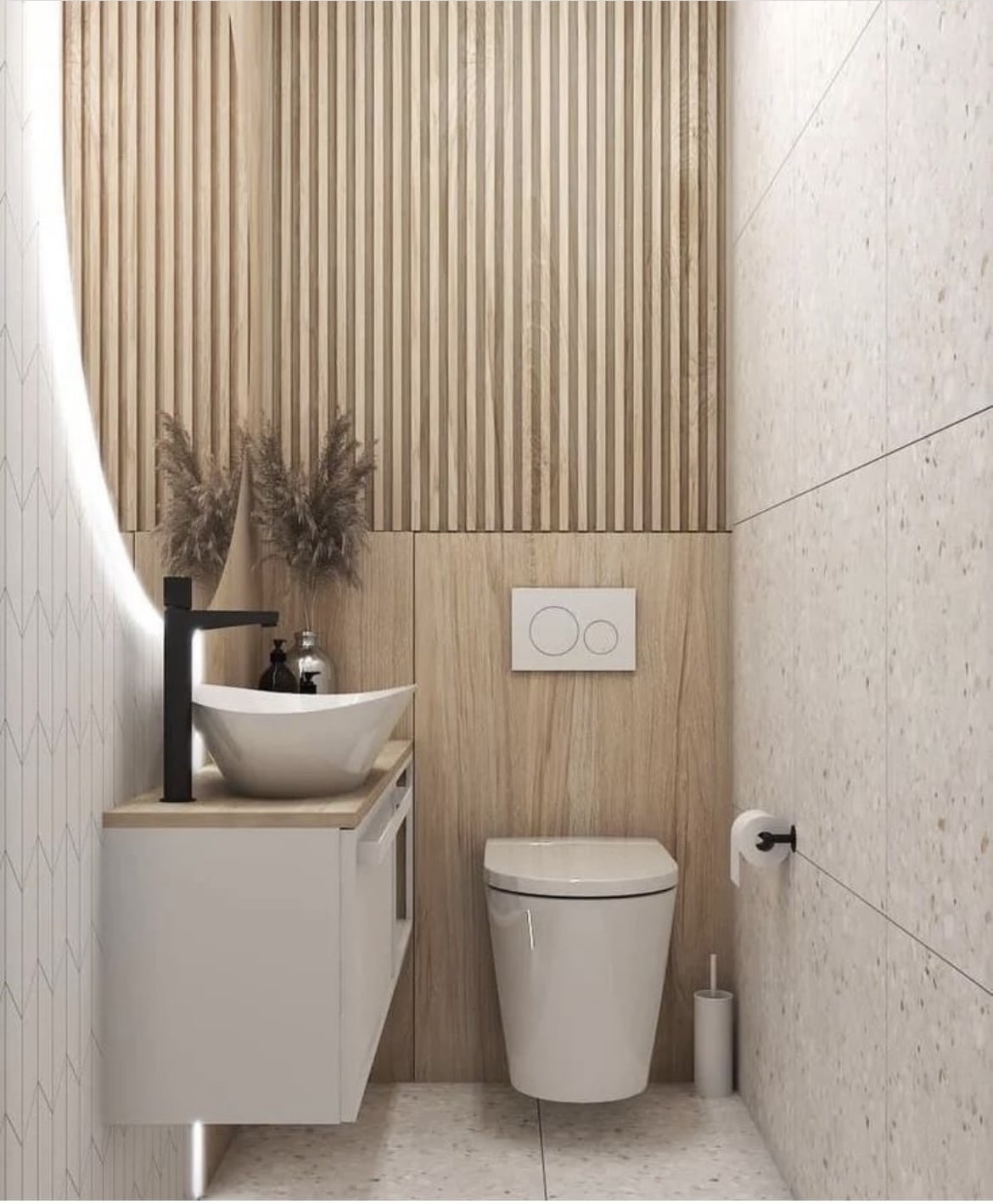
Wood can play a major role in Japandi interiors, but balance is important. Instead of covering every surface, focus on one standout feature wall or vanity area. Mixing slatted wood with smoother finishes keeps the design visually interesting and prevents the room from feeling too heavy.
Try Moroccan Tadelakt Plaster
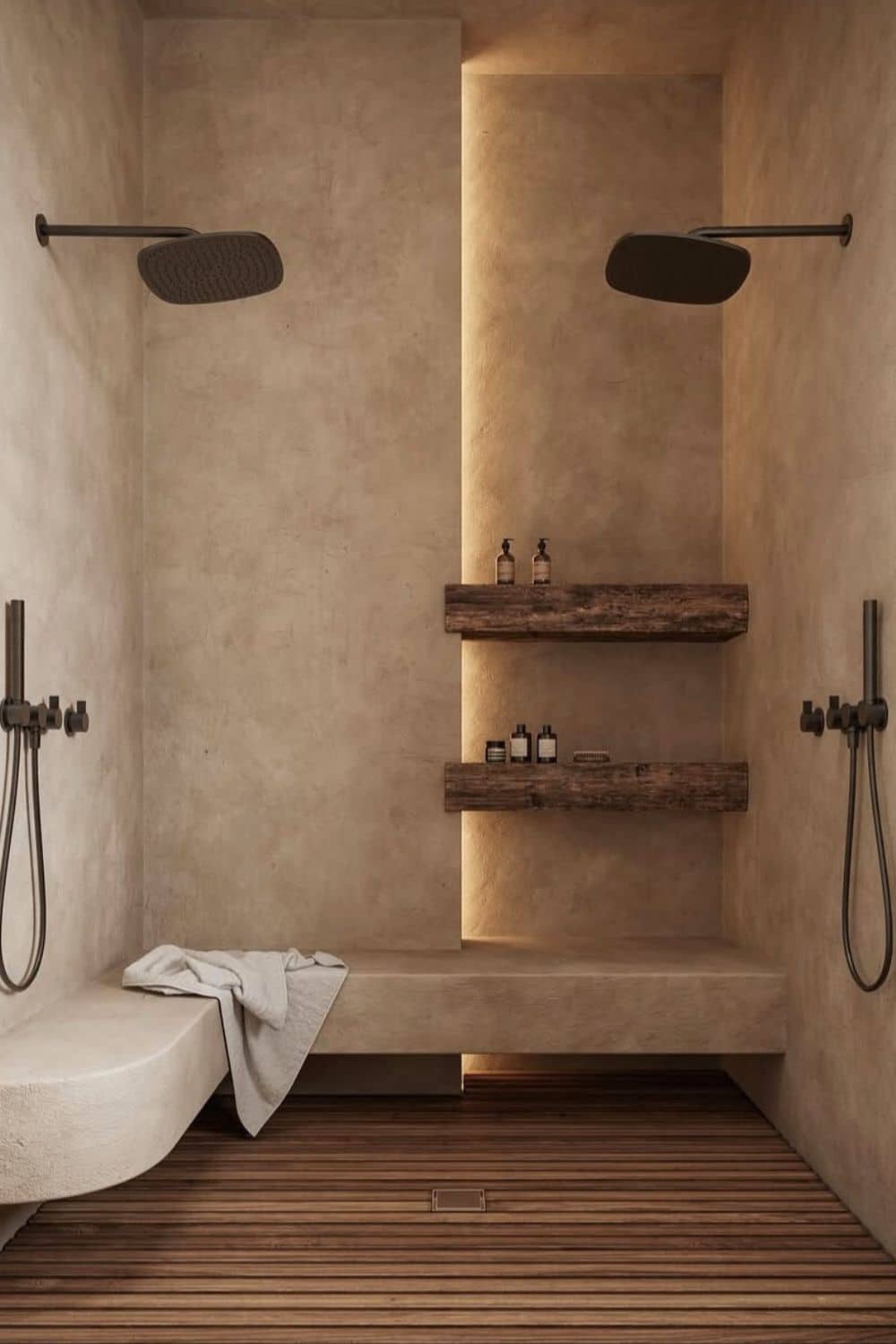
Tadelakt plaster brings a soft, velvety texture that instantly gives the bathroom a spa-like atmosphere. Its seamless finish feels organic and calming, especially when paired with reclaimed wood shelving or other natural materials.
Prioritize Functionality
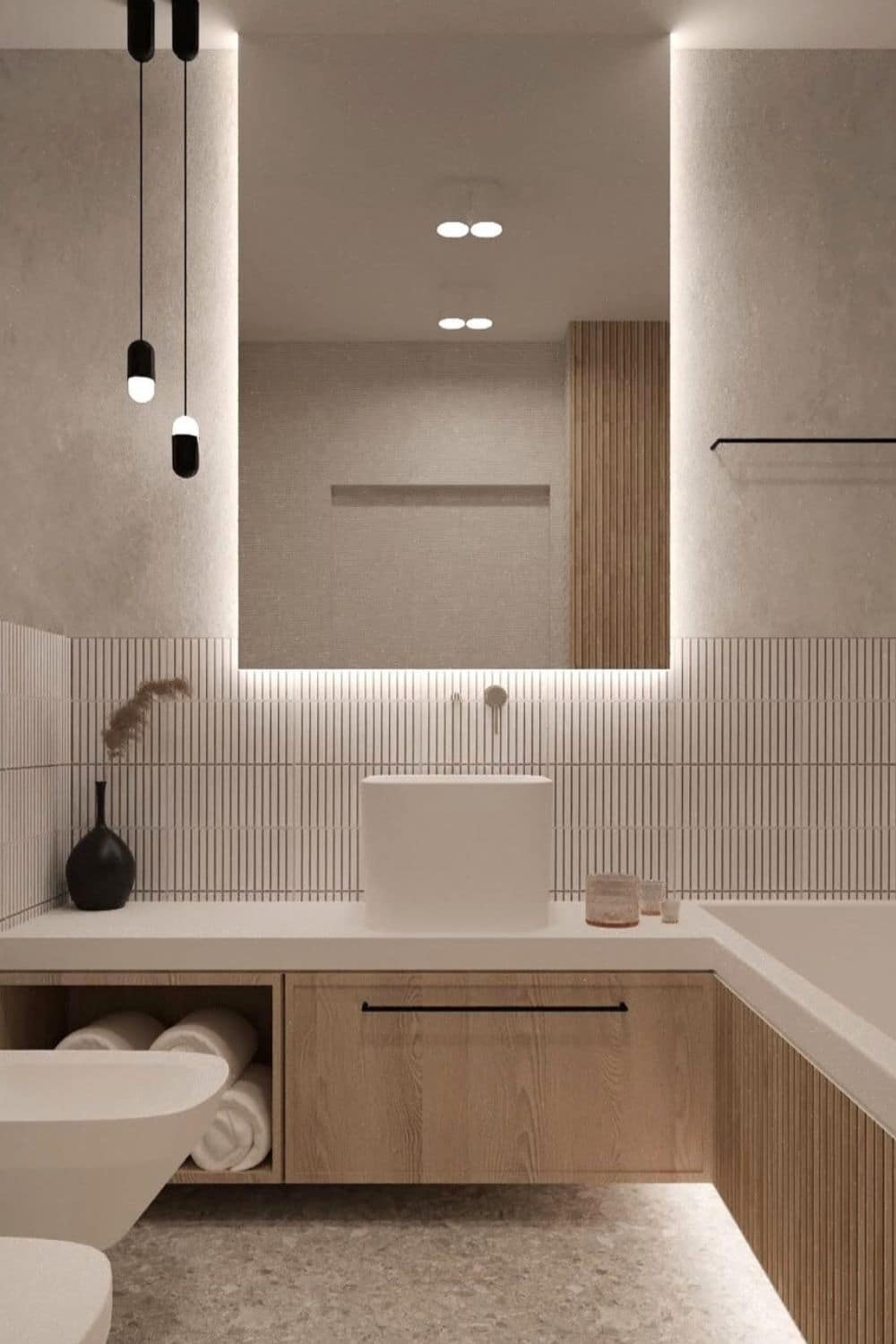
Japanese-inspired interiors always place practicality first. A long vanity with built-in storage keeps the room streamlined and clutter-free. Clean vertical lines in cabinetry, tiles, and lighting further reinforce that signature Japandi aesthetic.
Incorporate a Built-In Alcove
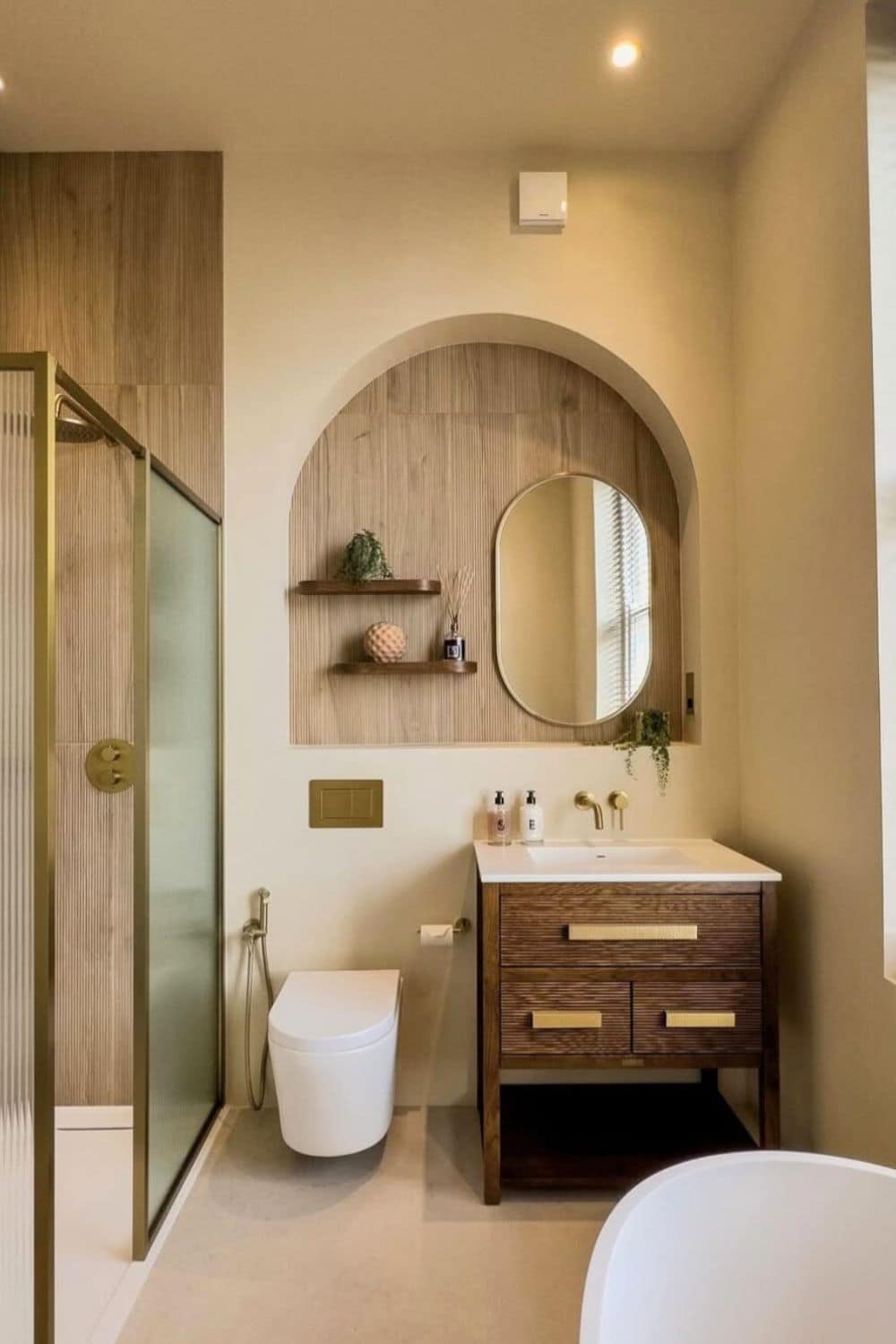
Custom alcoves are both stylish and functional in a Japandi bathroom. Adding recessed shelving behind a vanity creates extra storage while keeping the overall design sleek and uncluttered. It’s a subtle architectural detail that makes the room feel more custom and considered.
Use Soft Ambient Lighting
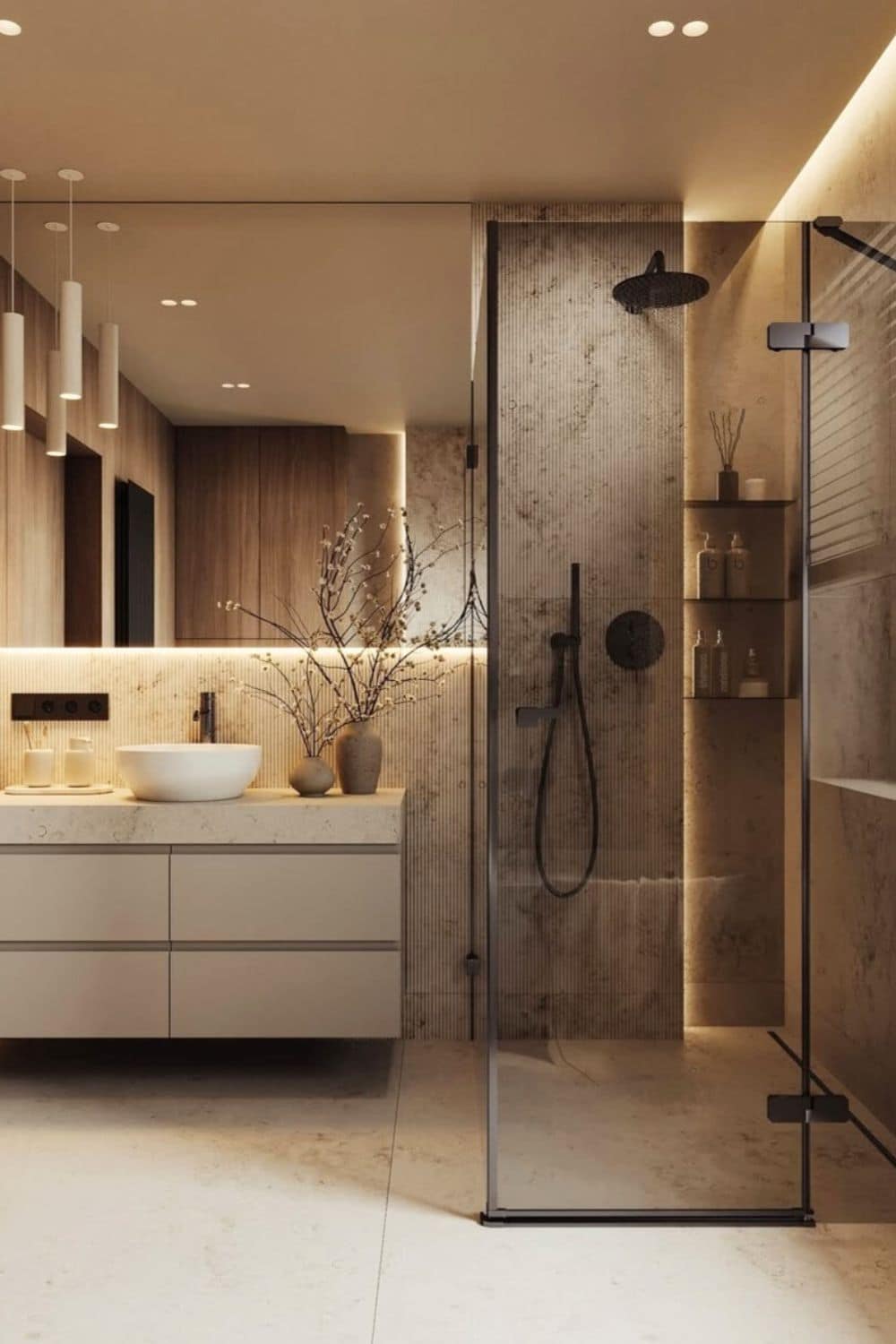
Lighting in Japandi bathrooms should feel warm and calming rather than overly bright. Backlit mirrors create a gentle glow that works beautifully throughout the day and instantly makes the room feel more relaxing and elevated.
Install a Japanese-Inspired Soaking Tub
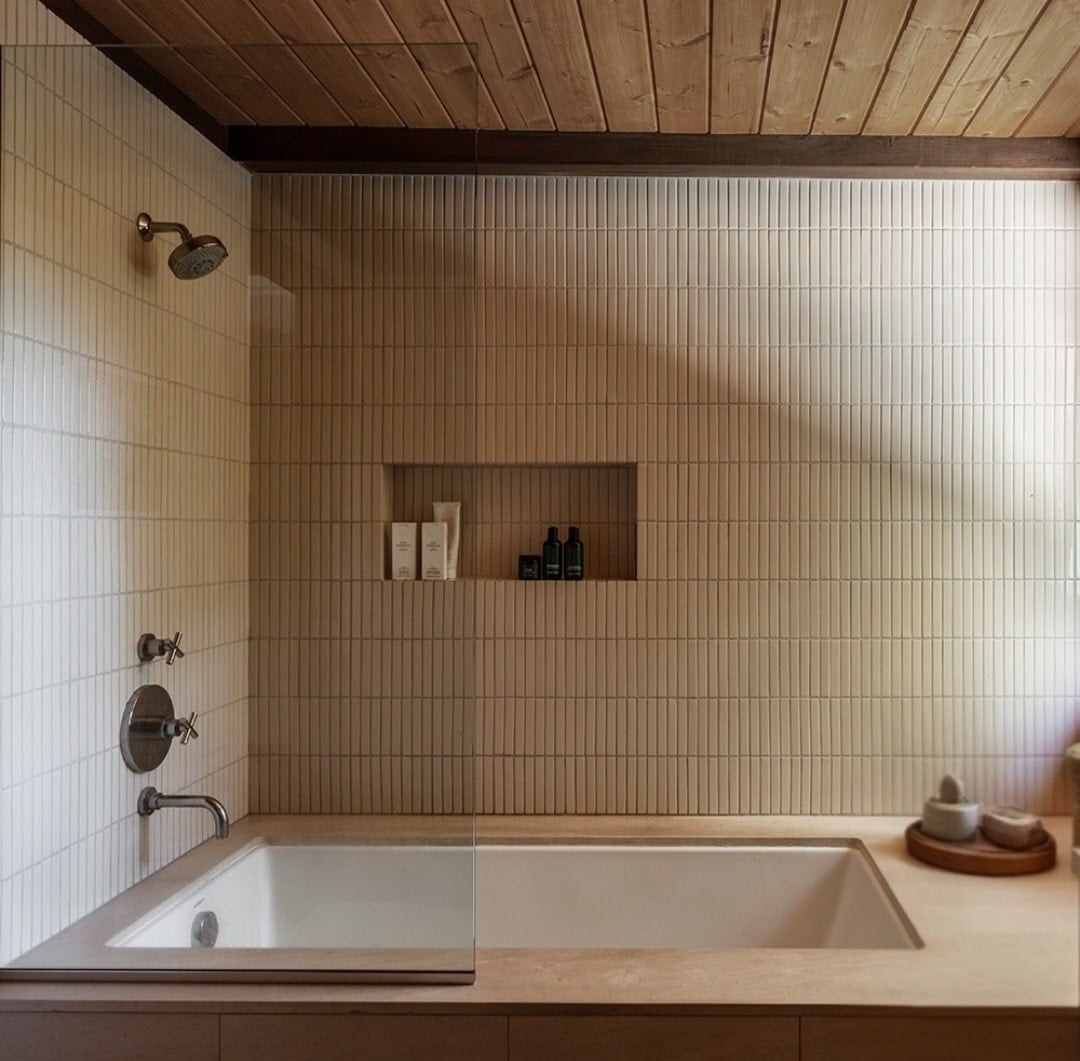
Deep soaking tubs are deeply rooted in Japanese bathing culture and instantly bring a spa-like feel to the bathroom. Framing the tub with cedar or warm wood finishes enhances the connection to nature, while modern tiles keep the overall design fresh and contemporary.
Choose Wood-Effect Panels
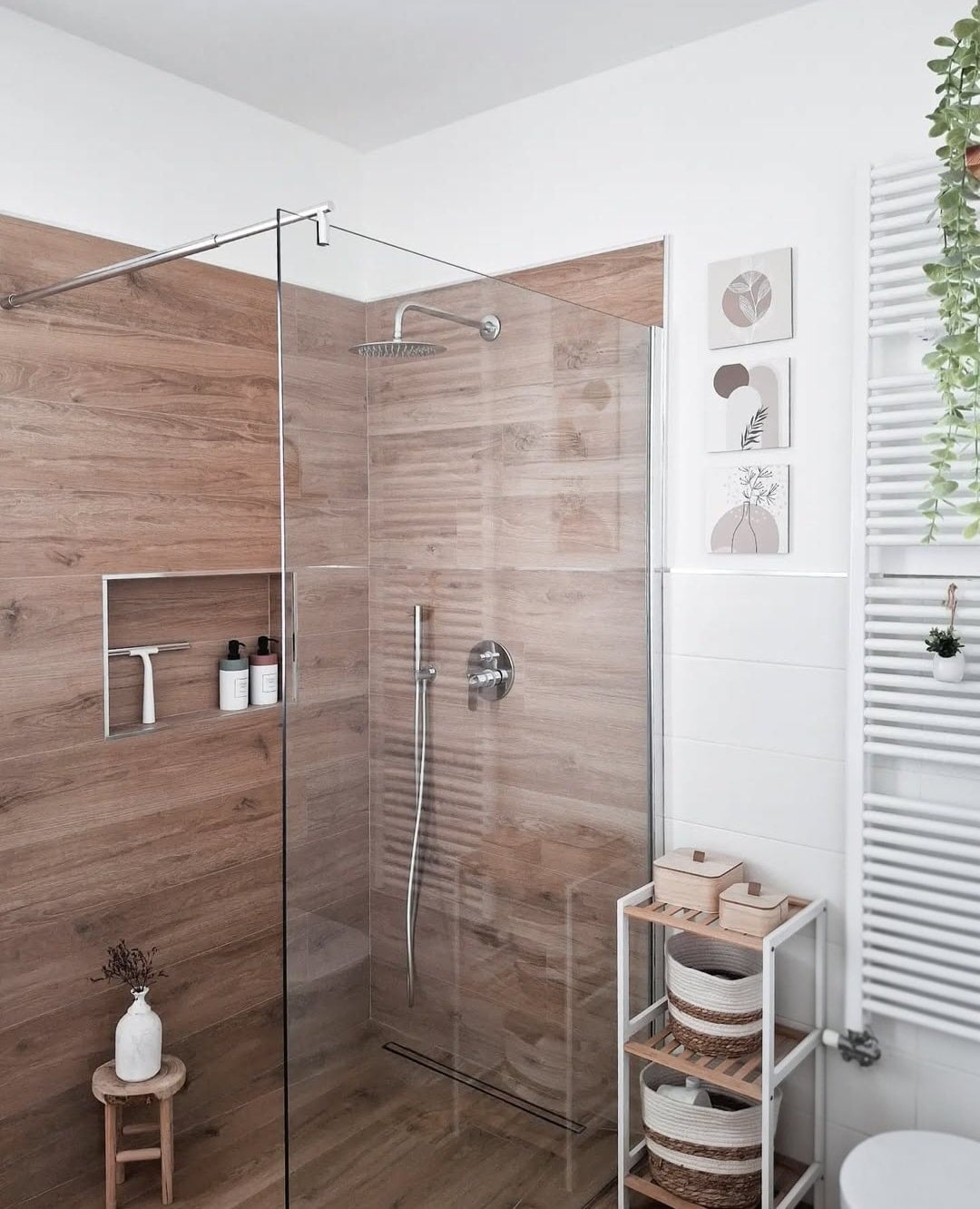
Real wood in a shower can require a lot of maintenance, making wood-look wall panels a practical alternative. They offer the same warm aesthetic without grout lines or moisture issues, making them ideal for a clean, low-maintenance Japandi shower.
Create a Spa-Like Escape
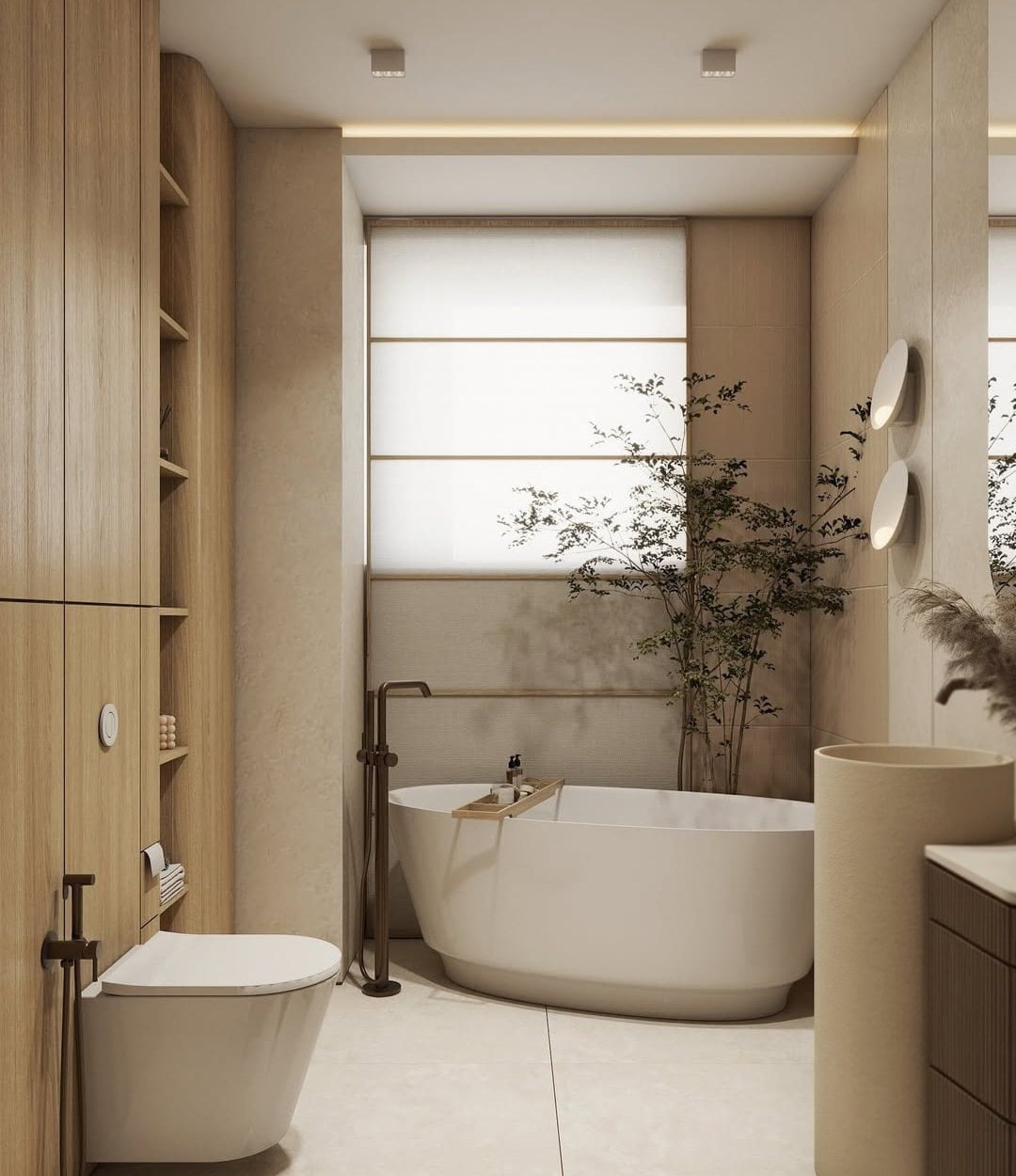
Japandi bathrooms should feel restorative and peaceful above all else. Shoji-inspired blinds soften incoming light beautifully, while hidden LED lighting in alcoves or along ceilings adds warmth and atmosphere. Together, these small details transform the bathroom into a calming retreat.
If you loved this article, don’t miss Japandi Interiors: 10+ Tips For Getting This Design Right!