
Have you been searching for playroom ideas for your home? Get inspired by our handpicked playroom ideas that will give your little one (or little ones) a fun, engaging space of their own!
Cutest Playroom Ideas You’ll Love
Everybody deserves a space in their home where they can spend time doing what they love. For kids, that means playing.
If you want to build a dream space for your child to spend time in, we’re here to help. Whether you’re working with a small space, on a budget, or the sky is the limit, there are playroom ideas on our list below that offer inspo and tips for creating the cutest playroom for your little ones.
soothing style
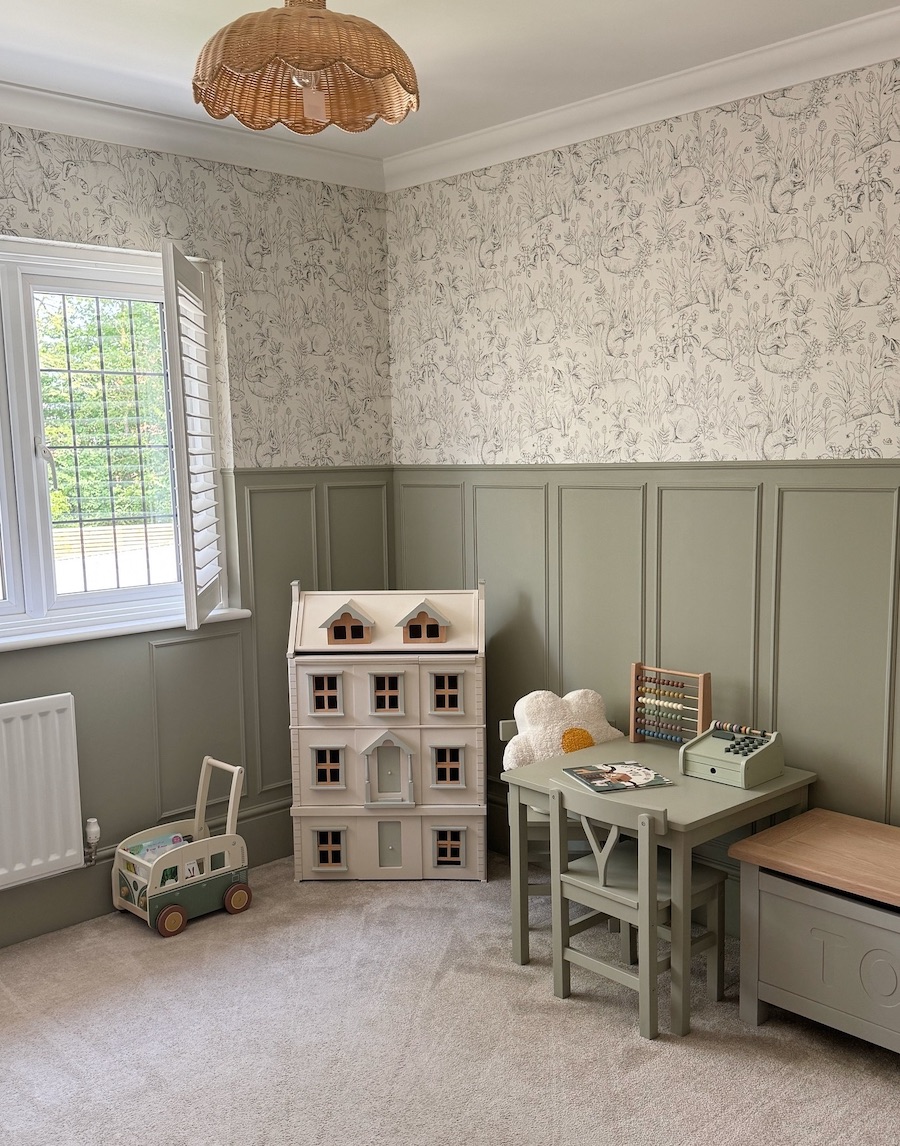
Soft neutrals and calming colors paired with natural wood and whimsical wallpaper create a playroom that’s beautiful but not overstimulating.
whimsical decor
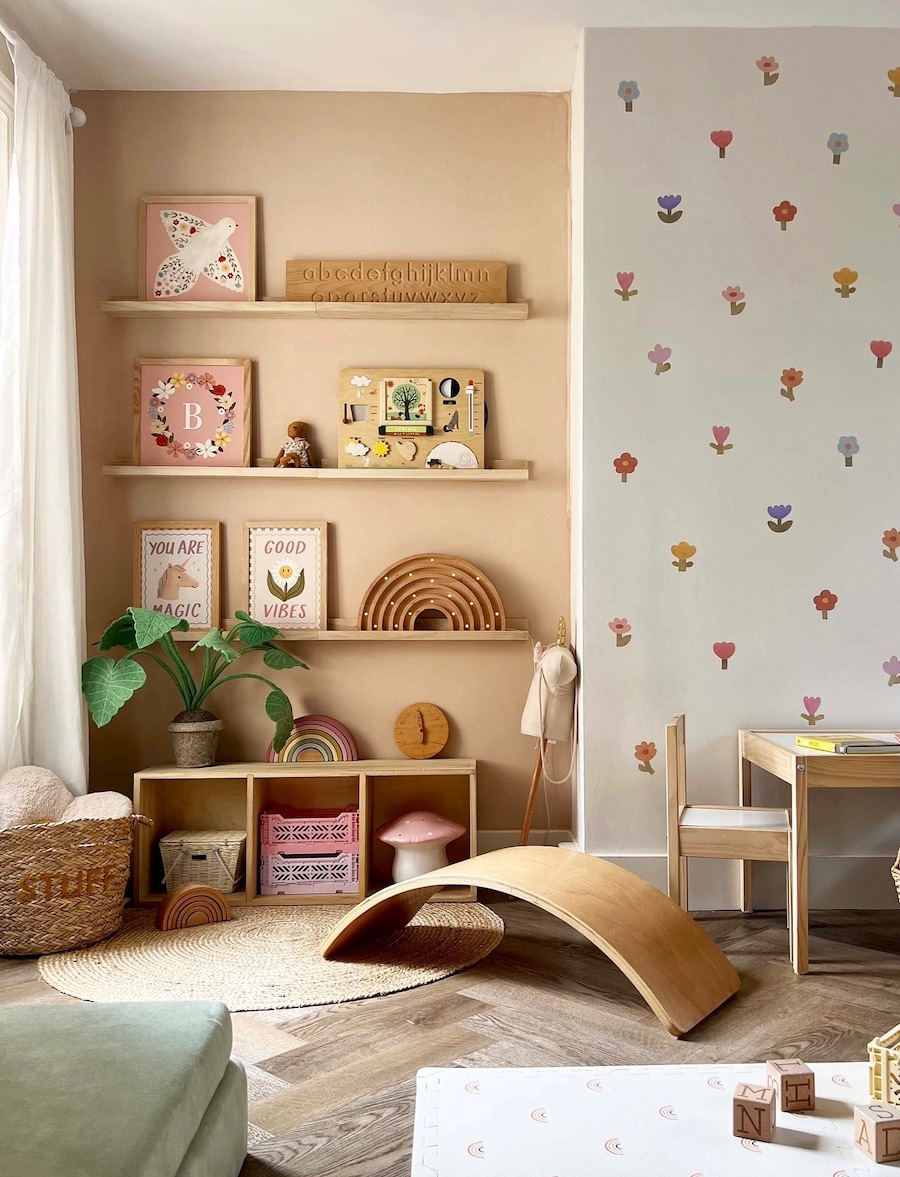
We love a bright, beautiful, and colorful space as much as anyone, but this aesthetic is especially great for toddlers. Adding touches of whimsy throughout the playroom is ideal for sparking curiosity and creativity!
a simple space
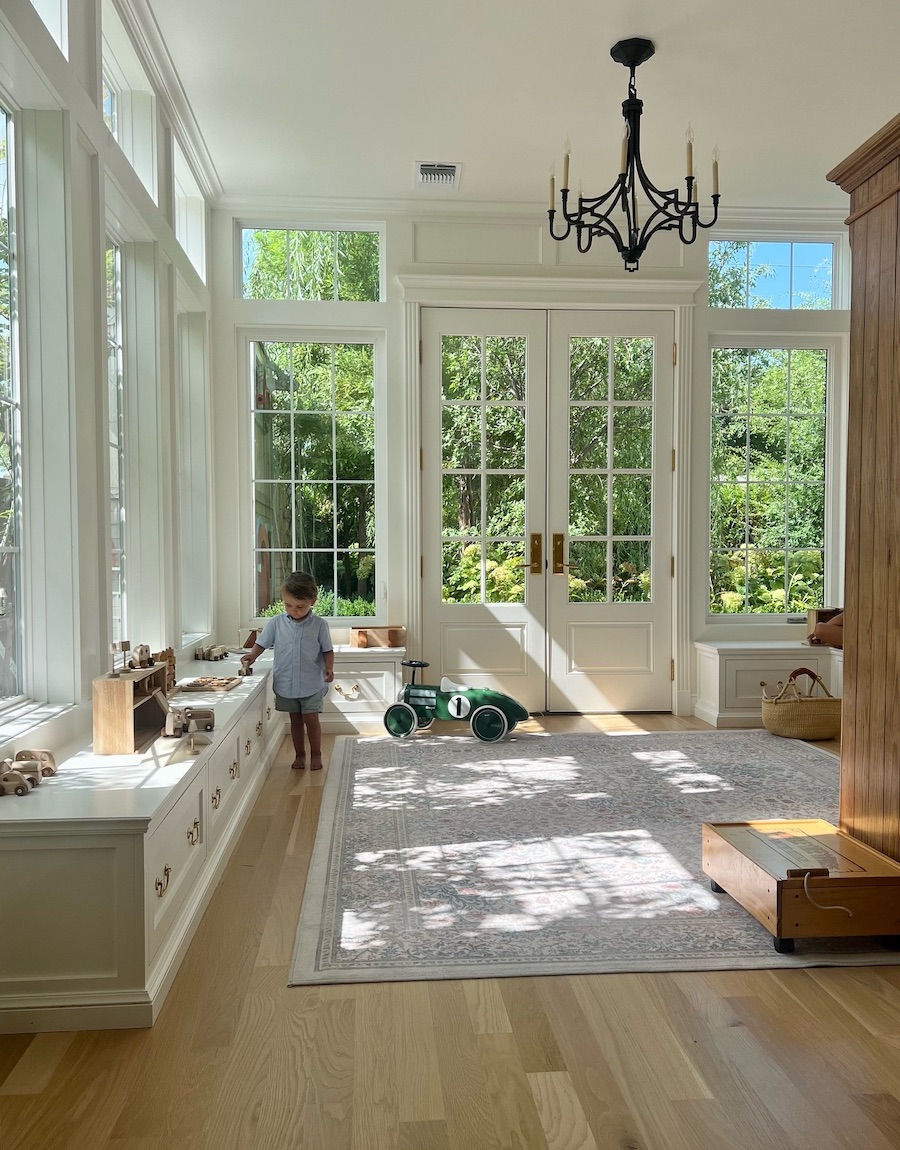
While we love bold and colorful spaces, keeping it simple is a fantastic way to create a soothing environment that fosters imagination in your children.
We recommend choosing low toy storage so your child can access it independently.
A neutral backdrop
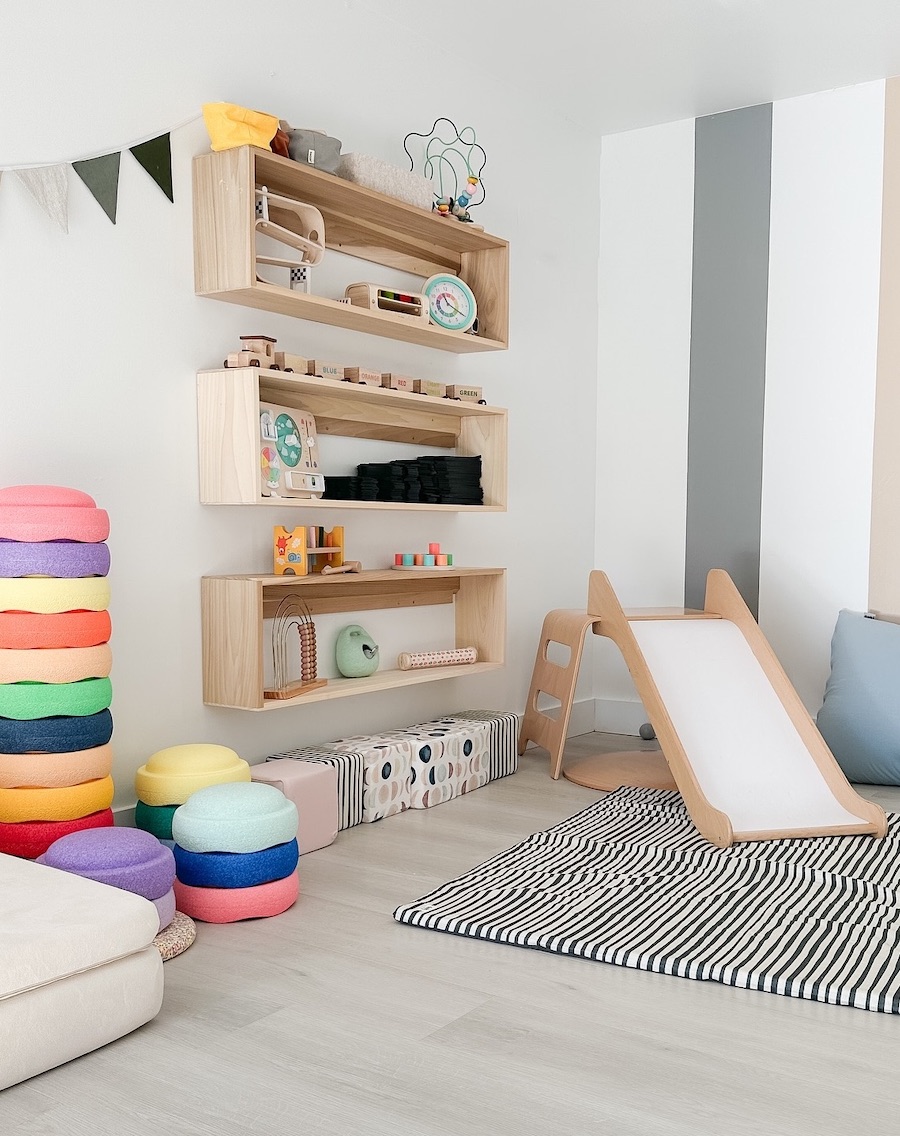
Neutral walls and furniture create the perfect backdrop for a playroom featuring a beautiful array of colors. This combo is amazing for adding pops of color without overwhelming the room.
indoor playground
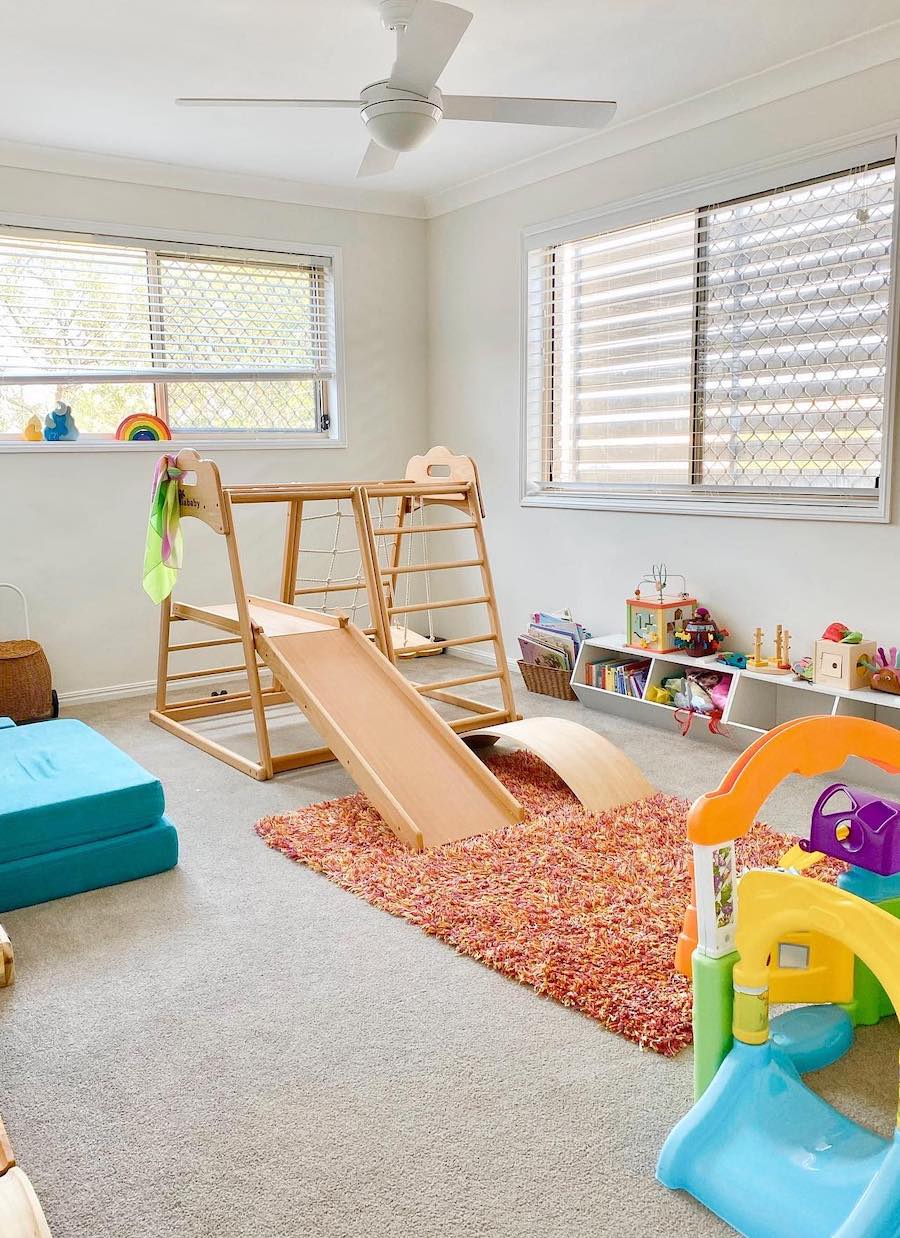
If you have the space and budget for this idea, your kids will be obsessed. Plus, creating an indoor playground means your children will always have a place to run around and play, no matter the weather.
Encourage adventure
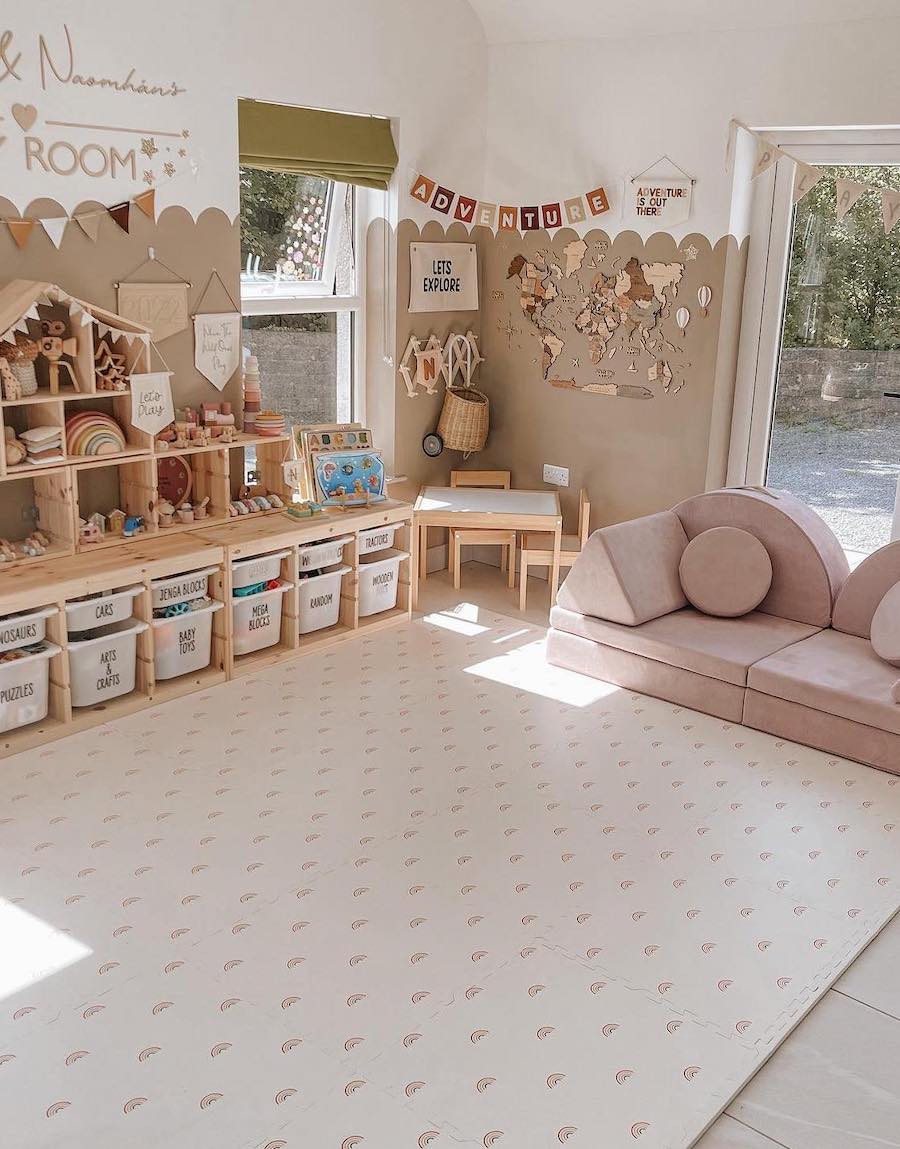
A spacious room and colorful toys that encourage hours of open-ended play are an excellent combination if you want to foster a fun, adventurous spirit in your little one!
a flexible setup
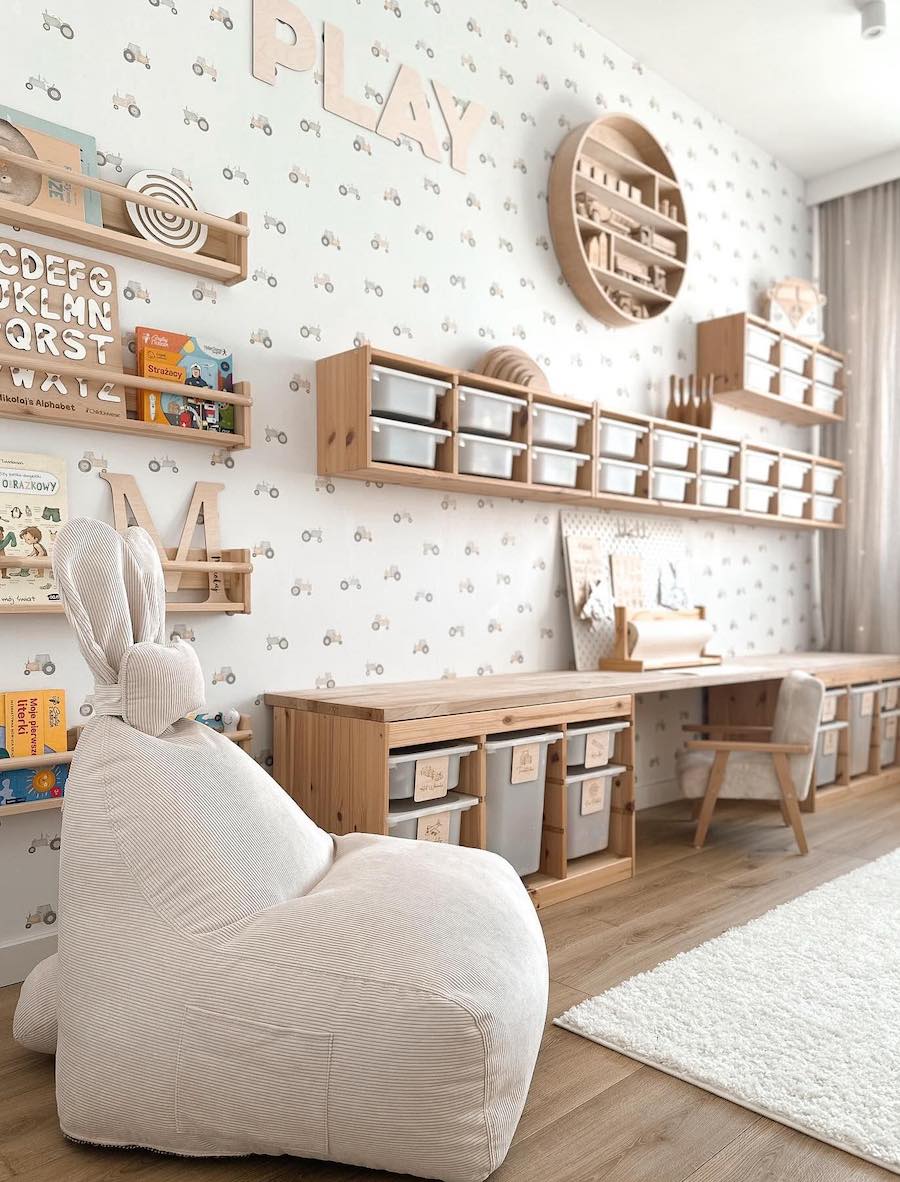
Affordable IKEA storage is a great investment, as it provides not only plenty of storage but also a flexible organizational system that can grow and change with your little one!
Designated zones
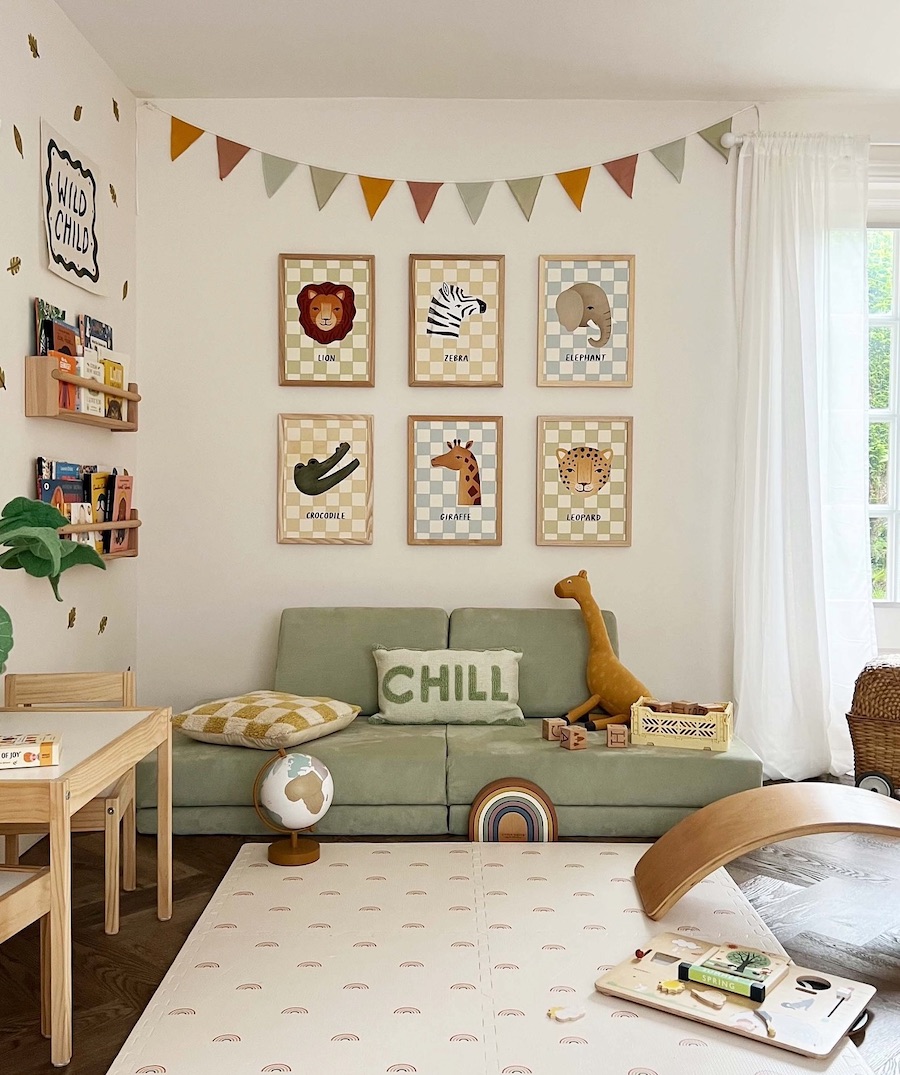
If space allows, we suggest creating designated zones within your playroom. A space for sitting and coloring, a space for reading, and a space for play help keep the room functional and organized.
Don’t forget the cool retro art and decor to help create an enticing room!
keep everything low
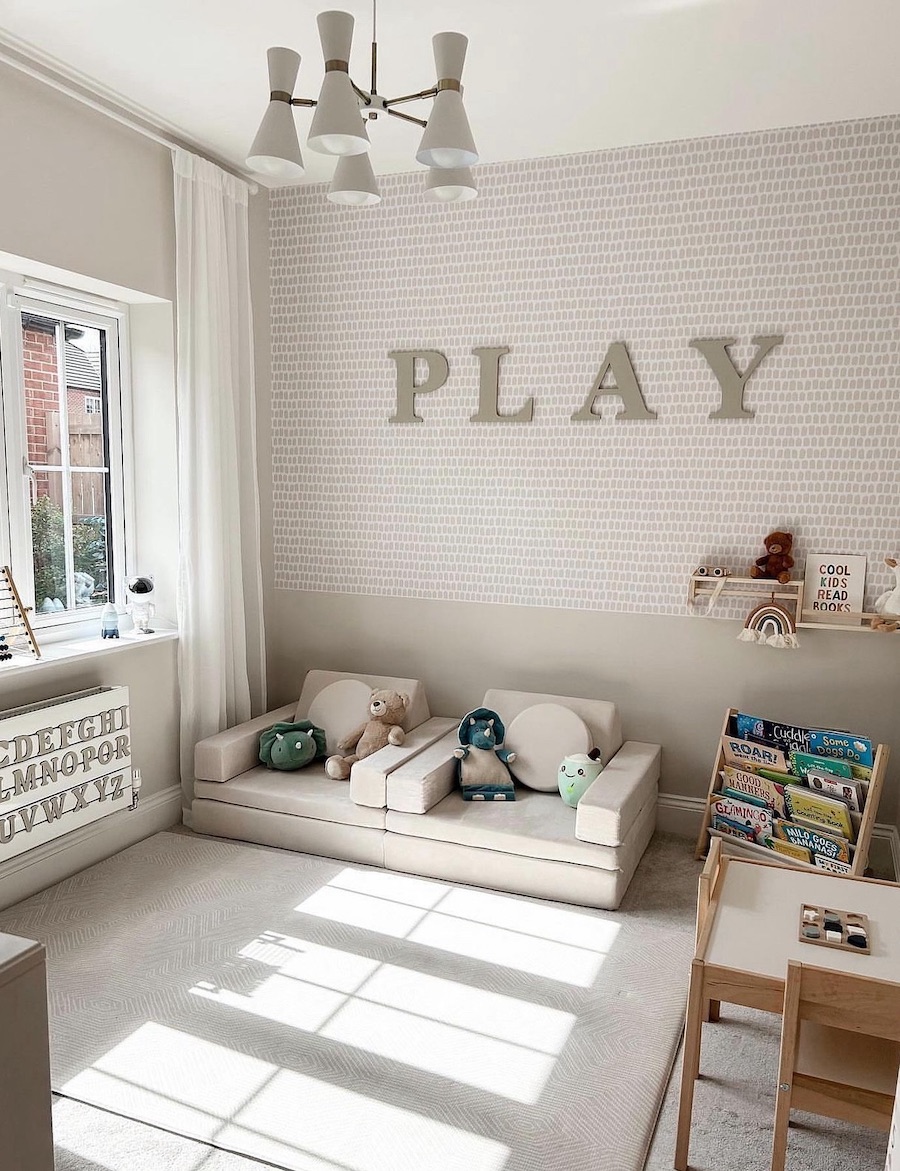
Low furniture is perfect when building a playroom for your child. This makes the whole space appealing and makes it easy for them to spend time in.
We love the patterned wallpaper and large wooden letters to help create visual interest up high and balance out the busyness from the child-sized furniture below.
giant round rainbow rug
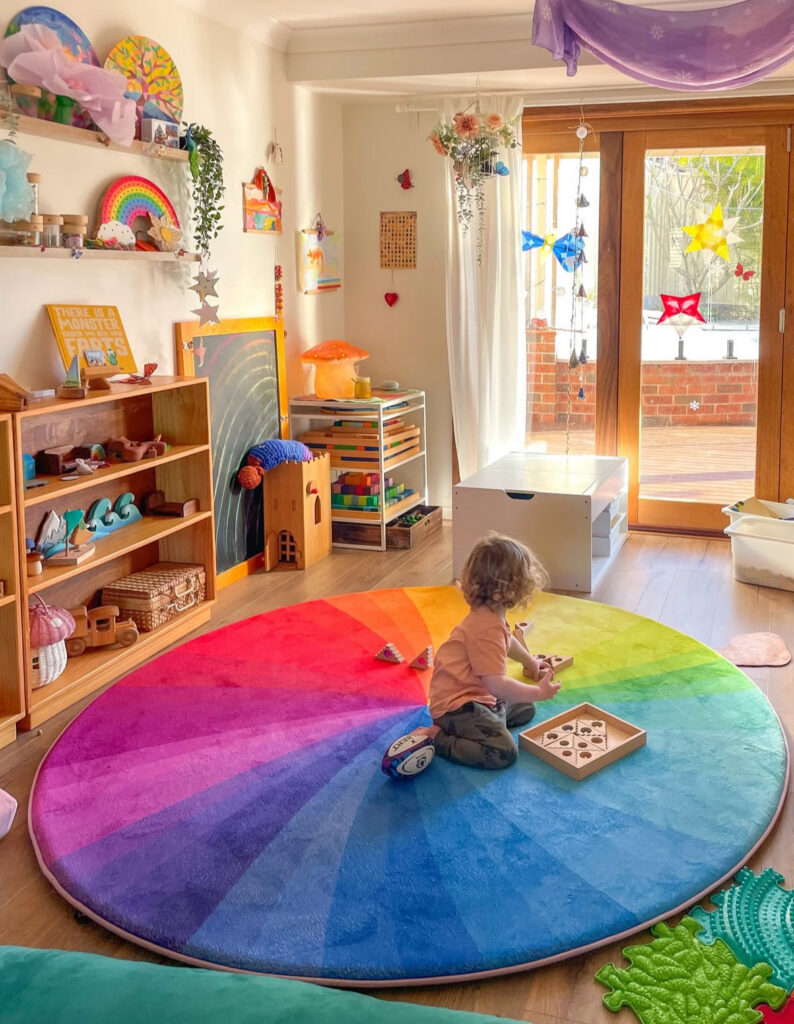
For a playroom that feels less chaotic, rugs can do a lot of the heavy lifting. Think of them as invisible dividers for different activities: one area for building, another for books, another for messy crafts that somehow end up everywhere.
The colorful, round rug in this room works almost like a built-in play signal. Kids instantly understand where the fun happens. The bold rainbow tones wake up the entire space and help the open layout feel styled and cohesive rather than cluttered.
bold black wall
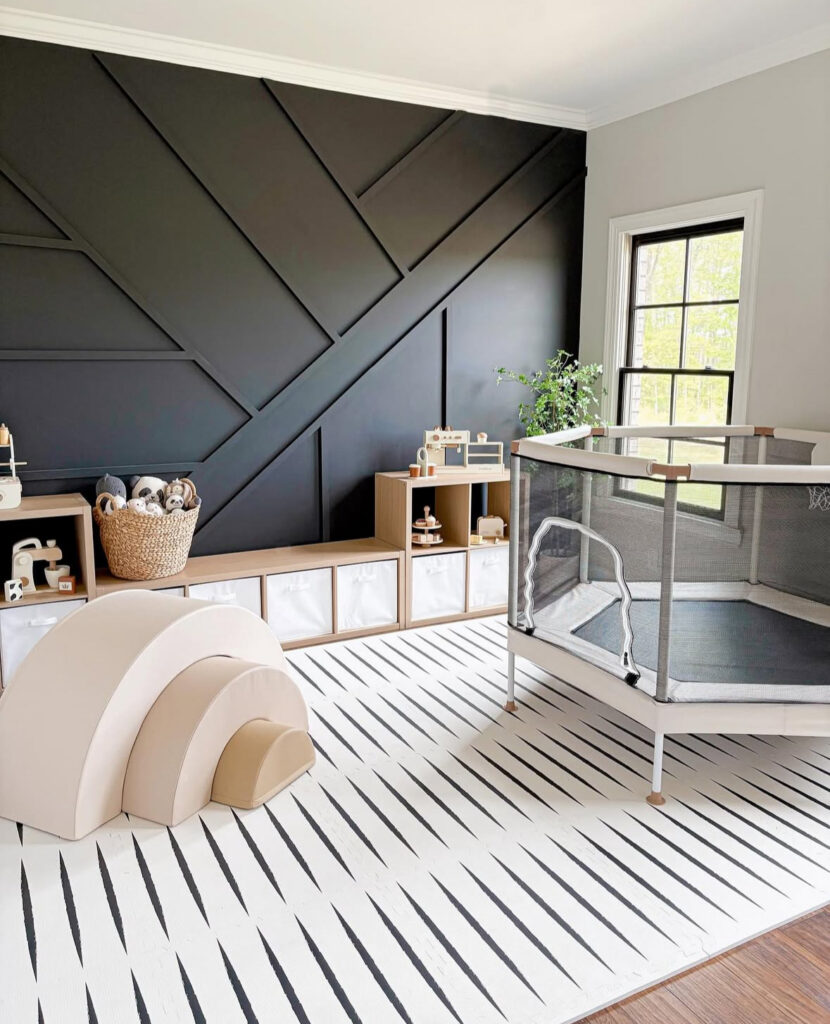
That contemporary playroom with the dark statement wall and patterned black-and-white mat takes a totally different approach, and it works so well. The bold flooring anchors the play space and subtly separates it from the rest of the room, especially for hands-on activities and movement-heavy play. Paired with the softer neutral surroundings, the whole space feels fresh, organized, and playful at once.
bunting + star wall decals
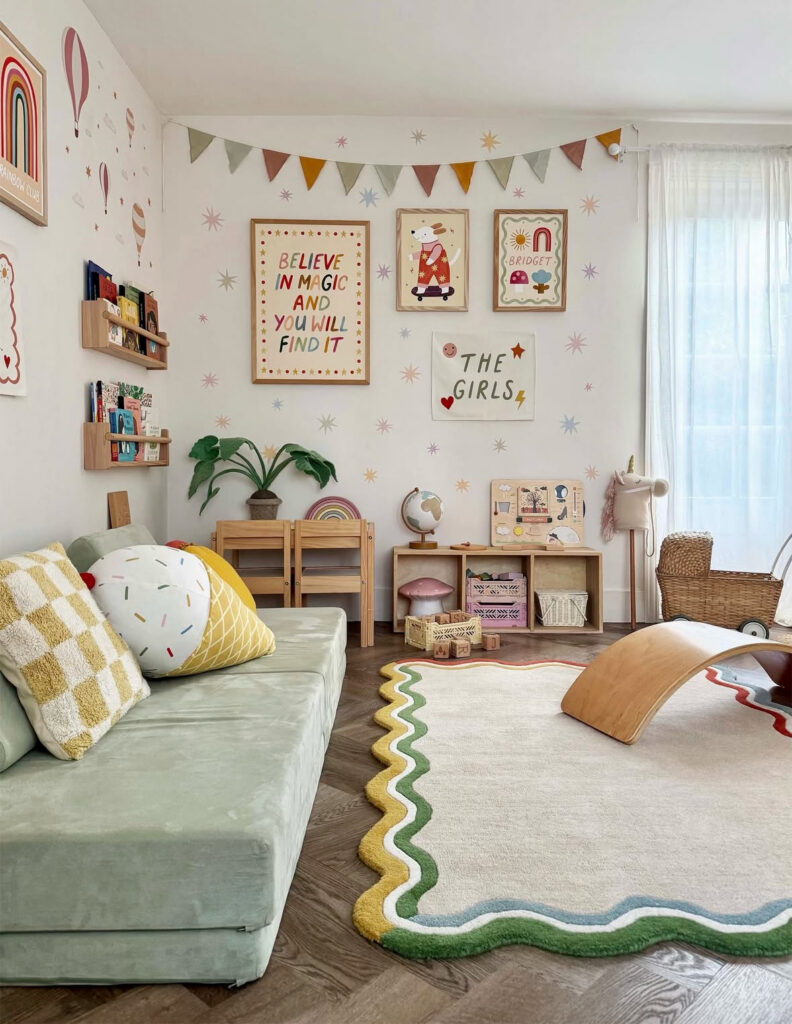
That playful setup with the star wall decals and scalloped rug feels like a little fantasy world in the best possible way. The soft, wavy outline of the rug turns the play corner into its own tiny destination, perfect for pretend adventures or curling up with books.
What makes it work is that the rest of the room stays understated, letting the fun details shine without making the space feel overly busy.
“open play” room with the hat wall
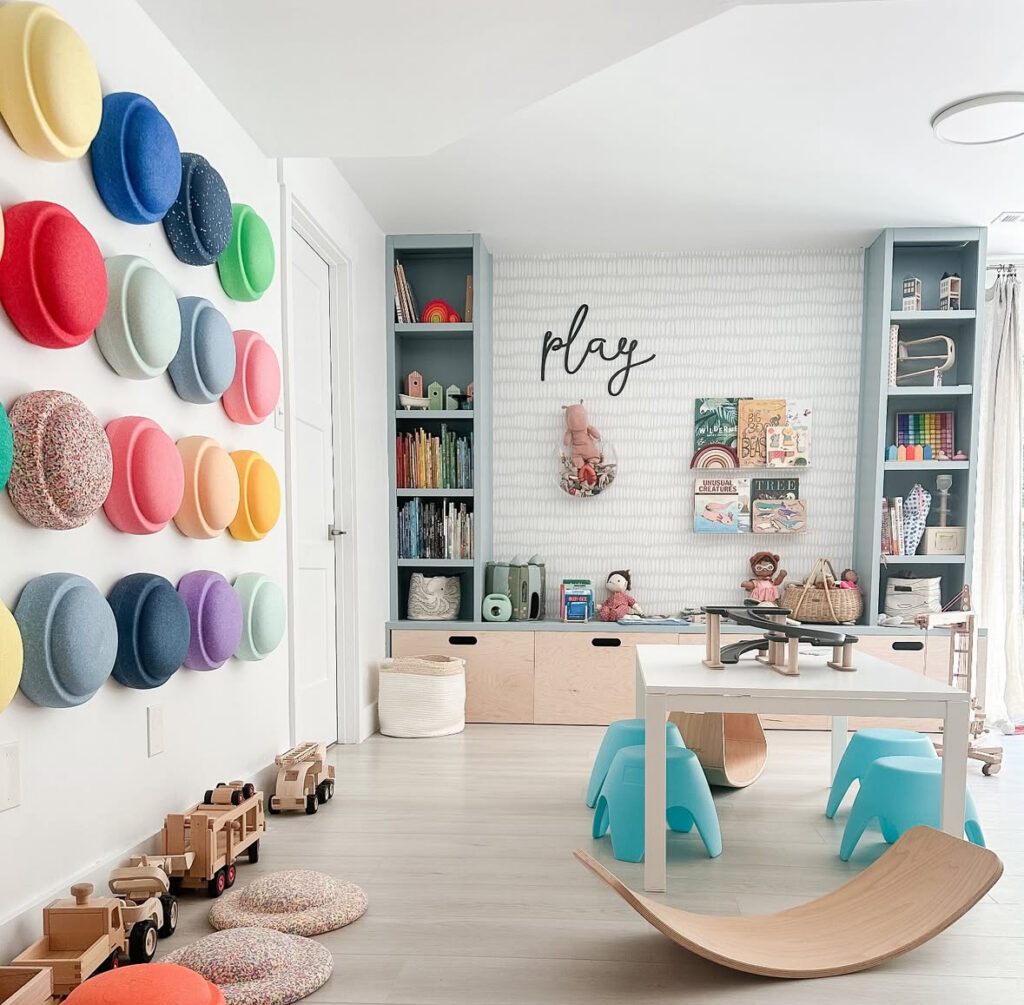
The playroom with the balance board and mounted hat wall might be one of my favorite examples of smart playroom design. It proves that open floor space isn’t wasted space at all. It actually encourages more active, creative play.
With the main area left clear for movement and larger activities, the room feels breathable and relaxed instead of crowded, which makes the whole setup feel more inviting.
cozy little seating corner
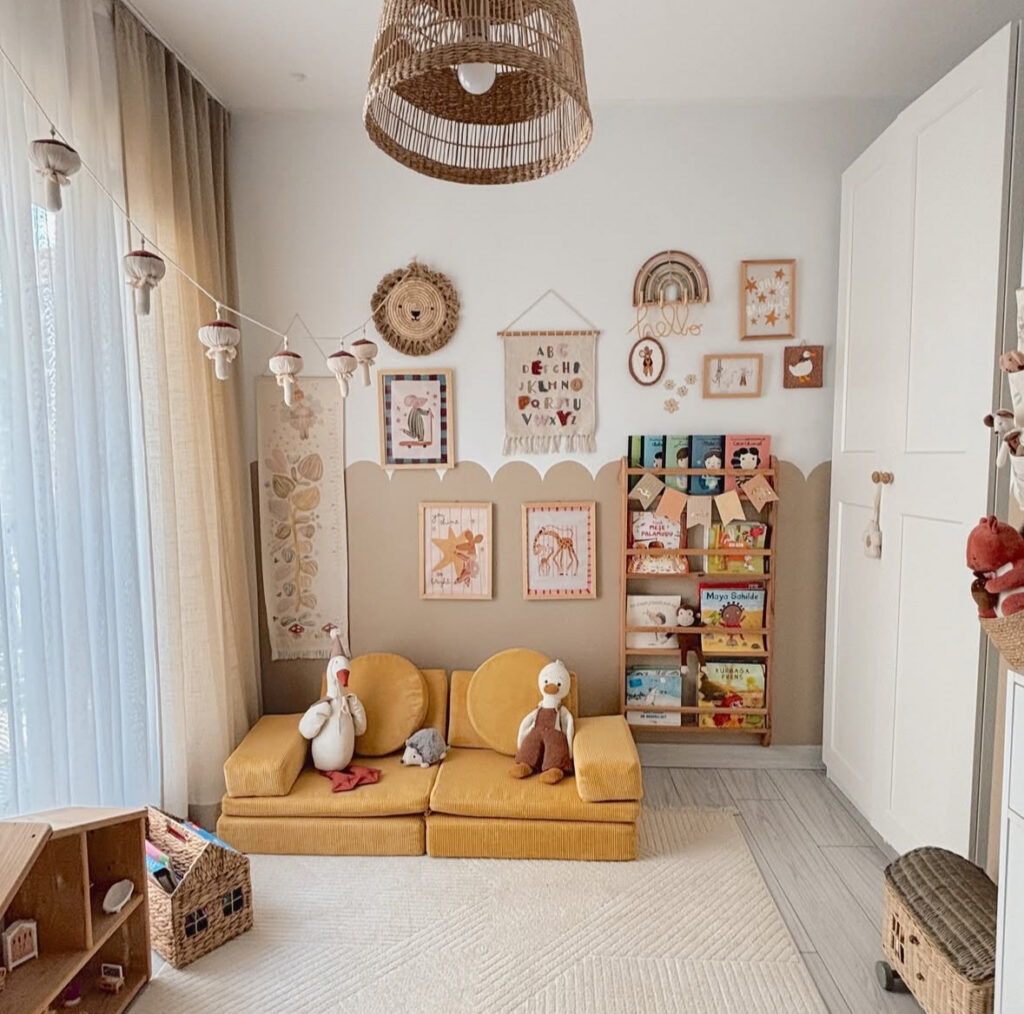
The thing people underestimate most in playroom design is seating. Kids are far more likely to settle into activities when there’s an obvious, comfortable place to sit. A chair by the books makes reading feel intentional. A small table with proper seating turns crafts into an activity instead of a mess spreading across the floor.
The little chair in the reading area works so well because it feels sized for the room and for the kids using it. It creates a sense of ownership without crowding the space. Same with the round activity table — it brings structure to coloring, puzzles, and projects while still feeling playful and relaxed.
The giant pouf in the sage-toned built-in space might be my favorite detail, though. It’s casual, movable, and works for almost anything. In high-energy playrooms with slides or ball pits, I think the best approach is to keep seating soft and tucked along the perimeter. It keeps sightlines open, helps the room feel safer, and still gives adults a comfortable place to supervise nearby.
sweet little storefront wall
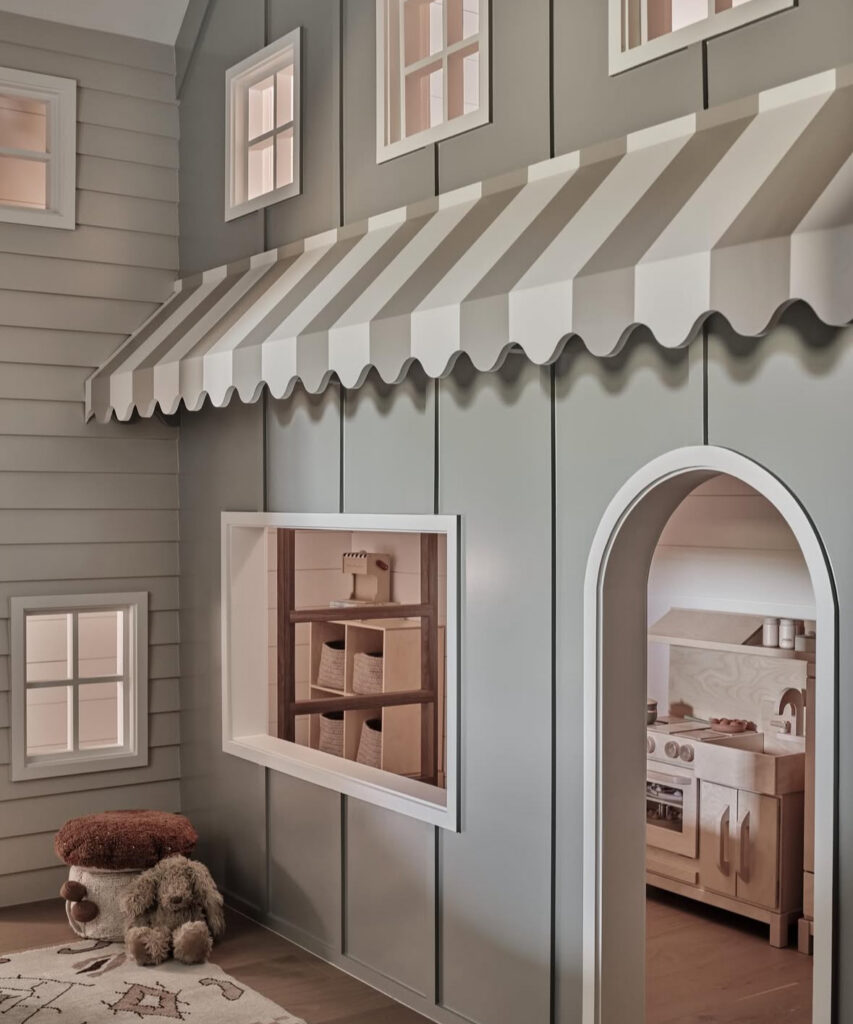
One thing I’ve started appreciating more in playroom layouts is how much walls can do for zoning. Instead of relying on extra shelves or dividers, simple architectural details and thoughtful lighting can define each area naturally. When the lighting feels warm and bright rather than cold and clinical, every little corner starts to feel purposeful.
The pretend-shop wall with the striped awning is such a smart example of this. The curved doorway and miniature windows instantly create a destination for imaginative play without extra decor. The muted green-gray tones keep the setup feeling soft and elevated, and those built-in cubbies are doing a lot of behind-the-scenes work to keep cleanup manageable.
cute tiny village
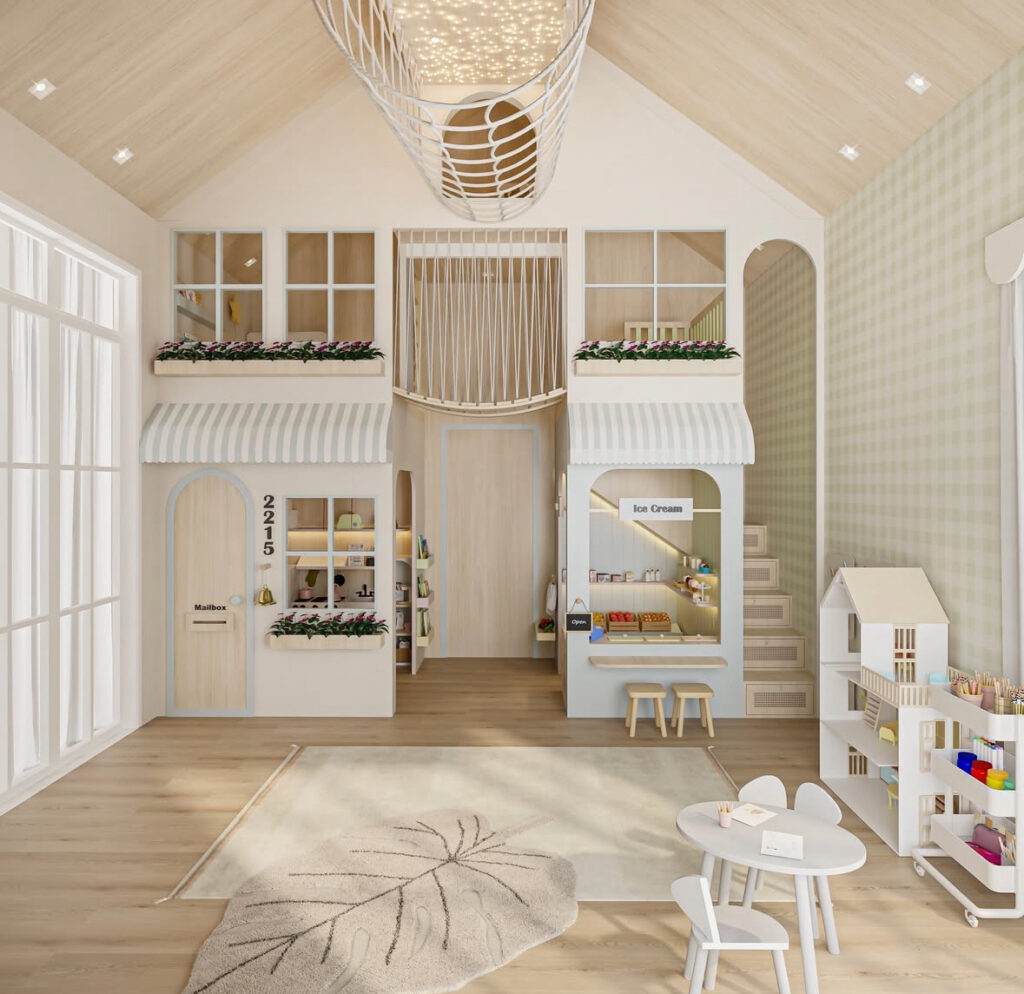
That spacious playroom with the two storefront-inspired walls completely nails the balance between playful and practical. The setup creates a charming “little village” feel for imaginative play, while the middle of the room remains open and flexible rather than becoming visually overwhelming.
The large rug anchors the activity zone beautifully, and the suspended statement light adds a fun architectural detail that makes the space memorable without piling on extra decor.
climbing wall + loft setup
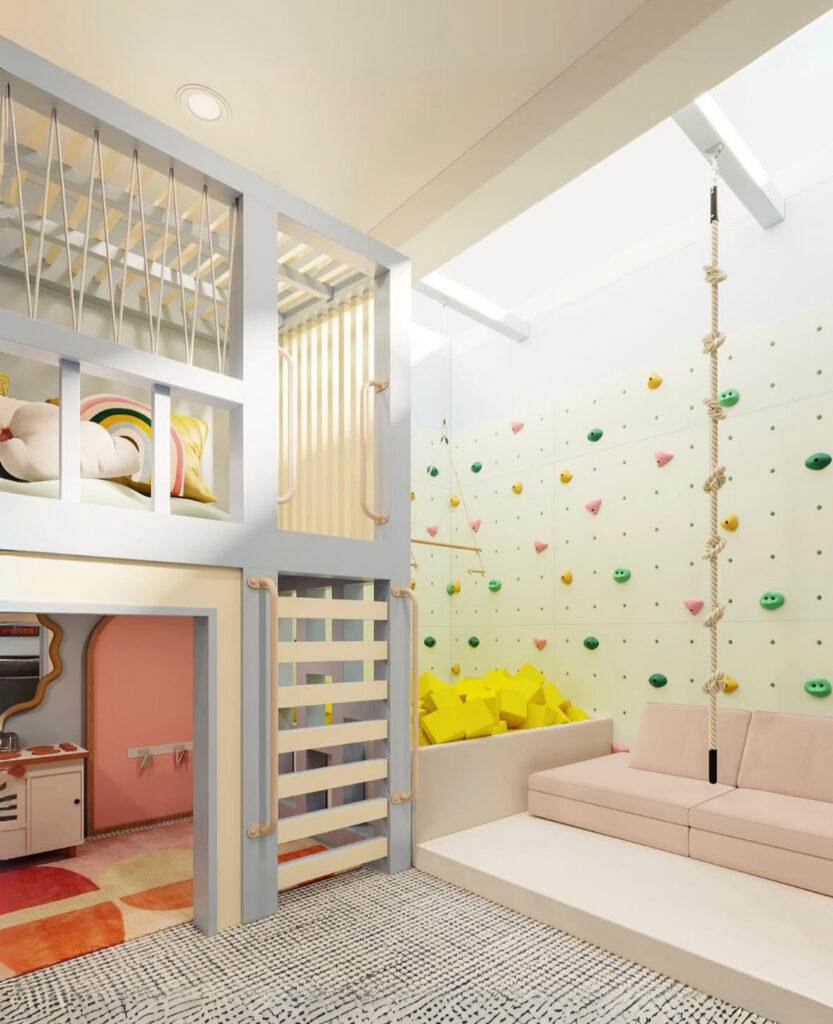
That loft-and-climbing-wall playroom completely changes the way active zones can look. The natural light pouring in through the skylight keeps the space feeling fresh rather than chaotic, and the muted climbing holds add just enough color to make it playful without turning into visual overload.
The soft seating platform and foam pit work so well because they define the play area naturally, making supervision feel easy and relaxed instead of constant and stressful. The wall itself becomes the room’s structure, which is such a smart use of space.
cozy little workstation
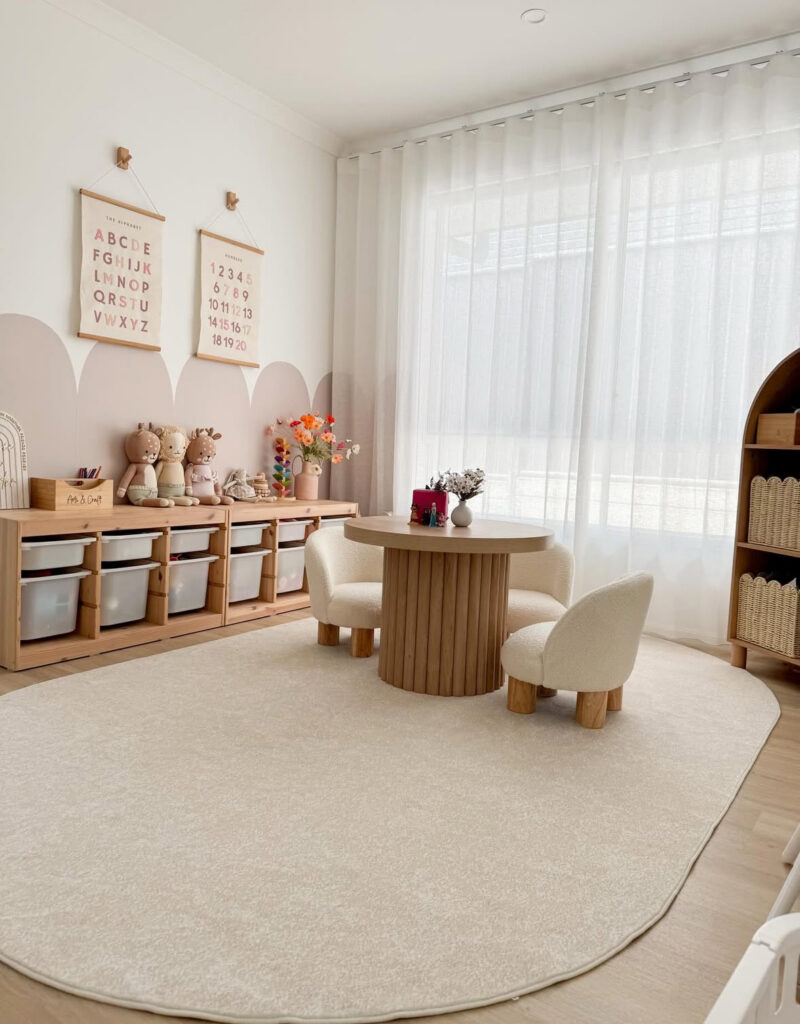
A well-designed craft zone works best when kids can jump into projects easily and clean up without it becoming a whole production. Keeping art supplies nearby, choosing wipeable surfaces, and having a basket or bin for works in progress helps contain the creative chaos before it takes over the dining table or couch cushions.
That cozy little table setup on the oval rug is such a smart example of this. The proportions feel comfortable for kids, the lighting makes the area feel bright and welcoming, and the rug subtly defines the workspace, making it feel separate from the rest of the room. It has the structure of a real activity station while still feeling soft and playful.
kitchen-ready setup
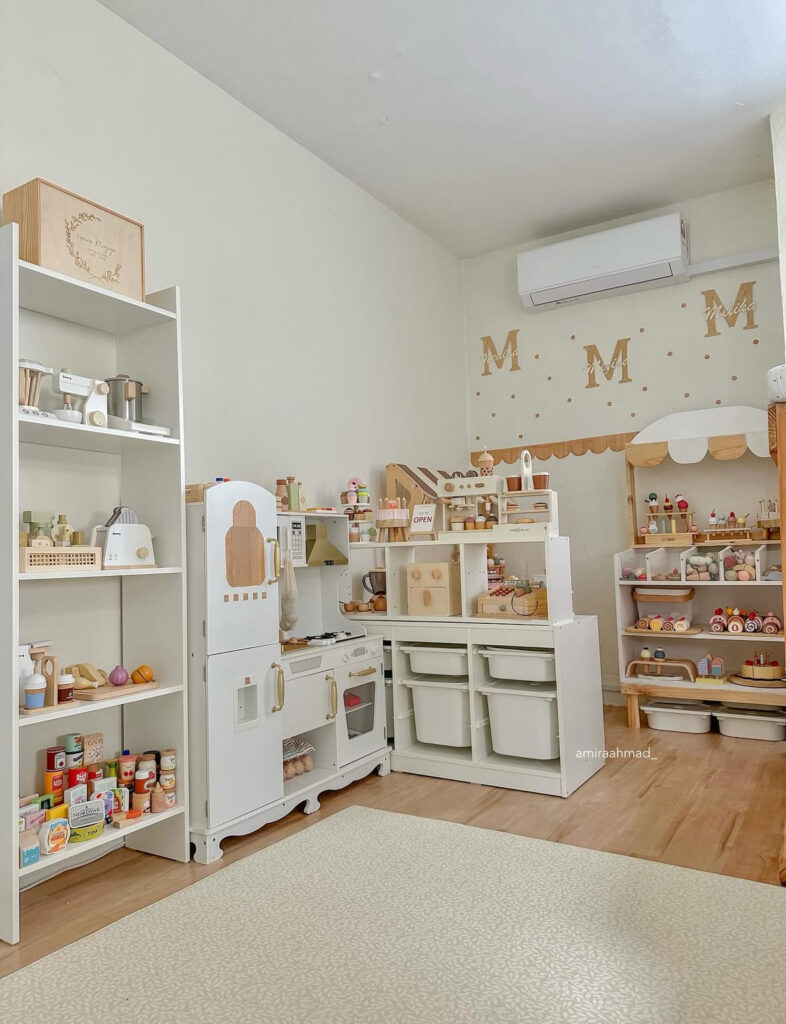
The café-style play area is really just another version of a well-designed activity zone. It keeps all the “tools” of play within reach, so kids can jump in and wrap things up independently. That built-in simplicity is what makes it so appealing in practice. When a space supports self-starting and self-cleaning habits, it reduces the constant back-and-forth for adults and makes everyday play feel much smoother.
Did you love this list of playroom ideas? Follow Cozyterior on Pinterest for more home decor ideas, tips, and inspiration!